Get Full Government Meeting Transcripts, Videos, & Alerts Forever!
Get email alerts on the Parks Grants topic
No spam. Unsubscribe anytime.
City councilors press finance after Springfield declines to apply for park grants
Summary
City officials debated a decision by finance staff not to apply for recurring state and federal park grants, including the PARC and Land and Water Conservation Fund programs; finance cited inability to meet matching requirements amid broader budget uncertainty.
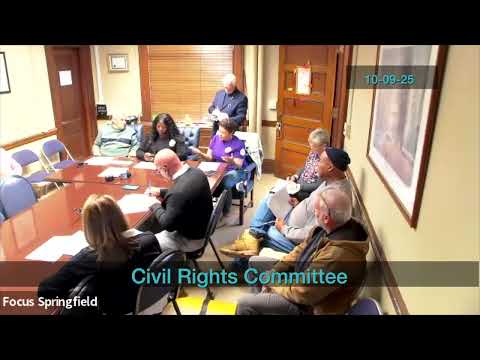
Springfield city councilors and parks staff spent a civil rights subcommittee meeting debating why the city did not apply this cycle for two recurring park grants — the PARC program and the Land and Water Conservation Fund (LWCF) subgrant — and whether that decision cost the city substantial, “free” funding.
The meeting opened with Tracy Whitfield, a city councilor, saying she had convened the session to review “the parks grama” the city had missed and to ask Parks and Finance to explain why applications had not been submitted. The parks and finance staff said the decision came after conversations about whether the city could provide the required local match while facing uncertainty in state and federal funding.
“Kathy [last name not provided],” a finance department official who participated in the discussion, told councilors: “we did not apply after, discussions with the finance department and with the mayor's office because of the fiscal situation that the city is in and fiscal situation that the federal government was in.” Whitfield responded, “I don't think it was the right decision,” and pressed staff for alternatives to cover the match, including free cash, MGM funds and one-time cannabis revenue.
Parks staff and the councilors exchanged details about prior awards and past practice. Parks project manager Laura Walsh said the PARC program (previously called the Urban Self-Help grant) and LWCF have historically been supplemented by community development block grant (CDBG) funds or other local matches. Walsh told the committee, “To my knowledge, [the LWCF/ORLP subgrant] has not been available” for the current application cycle, and later clarified that the PARC application cycle is due in July and that the city did apply in earlier years but not for the most recent cycle.
Finance officials described the matching constraints in more detail: the LWCF subgrant requires roughly a 50% local match, and while in-kind matches can sometimes be used, staff said it would be difficult to come up with the necessary half‑million dollars in either cash or in-kind matches this year. Finance also cited broader uncertainty — including state and federal funding cuts and the loss of previously budgeted grant awards — as a rationale for choosing to pause some grant applications.
Councilors called the choice a missed opportunity. Whitfield said the city had “never not gotten this grant before” in recent memory and estimated the city may have lost roughly $1 million or more in award opportunities. Several councilors asked for a full list of grants the city has applied for or accepted in past years and for a list of recurring grants that finance or the mayor's office decided not to pursue this year.
The meeting closed with a request from councilors that the finance and parks offices provide: (1) a comprehensive list of grants the city has received in prior years, (2) identification of grants not pursued this year and the reasons, and (3) follow-up at a finance committee meeting so councilors can review grant‑selection criteria and the fiscal tradeoffs behind decisions.
The session produced no formal motions or votes; it was framed as an informational review and a call for more financial transparency and coordination going forward.