Get Full Government Meeting Transcripts, Videos, & Alerts Forever!
Get email alerts on the Child Services Csa topic
No spam. Unsubscribe anytime.
Franklin County officials flag rising costs in Children's Services Act program, outline steps to rein in residential placements
Summary
County staff reported increasing costs for foster-care residential and private-day placements under the state'administered Children's Services Act (CSA), and described program changes aimed at keeping children in community-based settings and improving discharge planning.
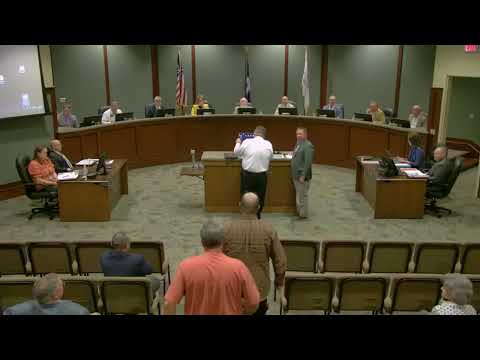
Franklin County supervisors heard a detailed update on the Children's Services Act program and were told last fiscal year'wide costs rose largely because of residential foster-care and private-day education placements.
The update, presented by Heather Kesterson of the CSA office and utilization manager Zach Clay and introduced by county finance staff, said the program serves about 199 children and costs the county roughly $7 million a year in gross expenditures. County staff said community-based services now serve the majority of children (about 43 percent) while accounting for a small share of costs, and that more expensive placements'private day school and foster-care residential placements'were driving the overall cost increases.
Why it matters: Residential and private-day placements carry higher local match rates and longer stays increase county expense. Staff told supervisors those placements also reduce the county's state reimbursement because of Medicaid offsets, creating a double hit to local funds.
County staff described the program structure and eligibility, noting CSA is a state pool of funds administered locally through the Community Policy and Management Team (CPMT) and Family Assessment and Planning Team (FAPT). Kesterson said the program is child-centered and family-focused and that reimbursement is on a vendor-reimbursement basis; typically the locality pays vendors and seeks state reimbursement on a monthly cycle.
Key figures and drivers - Program gross cost: about $7 million annually (FY25). - Children served last year: 199. - Community-based services: about 43% of children served but 7% of costs. - Private day school: 19% of children served but 46% of expenditures; the school division paid roughly $1 million in local matches last year and staff said private-day placements are driven by Individualized Education Programs (IEPs). - Foster-care residential placements: the county saw a 24% increase in costs in that category (staff cited about $17,000 per child of increased cost year over year) and also a 57% increase in residential education placements (about $7,000 per child for the education portion).
Local match rates explained: staff described the differential local match rates used in CSA accounting: roughly 14% for community-based services and family foster care, about 28% for private day school and therapeutic foster care, and 35% for residential care.
What staff are doing: Kesterson and Clay listed a set of operational changes the CPMT and CSA office have put in place to manage costs and utilization: increased family participation in FAPT meetings, structured FAPT agendas with role-play and planning, a monthly review committee for high-cost residential cases (with state Office of Children's Services participation), expanded utilization review (audits of facilities and documentation), and a new health-record system to improve staff efficiency. Staff said those actions have contributed to fewer children in high-cost settings and better outcomes for community-based services.
Planning and targets: the CPMT'which the county appoints'has adopted a strategic goal to reduce residential foster-care and private-day placements by 5 percent annually over three years. Staff emphasized a renewed focus on discharge planning so children step down from high-cost placements when clinically ready.
Board reaction and next steps: Vice Chair Supervisor Smith and other supervisors praised staff work and asked county administration to keep pressing the General Assembly and state partners on cost and rate issues. Staff said some program costs are largely outside local control (for example, private-day placements that are IEP-driven and federally protected), and they will continue to look for federal and state funding and operational gains to lower county exposure. The CPMT will return metrics to the board during budget discussions.
Ending: Supervisors were provided the detailed FY25 CSA report and asked staff to return with follow-up data, including length-of-stay and utilization numbers, as the county prepares its FY27 budget.