
Springfield working group hears Comcast outline affordability programs, device grant opportunity
Get AI-powered insights, summaries, and transcripts
Subscribe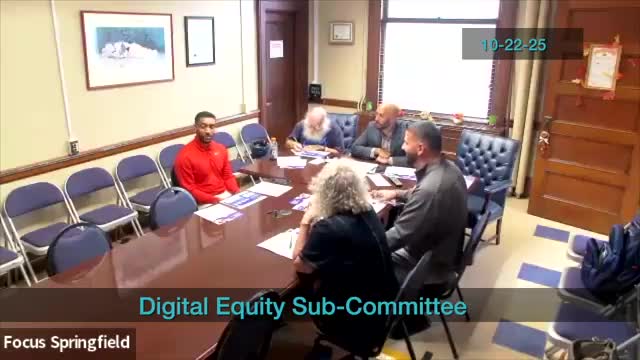
Summary
Representatives from Comcast briefed Springfield's Digital Equity Working Group on network coverage, low-cost Internet programs and partnerships, and a connected-device grant the city may apply for; the group discussed multi-dwelling access, outreach to neighborhood councils, and how residents can report address-level service problems.
Springfield's Digital Equity Working Group on Wednesday discussed a fast-moving device grant opportunity and heard a presentation from Comcast on service offerings, affordability programs and local partnerships.
The session focused on two near-term opportunities: a Connected Online grant Sequoia said would allow the city to apply for roughly 3,500 devices, and Comcast's ongoing programs to provide lower-cost Internet service and community support. Sequoia, a Springfield staff member handling grant efforts, told the working group that the Connected Online application is due Friday, Nov. 7, and the group should consider filing a priority application on the earlier deadline.
The meeting is part of the working group's broader effort to improve access in Springfield. "We did hear back from MBI in regard to our digital equity implementation grant," Sequoia said, adding that details were pending a press release. The grant conversation prompted discussion among councilors and community members about whether devices or data would be a higher priority for residents.
Comcast representatives described the company's local footprint, programs for lower-income households and technical steps residents can take when service appears absent. Brad Palazzo, director of community impact for Comcast's New England region, said Comcast's network is built through the entire city and that the company is undertaking an equipment upgrade over the next year to a year-and-a-half to support multi-gig symmetrical speeds. "Our network infrastructure is built out through the entire city of Springfield. So every resident and business who wants access to our services can get it, today," Palazzo said.
Palazzo described two low-cost options the company markets: Internet Essentials, which he said is available to qualifying households for as low as $14.95, and Internet Essentials Plus for higher speed at $29.95. He also described a prepaid offering called "Now," which he said is aimed at households that do not qualify for the subsidy-based Internet Essentials program; Palazzo said Now offers 100/20 or 200/20 service for about $30 to $45 per month and that equipment is included.
On account standing, Palazzo said Comcast's collections policies differ by product: customers seeking standard branded service tiers must work with collections to clear outstanding balances, but "from an Internet Essentials standpoint, if the debt is under a year, we will forgive that. If it's over a year, they would need to work with our collections team," he said.
Participants pressed Comcast on two recurring local concerns: (1) buildings where service appears to reach the structure but not upper units, and (2) how residents should report addresses for apparent lack of service. Comcast staff explained that internal building wiring is generally the responsibility of the building owner and that some multi-dwelling units require retrofits to deliver service to upper floors. Palazzo encouraged residents and working-group members to collect specific addresses where service problems occur so Comcast engineers can investigate nodes, headends and in-home wiring.
The working group also discussed outreach. Several members urged Comcast to connect directly with Springfield neighborhood councils and community partners. Comcast staff listed local and regional partners they fund or work with, including the Boys & Girls Club, the Alliance for Digital Equity, Tech Foundry, Wayfinders and Tech Goes Home, and said those partners help with digital navigators, device distribution and literacy training.
Other technical and policy items raised at the meeting included the state's BEAD/Broadband data collection (address-level speed and quality testing), grants MBI administers to retrofit multi-dwelling buildings, and Massachusetts' recent accessory dwelling unit law, which may create new rental arrangements the working group said should be considered for outreach and service planning.
The meeting closed with several follow-ups: Sequoia and Comcast agreed to share application materials and contact information with the working group; Comcast agreed to provide plain-language use cases that explain what different speed tiers support for a household; and the working group agreed to collect and forward specific addresses where residents report inability to obtain service. No formal votes or policy actions were taken at the meeting.