
Spanish Fort planning panel recommends annexation, pre‑zoning for Longleaf planned unit development
Get AI-powered insights, summaries, and transcripts
Subscribe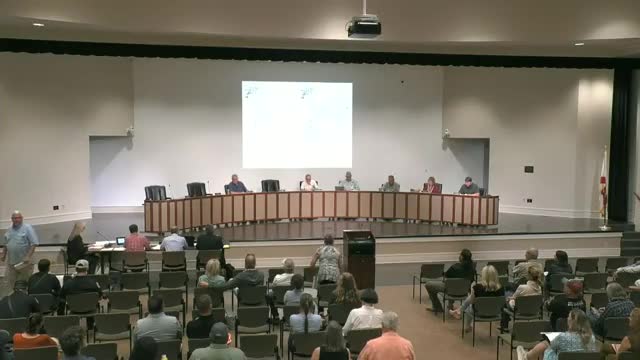
Summary
The Spanish Fort Planning Commission voted unanimously to recommend that the City Council consider annexing and pre‑zoning the Longleaf Planned Unit Development, a proposal to develop roughly 1,654 acres along White House Fork Road Extension and Alabama Highway 225.
The Spanish Fort Planning Commission voted unanimously to recommend that the City Council consider annexing and pre‑zoning the Longleaf Planned Unit Development, a proposal to develop roughly 1,654 acres along White House Fork Road Extension and Alabama Highway 225. The recommendation clears the application to proceed to city council for final consideration.
The development team said the Longleaf plan centers on a professional 18‑hole golf course and associated amenities, a proposed farm animal sanctuary covering about 400 acres, and a mix of residential units. Applicant Wade (last name not specified) told the commission he and partners bought the land in 2005 and resumed development work about three years ago: "We now have 25 animals on the animal sanctuary so far... and we expect to open to the public in '26," he said.
Why it matters: annexation would place the property under Spanish Fort municipal ordinances, subdivision standards and city review rather than Baldwin County rules. That would change which standards apply to future plats, roadway construction and some public services as the proposal moves through phased site plans and subdivision applications.
Most important details: city staff described the submittal as a PUD master plan and narrative that would govern future phases. The applicant and staff said the overall project footprint is about 1,654 acres and the applicant has proposed a total of about 1,015 units overall; the applicant also said the proposed net density across the project is less than 2.5 units per acre. The western/golf course side was described as including roughly 246 single‑family lots and about 125 townhome units; staff also noted 79 lots already are platted in part of the property and could be built under current county authority if sold individually.
Public comments at the hearing were numerous and strongly critical of annexation and large‑scale development. Residents cited traffic and safety on County Road 40 and AL‑225, drainage and flooding on local properties, volunteer fire department capacity and potential impacts to wildlife and springs. William Jackson, a volunteer fire department captain who lives in the White House Fort community, said, "We have some concerns with the annexation... we are 100% volunteer and can we provide mitigation for fires if one was to happen." Other speakers said they object to losing a rural way of life and questioned notice and timing of outreach.
City staff and commissioners responded point‑by‑point during the meeting. A staff speaker clarified that this is a voluntary annexation requested by the property owners and that "the only property that's being annexed is the property that's depicted on the screen; there's nobody else's property that's being annexed by this act." The staff explanation also said inspections of existing roads were completed, deficiencies identified were corrected through Baldwin County review, and future roads built as part of the project would have to meet city construction standards when submitted for city approval.
On traffic studies, City Engineer Matthew Jones said studies are typically required at the subdivision/plat stage and that ALDOT or the county may require traffic analysis for connections to state or county highways: "As they come back for the plat process, there will be a requirement for traffic studies to be performed." Staff also said stormwater calculations and more detailed drainage plans will be required with future phases; the applicant requested some deviations to subdivision and stormwater rules that staff said would be evaluated with each phase.
Several residents raised the White House Fort Landmark District, which some commenters said requires a local vote before annexation in that area. William Jackson described the landmark district as having been approved by voters in November 2024 and named a sponsor; city staff replied that the landmark legislation is a constitutional amendment that does not prevent an individual landowner from requesting voluntary annexation, and that this application covers only the owners who requested annexation.
Planning commission action and next steps: after public comment and discussion the commission took a recorded roll call and recommended approval of the pre‑zoning/annexation application (agenda item 25101) by unanimous vote (Kant: yes; Vaughn: yes; Smith: yes; Nelson: yes; Lazenby: yes; Mayor McMillan: yes). The commission’s recommendation will go to the City Council, which will hold its own public hearing and vote. If the City Council approves annexation and the PUD zoning, the developer must return with phased plats, detailed drainage and traffic studies and any required permit approvals before construction can proceed.
Context and timeline: the applicant said initial development work and partial golf course construction occurred in 2006–2010, then paused during the 2010 economic downturn; work resumed roughly three years ago. The applicant characterized full buildout as a multi‑phase project that could take a decade or more, with concentrated work on the golf course side and sanctuary in the near term. Several residents and the commission said components such as traffic studies, stormwater plans and service arrangements will be addressed during the plat and permitting process.
Votes at a glance: Planning Commission recommendation — approve pre‑zoning/annexation for Longleaf PUD (agenda item 25101); vote 6–0 in favor. The City Council will schedule a separate public hearing and final vote.
For now, the recommendation moves the proposal to the City Council for formal consideration and preserves the public record of resident concerns about traffic, drainage, emergency services and wildlife.