Get email alerts on the Septic Variance New Parcel topic
No spam. Unsubscribe anytime.
Board approves variance to allow type‑3 septic on newly created 36‑acre parcel
Summary
The Morrison County Board of Adjustment approved a variance to create a parcel that cannot support a type‑1 septic system and to allow installation of a type‑3 (mound) system; the parcel contains delineated wetland and drew questions about use of prime agricultural land.
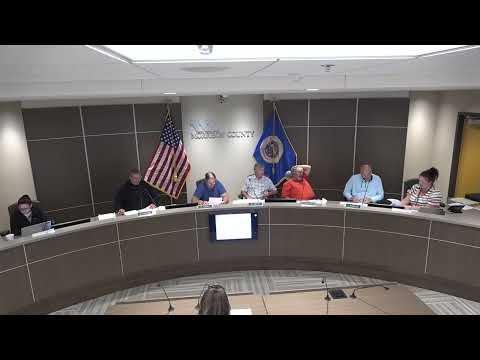
The Morrison County Board of Adjustment on Sept. 30 approved a variance allowing creation of a new parcel that cannot support a county-standard type‑1 septic system and permitting a type‑3 (mound) septic installation on that parcel.
Applicants Timothy Macci, Yasmin Crowe and Jeremy Mogg asked the board to allow the split of a 36-acre parcel so they could place a home on the east portion and install a type‑3 mound system. Land Services staff said soil testing and the septic designer could not locate two separate soil treatment and dispersal areas sufficient for a type‑1 system, and therefore the applicants requested a variance under ordinance sections cited in the staff report.
Staff presented an aerial photo, a wetland delineation completed by the Soil and Water Conservation District and site photos. The proposed new lot contains wetland that has been delineated, and the applicants said the intended use is a residence with the remainder of the acreage to remain as pasture or limited farm use. The applicants said they had a verbal concurrence from the township on driveway access.
Several board members raised questions about conversion of potentially productive agricultural land. Board member Marv said a nearby higher and more wooded parcel might have been considered to avoid impacting prime agricultural acres, and asked about the parcel owner’s intent for the remainder of the field; the applicants responded they intended to use roughly an acre for buildings and retain most of the acreage for pasture or limited agricultural use.
Board members found that the lot’s soils and site conditions made a type‑1 system infeasible and that the request involved more than economic considerations because a mound system requires import of material and additional infrastructure. After discussion, a motion to approve the variance was made by Brent and seconded by George; the motion passed with all members voting in favor.
Land Services staff recorded that the wetland was delineated by the Soil and Water Conservation District and that the applicants must continue working with the county on permitting and on any conditions required for the mound system and any wetland protections. No formal additional conditions were recorded in the hearing minutes beyond standard permitting coordination.
AI generated
The text on this page is AI generated. Summaries, highlights, analysis, and video transcripts are all produced from the original source material.
AI can make mistakes, so if you spot one, and we will fix it for everyone.
Note: the source content is unaltered by us. Any content source we link to, be it a video, an audio recording, or a document, is presented exactly as its publisher released it. That publisher is usually a government body, sometimes an individual official or another organisation.