Get Full Government Meeting Transcripts, Videos, & Alerts Forever!
Get email alerts on the Land Use Fencing Salvage Yards topic
No spam. Unsubscribe anytime.
Council approves second reading of ordinance tightening rules for junk, salvage and wrecking yards
Summary
The Rawlins City Council approved second reading of an ordinance amending multiple sections of Title 19 to clarify definitions for junk, salvage, impound and wrecking yards and to add fencing requirements; councilmembers debated a grandfathering provision and whether to incorporate state highway fencing requirements.
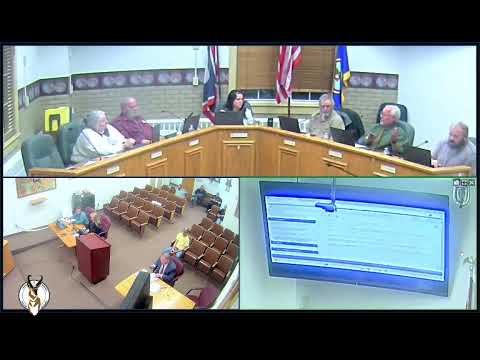
The Rawlins City Council on Oct. 21 approved second reading and waived additional reading of an ordinance amending multiple sections of Title 19 of the municipal code to clarify definitions and add fencing and screening requirements for junk yards, salvage yards, towing/impound yards and wrecking yards.
Council members and staff said the package separates older, broadly written definitions into distinct categories so enforcement staff can apply rules consistently. "What we're trying to do is make a clean and cut all across the board to say, ‘okay, I have a junkyard, we look at the definition of the junkyard,'" a Community Development staff member said during the discussion.
The ordinance adds specific definitions and requires enclosure or opaque screening for facilities that store vehicles and related materials. Council discussion centered on three recurring concerns: (1) whether to include a grandfather clause for existing uses, (2) how to incorporate state highway fencing requirements, and (3) enforcement and fairness between long-established and newer businesses.
Council member Singer moved approval; the council opened online voting and the motion passed on second reading with council support and one recorded exception. Vice Mayor Gerald Garner repeatedly asked how the city would document preexisting fences and whether removing the grandfather clause would create enforcement or fairness problems for property owners who built fences before the ordinance change.
Staff said some recent records make it possible to verify fences installed in the last several months and that the ordinance would take effect on passage, with the city working with businesses on timeframes for compliance. The council and staff also discussed state law covering visibility and screening along state highways; council asked staff to confirm the relevant state statute language and the date the statute took effect before the third reading.
Council members said they expect to review a redlined draft showing the staff-proposed changes and any language to adopt state standards or dates that define grandfathering before the final vote.
The second reading passed; the council directed staff to return with clarifying text on grandfathering, proposed language adopting state highway screening requirements, and highlighted edits for the third reading.
Notes: the discussion referenced federal/state highway screening concerns commonly known in local practice as arising from the Highway Beautification Act (sometimes referred to in informal conversation as the "Lady Bird" highway/beautification concept) and local zoning categories (commercial C2, industrial). The ordinance language amends multiple Chapter 19 sections listed by staff during the public reading.