Get Full Government Meeting Transcripts, Videos, & Alerts Forever!
Get email alerts on the School Climate topic
No spam. Unsubscribe anytime.
Weston Middle School students lead No Place for Hate rollout; district curriculum committee discusses broader anti‑hate lessons
Summary
Weston Middle School has launched a student‑led No Place for Hate program this fall, including a week of pledge activities and planned events in fall, winter and spring to qualify for a No Place for Hate designation, Principal Jason Bluestein and district staff told the curriculum subcommittee Oct. 8.
Weston Middle School students have begun a student‑led rollout of the Anti‑Defamation League’s No Place for Hate program this school year, Principal Jason Bluestein told the Weston School District curriculum subcommittee on Oct. 8.
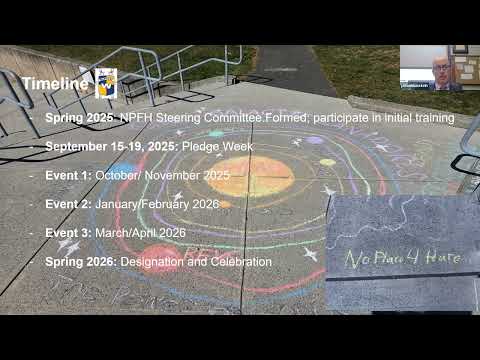
Bluestein described a timeline and early activities. A steering committee of staff, parents and students trained in spring 2025; the school held a pledge week Sept. 15–19 during which students learned the pledge in assemblies, signed pledges during advisory and posted them on bulletin boards. The school is planning at least three events this school year — a fall event (targeted for early November), a winter event (January–February) and a spring event — which are required components before applying for a No Place for Hate designation.
Bluestein said the initiative is “very student driven” and that students planned and led team assemblies, created chalk messages of hope outside the building and produced artwork connecting school values to the program. “The kids are starting to make the connection between all of these opportunities,” a district leader said, describing displays created by students that centered the middle school and emphasized connection, kindness and inclusivity.
The program includes structured activities that must involve active student participation and reflection rather than passive listening to a guest speaker. Bluestein said the ADL provides a toolbox of seed ideas the school can adapt and that the staff will avoid activities that risk alienating or putting marginalized students in a position to explain or justify their identities.
Student involvement has been substantial: Bluestein said many students applied to serve on the school steering or planning groups and staff organized nine subcommittees to accommodate interest. The principal also described targeted restorative circles done with eighth graders after a recent incident at the school; administrators said such circles surprised some teachers with the depth of student participation and that the work will expand to other grades in time.
Board members discussed curriculum connections, including Holocaust remembrance and anti‑hate lessons. Committee leaders said the district previously expanded Holocaust remembrance programming down to sixth grade in recent years and that curriculum subcommittees are creating a crosswalk of anti‑hate lessons starting with seventh grade and expanding up and down the grade levels.
What’s next The middle school will hold the first event in the No Place for Hate series in early November, continue advisory‑level lessons and report back to the curriculum committee as the school develops specific lesson plans and coordinates with district anti‑hate curriculum work.
Source notes: Principal Jason Bluestein presented the No Place for Hate timeline and examples; district staff referenced training materials from the Anti‑Defamation League and ongoing curriculum work from a district anti‑hate subcommittee.