Auburn council directs staff to draft retail cannabis ordinance after public outreach and mixed council feedback
Loading...
Summary
After town halls and a survey showing high support, Auburn City Council directed staff to draft a retail cannabis ordinance and zoning changes; council debated license caps, equity preferences and delivery rules but did not take a final vote.
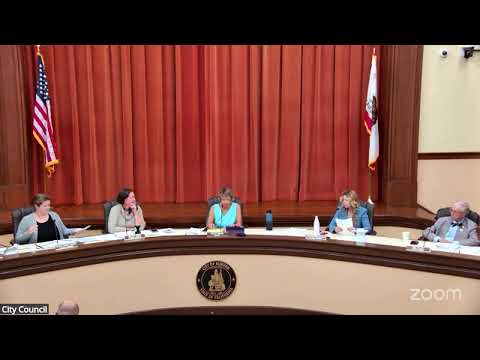
The Auburn City Council on Oct. 13 directed staff to draft a retail commercial cannabis ordinance and related zoning changes after reviewing public outreach and survey results and hearing from residents, business groups and advocates.
Staff reported outreach that included two town-hall workshops and an online survey; combined participation was described by staff as about 221 respondents and attendees. The city’s report summarized overall support at about 86 percent across the outreach channels. Development staff recommended limiting the city initially to recreational retail (not dedicating separate medical-only licenses), awarding licenses by a competitive RFP, and placing a per-license population threshold tied to the city’s population.
Why it matters: council members said the ordinance could retain tax dollars now spent in neighboring jurisdictions, create new local businesses and jobs, and help diversify Auburn’s sales-tax base. At the same time, many council members urged detailed controls for security, odors, signage and storefront design so any dispensary “fits” downtown and other parts of the city.
Staff presentation and outreach results
John (Development Director) told council staff updated a financial spreadsheet and compared other cities’ revenue outcomes. He said outreach included two after-hours workshops and an online survey posted after the Aug. 25 direction from council. According to staff, roughly 81–90 percent of respondents identified as Auburn residents and the combined outreach showed roughly 86 percent support for allowing retail cannabis under the scenarios presented.
Staff proposed the following, which council discussed but did not formally adopt as ordinance language: - Start with recreational retail licenses rather than a medically restricted regime; staff recommended focusing on recreational sales now. - License cap tied to population, using a per-license threshold (staff originally proposed one license per 7,500 residents). Council members discussed increasing that threshold. - Use an RFP (competitive) process for awarding licenses with scoring criteria that could give extra points for local ownership and for women-/minority-owned businesses while preserving fairness under trade and public-procurement law. - Require annual (or periodic) reviews of operators to check compliance on odors, security and other operational requirements; require local business licensing and an enforcement path for persistent problems. - Allow delivery and curbside service as permitted by state rules; do not allow drive-through dispensaries because that is not permitted under state law, staff advised.
Public comment and equity concerns
Several speakers urged the city to move forward so tax dollars spent in Sacramento or Grass Valley remain local. Resident Patricia Johnson told the council, “It would be a great asset so we don't have to drive into another city. Given my age and the roads, we would really appreciate that you would consider establishing the right to have it in our community.”
Richard Miller, state director for Americans for State Access, urged the council to include an equity pilot program for retailers and small-business assistance to help prevent large corporate chains from crowding out local operators. “I’d like to see an equity pilot program for cannabis retailers and other cannabis businesses moving forward,” Miller said.
Council discussion and direction to staff
Council members expressed support for moving forward to create zoning and ordinance language and asked staff to return with a draft that the planning commission would review before the council considers final readings. Council members asked staff to include: - RFP scoring that allows extra points for local businesses and for minority- or women-owned enterprises while keeping the process legally defensible; - Clear design, signage and security standards; and - A larger per‑license population threshold than staff’s initial 7,500 suggestion. Several council members proposed raising the threshold (members voiced figures including 8,500 and 10,000 during debate); the council’s working direction was to pursue an approach closer to the middle of that range (council asked staff to draft using 8,500 for further analysis and to show alternatives).
Staff said it would prepare zoning/ordinance drafts for the planning commission and incorporate the council’s direction into the RFP criteria, compliance standards and CEQA analysis before returning to council. The council did not take a final vote on a retail-cannabis ordinance at the Oct. 13 meeting; the action was direction only.
What remains: staff will draft ordinance language, RFP criteria and an environmental check (CEQA initial study) and present options to the planning commission and council. Council members asked staff to return with examples of preference and equity scoring used elsewhere and with a draft the council can review before hearings.
Ending
Council members agreed the issue requires careful ordinance detail even as they signaled support for allowing retail cannabis in appropriate locations to keep tax dollars local. No final ordinance was adopted; staff was directed to prepare drafts, scoring criteria and environmental analysis and then proceed through the planning commission process.