Get Full Government Meeting Transcripts, Videos, & Alerts Forever!
Get email alerts on the Library Materials Legislation topic
No spam. Unsubscribe anytime.
Albany County educators and residents urge changes to draft ‘explicit materials’ bill, warn of chilling effect
Summary
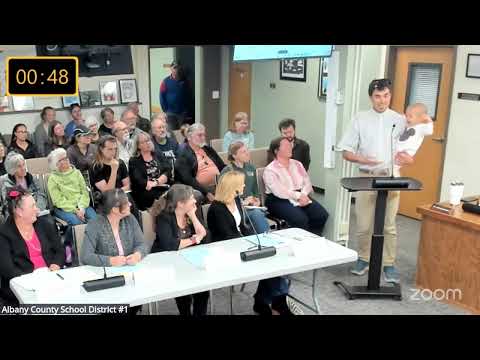
At a special meeting of the Albany County School District #1 Board of Trustees (date noted in public agenda), librarians, teachers, trustees and two state legislators discussed a draft Joint Judiciary Committee bill that would prohibit “explicit” materials in county and school libraries and allow civil penalties of $50,000 per violation.
At a special meeting of the Albany County School District #1 Board of Trustees (date noted in public agenda), librarians, teachers, trustees and two state legislators discussed a draft Joint Judiciary Committee bill that would prohibit “explicit” materials in county and school libraries and allow civil penalties of $50,000 per violation.
District legal presenter Dr. Goldharpe said the draft applies to both county and school libraries and that a violation "could result in school districts being subject to [a] civil penalty of $50,000 per violation." He also noted the draft permits judicial causes of action that include awards of attorney's fees, which he said could incentivize litigation.
The gathering drew a stakeholder panel of librarians and classroom teachers who said the bill’s broad definition of “explicit” would sweep in materials with context or pedagogical value and would replace professional judgment with litigation risk. "This story has context, purpose, and value," said Stephanie Hunt, librarian at Laramie High School, referring to Laurie Halse Anderson’s Speak as an example of material that supports conversations about consent and recovery.
Why it matters: speakers from the district, local libraries and the public said the draft could remove books that provide health information, representation for marginalized students and classroom resources used for curriculum-aligned instruction. Trustees and community members also warned the $50,000 fine and open standing for plaintiffs would create a chilling effect on purchasing and classroom use.
Panel and trustee concerns Several librarians described the district’s existing collection-development and reconsideration procedures. Stephanie Hunt and other panelists said they use vendor review services (for example, Follett and professional review journals) and follow the district’s collection policy when evaluating materials. An elementary librarian said the district’s elementary collections contain no materials she considers subject to the bill as currently written, but that electronic access through apps such as Sora and Libby complicate where responsibility lies when students access materials off campus.
Trustee Tracey Murphy said she shares staff concerns and urged lawmakers to stop the bill from moving forward or adopt amendments that reduce harm. "I do have serious concerns," Murphy said, adding that the district’s Vision 2030 and its local policies are aligned with supporting students and educators.
Statements from legislators Sen. Gary Crum told the meeting he "absolutely oppose[s] the bill" as written and called it "a bad bill. It's a terrible bill." Crum and Rep. Ken Chastick said they had proposed or supported amendments intended to limit the bill’s scope; Goldharpe commended "amendments 1 through 4 and 9" as reducing potential exposure for districts. Crum said the Joint Judiciary Committee would debate the draft on Oct. 13 but that public comment was closed for that session because the committee had held extensive comment at an earlier Casper meeting.
Rep. Chastick said he prefers the bill to die but has submitted amendments to reduce harm, adding he still might vote against the bill even if some amendments pass: "I would prefer that the bill die. I absolutely would prefer that."
Legal standard and constitutional concerns Several speakers pointed to existing legal standards and precedent. Public commenters and trustees referenced the Miller test (Miller v. California) as the familiar legal obscenity standard and said the draft goes beyond that test. A public commenter urged trustees to consult counsel and, if necessary, litigate if a future statute requires violating the Wyoming Constitution’s prohibitions on sectarian instruction.
Public comment and examples Dozens of public speakers and district educators addressed the board and legislators. Teachers and students described classroom and curricular uses of contested titles and expressed worry about lost educational opportunities. Jennifer Bennett, a 7–12 English teacher with a K–12 library certification, urged that county and school libraries be regulated separately because they have different missions. A number of commenters said books serve as safety and health resources for youth, citing mental-health and sexual-assault recovery reasons for keeping certain titles available.
Process and next steps Board members and legislators urged participants to continue dialogue. Legislators said the Joint Judiciary Committee will continue to work the draft (committee materials show roughly 19 proposed amendments) and that community members who want to influence outcomes should contact individual committee members rather than sending mass identical messages. No formal district action or vote was taken at the meeting.
The meeting record shows the district intends to continue collaboration with legislators and to provide specific local policy language to protect age-appropriate materials while clarifying enforcement procedures and standing for lawsuits.
Ending Legislators attending the meeting said they would bring the district’s concerns back to the committee and continue negotiations over amendments; trustees and educators said they planned to press for explicit protections for professional judgment, due process and limitations on who may sue. No vote was taken by the board at the meeting.