
Hayward staff pause community agency funding as budget review continues
Get AI-powered insights, summaries, and transcripts
Sign Up Free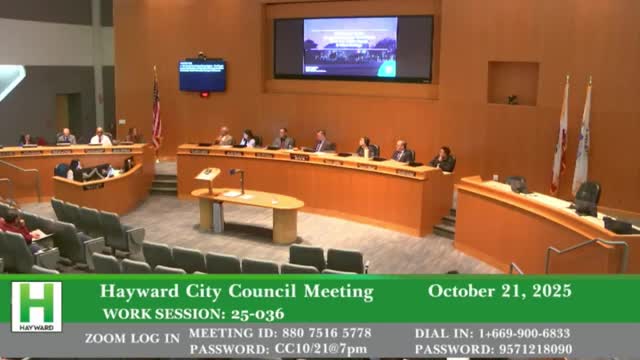
Summary
Facing a tense fiscal outlook, city staff told council they have canceled the community agency funding availability for next fiscal year and hired financial consultants to conduct a thorough review; staff will return with proposed cost‑savings and a first-quarter actuals report in November.
City staff told the Hayward City Council on Oct. 21 that the city is accelerating fiscal review steps after an updated budget review and that it has canceled the funding availability notice for the next fiscal year’s community agency grants.
Assistant City Manager Mary Thomas said the city has engaged two financial consultants to assist the finance team with a detailed review of last fiscal year’s numbers and current fiscal position. Staff are preparing a quarterly report (first-quarter actuals) for release to council the week after the meeting and will present a package of proposed cost‑savings measures on Nov. 18. Thomas described the consultant work as focused on cash flow, verifying closing numbers and strengthening the long‑range forecast; the initial engagement is expected to deliver results by the end of the calendar year, with the possibility of an extension if additional analysis is needed.
Thomas said departments are conducting exercises to identify additional savings and that the cancellation of the community agency funding availability was a difficult but fiscally necessary decision to avoid creating unfunded obligations given current projections. She described the move as a pause in new discretionary community grants while broader reductions are evaluated across departments.
Council members asked for clarity on service impacts. Thomas said core enterprise services such as sewer, water and streets are largely paid from enterprise funds and not the general fund; general fund pressures are likelier to affect services such as public safety and the library. She pledged the administration would present a comprehensive view of likely service impacts when staff return with recommended reductions.
Council members also asked about the financial consultants’ timeframe and cost. Thomas said the initial work plan covered roughly the first 45 days to address cash flow and year‑end verification, with a likely completion by the end of the calendar year; staff said they would report the consultants’ cost to council as the engagement progresses.
Separately in consent‑calendar discussion, council reviewed a fire department grant requiring a 10% city match. Fire Department staff said the total match requirement is about $178,000 (including tuition and supplies) and that some previously paid costs (roughly $91,000) were paid before the grant was approved and therefore are not eligible for reimbursement at this time. Staff said they are exploring whether previously paid amounts could be credited or reimbursed if the grant allows retroactive crediting, but confirmed the city has budgeted match amounts from existing CIP and department budgets.
Thomas and council emphasized they will continue weekly budget updates and make materials and financial spreadsheets available online to maximize transparency as reductions and proposals are developed.