Get Full Government Meeting Transcripts, Videos, & Alerts Forever!
Get email alerts on the School Accountability topic
No spam. Unsubscribe anytime.
Board approves 2025–26 school improvement plans 6–1 after debate over timing and IAR data
Summary
Naperville CUSD 203’s Board of Education approved the 2025–26 school improvement plans on Oct. 6 by a 6–1 vote; Board member Melissa Kelly Black voted against the plans, citing inconsistent inclusion of state IAR results and concerns about subgroup achievement gaps.
The Naperville CUSD 203 Board of Education voted 6–1 on Oct. 6 to approve the district’s EC–12 school improvement plans (SIPs) for the 2025–26 school year. Board member Melissa Kelly Black cast the lone dissent, saying the SIPs as presented did not consistently include Illinois Assessment of Readiness (IAR) results and therefore could not fully show performance and proficiency gaps for subgroups such as students with individualized education programs (IEPs).
Melissa Kelly Black told the board she had reviewed the plans and found many that relied primarily on MAP growth goals without tying that growth to grade‑level proficiency as measured by the IAR. She said that combination can obscure students who make growth yet remain well below grade level, and that several schools recorded large achievement gaps for groups including students with IEPs and Black/African‑American students. Kelly Black urged the board to pause approval until the official IAR data are publicly released; administration said the state embargo prevents schools from publicly releasing official IAR results until Oct. 31 but that principals had received preliminary IAR/ACT data internally in late August for planning purposes.
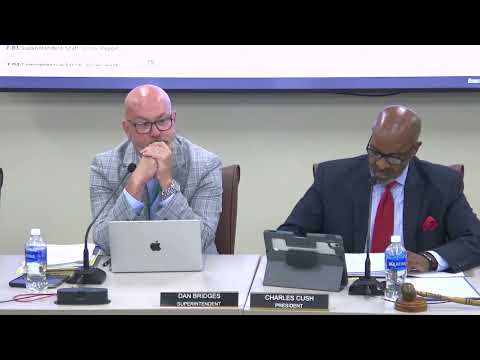
Dr. Patrick Knowlton (the district’s curriculum leader) and Superintendent Dan Bridges defended the SIP process and the school teams’ use of multiple data sources. Knowlton said the SIPs reflect a three‑year continuous improvement process that draws from many formative and summative data points, and he thanked principals and school improvement teams for the work to unpack data and outline improvement actions. Bridges said the district follows Illinois State Board of Education guidance on continuous improvement and that principals use preliminary data before the public data release to inform plans.
Board members who supported approval said the SIPs represent an operational, living plan meant to guide instruction from day one; several members argued waiting until the IAR public release would delay timely interventions. Opponents said SIPs should be explicit about state‑reported proficiency and subgroup gaps.
Vote details: motion to approve the school improvement plans passed on a roll call with Board President Kush and board members McMillan, Kosminski, Blasdick, Walinski and Gerke voting aye; Kelly Black voted nay (recorded roll call in meeting minutes).
Why it matters: SIPs are a primary accountability and planning document for each school; they inform how the district and buildings target interventions, staffing and programmatic priorities to address performance and achievement gaps.
Next steps: administration and principals will continue to refine school improvement work during the school year; board members asked administrators to ensure SIPs and subsequent communications make clear how state‑reported IAR proficiency and growth measures relate to local measures such as MAP and MTSS.