
Lawmakers at Taft event urge expanded oil production, cite SB 237 and pipeline risks
Get AI-powered insights, summaries, and transcripts
Subscribe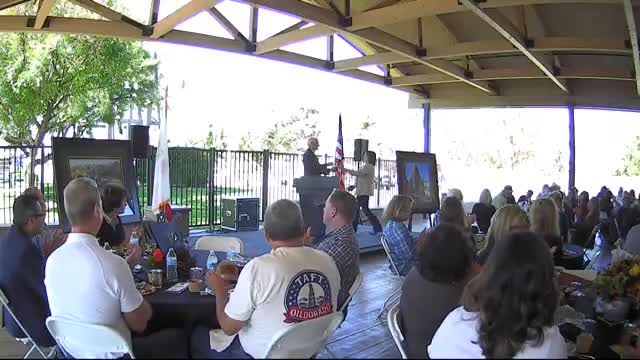
Summary
Senator Shannon Grove and Congressman Vince Fong spoke at a Taft Oil Dorado Days event, praising recently passed SB 237 and urging expanded oil production, pipeline volume certainty and use of carbon-capture enhanced oil recovery to avoid refinery closures and higher fuel costs.
Senator Shannon Grove and Congressman Vince Fong told a Taft Oil Dorado Days audience that state and federal policy changes are needed to shore up California’s oil production and keep refineries and pipelines operating.
Senator Shannon Grove, a California state senator, said her office and local partners pushed for what she described as fixes in Sacramento and cited legislative work on “SB 237.” Grove said, “About 8 months ago, I had a call from the governor's office, and they said, senator, we're in trouble. We realize it, and we're gonna fix this situation.”
Grove and other speakers credited a local campaign of meetings and tours with raising visibility of Kern County energy production to state officials. She described negotiating language changes and said the effort produced what she called a permitting certainty package that “got 2,000 drill permits every year for 10 years,” which she said was intended to provide regulatory certainty for local producers.
The event’s keynote, U.S. Rep. Vince Fong, said California’s energy and national security are linked and blamed state policy for reduced local production. “Energy security is national security,” Fong said. He cited statewide numbers he attributed to the state’s consumption and production, saying California uses about 1,400,000 barrels of oil per day while roughly 400,000 barrels are produced in California and that imported refined product fills the gap.
Fong warned of near-term infrastructure risks, telling the audience that at least two refineries are at risk of closure and that a pipeline feeding Bay Area refineries faces volume uncertainty. He said those closures would remove about 20% of refining capacity and could force California to import more refined gasoline. He urged removing restrictions on certain technologies and policies — including use of carbon for enhanced oil recovery (EOR) and expansion of what he described as “advanced energy recovery” — to increase production and keep pipelines and refineries supplied.
Speakers referenced the offshore Sable platform and pipeline projects as potential sources of additional volume; Fong said federal and state agencies had been engaged on related permits. Both Grove and Fong framed their comments as advocacy for local jobs, economic stability and keeping domestic refining capacity operational.
There were no formal council votes or motions related to the policy remarks recorded in the event transcript. The statements reported here are those of the speakers at the Taft program and describe their priorities and proposals; they do not represent enacted local policy.
The event also included acknowledgments and awards for long-serving local industry figures and officials, presented later in the program.