Get Full Government Meeting Transcripts, Videos, & Alerts Forever!
Get email alerts on the Facilities topic
No spam. Unsubscribe anytime.
Naperville CUSD 203 unveils comprehensive facility assessment and outlines FY26–31 capital improvement priorities
Summary
District staff presented a comprehensive facility assessment and a five‑year capital improvement plan that prioritizes life‑safety projects, HVAC and roof work, and other building upgrades. Administration will ask the board to approve the FY26–27 projects at the Oct. 20 meeting.
The Naperville CUSD 203 Board of Education on Oct. 6 reviewed a newly completed comprehensive facility assessment and a proposed five‑year capital improvement plan that district staff say will guide maintenance and replacements through fiscal 2030–31.
Melanie Brown, director of buildings and grounds, told the board the assessment—aligned to the district’s strategic blueprint and a 10‑year health/life‑safety planning horizon—will be one input among several used to set priorities and budgets. Chuck Freundt, assistant superintendent for leadership and school services, described the assessment as “an important reference” and said staff will use it together with maintenance reports and contractor input to build a roadmap for prioritized work.
Board members heard that the district’s capital improvement planning budget for the current year is $7,000,000 and that the operations and maintenance (O&M) budget for the year is $33,537,750 (education and transportation funds). Brown presented line‑item projects the district says will be ready for board approval on Oct. 20 for FY26–27, including replacement chillers, a cooling tower and original air handling units at Naperville North, selected roof restorations and replacements, playground renovations, replacement of galvanized piping at Prairie and Lincoln (phase work), and relocation/replacement of Kennedy’s generator. She also noted projects earmarked in later years for HVAC modernization and a $2,000,000 placeholder for digital HVAC system upgrades over time.
Many items in the plan come from the recent facility assessment; Brown noted that several were already on prior capital plans. She described the cost estimates in the assessment as “ballpark figures” intended to help the district plan and said formal project costs will be established through the usual bidding and procurement process. The district used White (the firm that produced the assessment and previously did the 2013 assessment) for the study; board members discussed whether and when to seek a third‑party estimator for bid pricing to avoid real or perceived conflicts of interest.
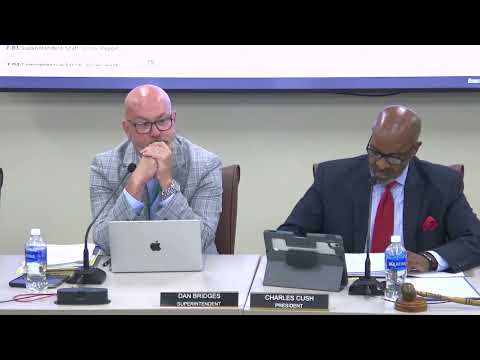
Superintendent Dan Bridges and Brown told the board life‑safety schedules issued to the district set required completion windows for grouped items (some work targeted for completion by Aug. 2028, other groups by May 2029 and March 2030). Brown said the district is aiming to complete the life‑safety work ahead of those deadlines where possible but had built “wiggle room” into the schedule for planning and procurement. She said contractor expenses for projects accelerated into the current fiscal year (e.g., Naperville North auditorium roof and Lincoln boiler replacement) are expected to land “right on budget” for FY25.
Board members pressed for details about cost buffers, procurement independence and how the district decides which items to accelerate. Brown said the assessment’s estimates are based on vendor experience in today’s dollars and that larger projects include contingencies when they move from planning to contract. She also described the district’s internal process: regular building‑level input, monthly operations meetings, and use of architects/engineers for cost estimating. Board members were told the district participates in cooperative purchasing for some large items (for example, recent chiller purchases) to gain competitive pricing.
Why it matters: the plan covers life‑safety deadlines required by state surveys and a set of high‑cost system replacements that affect classroom environment, energy use and long‑term maintenance costs. Administration will ask the board to approve the FY26–27 capital projects at the Oct. 20 meeting; if approved, staff said planning and bidding would follow so work could be scheduled to take advantage of summer construction windows and competitive pricing.
Next steps: the district will bring the FY26–27 project approvals to the Oct. 20 meeting and finalize individual project budgets through standard bid and procurement processes. Brown said some discretionary items (concrete/asphalt/flooring rotations, playgrounds) can be sized up or down depending on available funds.