Get Full Government Meeting Transcripts, Videos, & Alerts Forever!
Get email alerts on the Animal Control topic
No spam. Unsubscribe anytime.
Two Rivers updates animal code: clarifies licensing, waste rules and backyard slaughter standards in R‑1/R‑2 zones
Summary
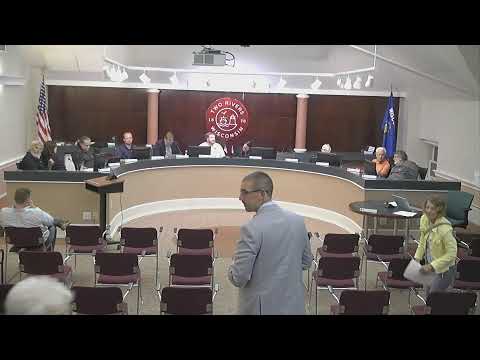
The Two Rivers City Council adopted an update to Chapter 6-5 of the municipal code Oct. 6 that clarifies dog licensing deadlines and late fees, extends waste cleanup rules to all animal waste, and establishes standards governing slaughtering/processing of animals in permitted residential zoning (R‑1 and R‑2) subject to performance standards.
The Two Rivers City Council voted Oct. 6 to amend Chapter 6‑5 of the municipal code to clarify animal‑ownership rules, update licensing and late‑fee language, strengthen animal‑waste requirements and set standards for the on‑site slaughter or processing of animals in specified residential zoning districts.
City staff said the rewrite clarifies existing dog‑licensing requirements including the April 1 deadline (or within 30 days of acquiring a dog) and restates the $250 forfeiture fine for certain violations. The amendment extends animal‑waste rules (previously limited to dog feces) to all animal waste and prohibits accumulation of carcasses or waste on private property.
The ordinance also sets performance standards for slaughtering livestock and processing game within R‑1 and R‑2 residential districts. Under the amendment, residents may lawfully slaughter or process animals (including deer) only where the animal is lawfully kept and the activity occurs in a backyard or an enclosed space that meets the code’s performance standards for noise, humane handling and waste removal. Council and staff said the change intends to protect public health and neighborhood quality of life while allowing limited backyard processing consistent with state law.
Council members asked whether the city clerk remained responsible for licensing administration and whether the code change would affect enforcement staffing; staff answered that administration remains with the clerk’s office and that enforcement uses the standard forfeiture and fee schedule. The council adopted the ordinance on a roll‑call vote (see Actions).
Ending: The ordinance becomes part of the city’s municipal code; enforcement and interpretation will be handled through existing administrative processes.