
Atlantic County fire, EMS leaders renew push for centralized 911 dispatch citing NextGen 911 timeline
Get AI-powered insights, summaries, and transcripts
Subscribe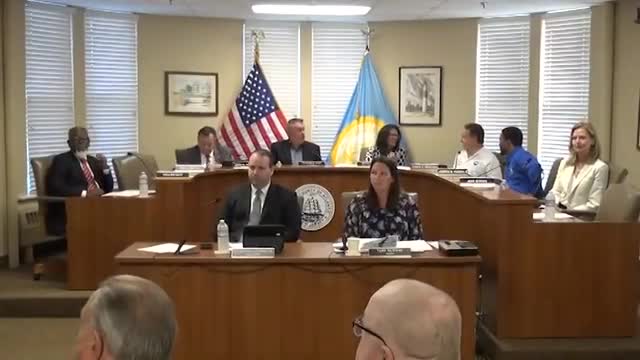
Summary
County fire and EMS leaders urged the Atlantic County Board of Commissioners to pursue a centralized 911 call- and dispatch-center to address fragmented public-safety answering points (PSAPs), improve location accuracy under NextGen 911 and shorten response delays.
Atlantic County fire and EMS leaders told the Board of Commissioners that the county’s 13 separate public-safety answering points (PSAPs) create dangerous delays and that centralizing 911 call taking and dispatch is now urgent because of an impending NextGen 911 technology transition.
At a presentation to the board, Howard Berchtold, a longtime volunteer fire service leader, said Atlantic County remains the only county in New Jersey without a consolidated dispatch system and that fragmentation increases the time it takes to get help to people in life‑threatening situations. “It’s about life, not just property,” Berchtold said.
The presenters described recurring examples where 911 calls were routed to the wrong center, calls dropped or were transferred multiple times and mutual‑aid activations required phone calls to several dispatch centers. Danny Adams, Margate Fire Department chief and a member of the county fire leadership group, said a recent multi‑department response in Longport required separate phone calls from a scene commander to multiple municipalities to activate mutual aid, creating delays in assembling resources.
John Gary, introduced by presenters as the county’s radio and 911 coordinator, walked the board through the technical drivers of the change. He said the state has slated Atlantic County for NextGen 911 implementation in 2026–2027. Under NextGen, newer networks (ESInet/PESInet) and upgraded computer‑aided dispatch (CAD), records management (RMS) and GIS systems will permit precise geolocation of callers and direct digital sharing between centers — but only if PSAPs modernize.
Gary said the state will pay to upgrade connections to the demarcation point and some rack equipment but that individual PSAPs will still face on‑site upgrade costs for internal IT, CAD, RMS, logging recorders and console equipment. The group cited an Adcom feasibility study they said estimated an up‑front countywide capital need in the range of $12 million to $15 million; the presenters also said they expected per‑site upgrade costs on the order of roughly $1.5 million (estimate provided in study materials) if each PSAP upgrades independently.
Speakers pressed the board to consider a county call‑taking center for fire and EMS (their “Plan B”) even if municipal law‑enforcement PSAPs delay joining. Under the presenters’ “Plan A” the county would centralize call taking and dispatch for police, fire and EMS together; under Plan B the county would at minimum take all fire and EMS calls while continuing to transfer or interoperate with municipal police centers.
Presenters and several commissioners discussed benefits including unified CAD‑to‑CAD interoperability, faster nearest‑unit dispatch based on GPS, reduced redundant vendor costs across 13 PSAPs, specialized fire/EMS dispatch training and a redundancy layer for catastrophic events. They also acknowledged challenges: finding suitable space, capital costs, achieving municipal buy‑in and coordinating vendor cutovers during implementation.
Commissioners raised financing and policy questions. Several said they would like a clearer project plan and budgets to present to municipalities and to use public outreach, regional meetings and state lobbying to secure NextGen funding owed to counties. Multiple commissioners referenced concerns about timing, vendor coordination and the need to build trust with law enforcement agencies that have historically run their own dispatch centers.
Berchtold and Adams said they would coordinate community meetings with Adcom and county staff to explain the study’s findings to municipal officials and residents. The presenters urged the board to proceed with planning steps so Atlantic County is not the last to migrate to NextGen 911.