Get Full Government Meeting Transcripts, Videos, & Alerts Forever!
Get email alerts on the Beach Parking topic
No spam. Unsubscribe anytime.
Two Rivers council approves 10-day paid-parking pilot at Nashota Beach for summer 2026
Summary
The Two Rivers City Council approved a 10-day paid-parking pilot at Nashota Beach in 2026, charging $10 per vehicle in two lots to test shifting some beach maintenance costs from taxpayers to nonresident visitors. The pilot will apply only to Lots 2 and 3 and aims to gather data on traffic, origin of visitors and revenue potential.
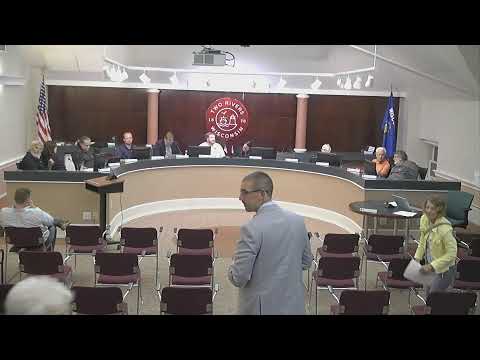
The Two Rivers City Council on Oct. 6 approved a pilot program that will charge $10 per vehicle on 10 selected high‑demand days in 2026 in two parking lots at Nashota Beach. The program applies only to Lots 2 and 3; parking in the remaining beach lots and along Zelatnik Drive will remain free.
City Manager Kyle described the pilot as a low‑risk test to collect data on who uses the beach, how many vehicles are nonresidents and how much revenue a managed user fee could generate. Staff estimated gross revenue of about $20,000 if the lots turn over once per day; anticipated operating costs for staffing and equipment were presented at roughly $4,500, with an additional roughly $1,000 in one‑time equipment (handheld credit-card readers), leaving a preliminary net projection near $14,000–$15,000 if the pilot performs as estimated.
Council and staff emphasized the pilot is data-gathering only. City Attorney (unnamed) advised that charging different rates for residents and nonresidents is legally sensitive and must be balanced against the degree to which residents already pay for services through property taxes. "We would caution the council to be careful about adopting something where we say charge nonresidents $20 a day and residents $0 a day," the attorney said, explaining courts apply an equity analysis in comparable cases.
The program will be staffed by seasonal attendants or community organizations; staff suggested collecting fees on the way out and exploring options such as daily tags, seasonal passes and resident discounts in future years if the pilot shows merit. The council directed staff to select the 10 pilot days in advance of May 18, 2026, and to report back with operational details and performance metrics.
Public comment at the meeting was strongly engaged. Many residents said they opposed paid parking, citing potential displacement of vehicles into neighborhood streets, loss of beach character and added cost for residents on fixed incomes. Several attendees urged instead addressing tourist impacts through room-tax allocations or encouraging visitors to patronize downtown businesses. Others supported testing the idea to reduce pressure on the general fund.
The motion to approve the pilot (10 days) passed by roll call vote; recorded votes are below. The council asked staff to monitor traffic impacts, number of complaints, occupancy rates in the charged lots and origin of vehicles (resident v. nonresident) using available camera and accounting tools.
Ending: City staff will finalize operational details and publicize the selected pilot dates in advance so residents can plan; staff will return to the council with a report after the pilot season.