
Minnesota Power outlines 345 kV Maple River–Cuyuna transmission project, seeks public input on route
Get AI-powered insights, summaries, and transcripts
Sign Up Free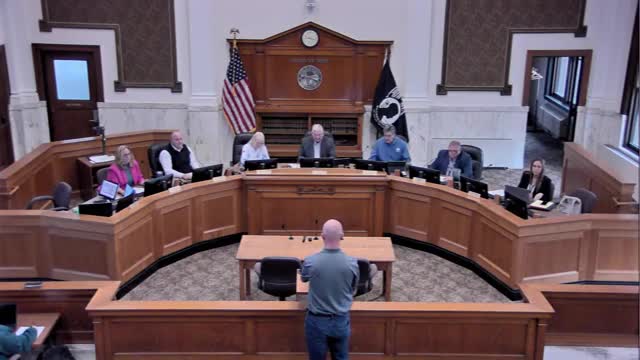
Summary
Minnesota Power representatives told the Crow Wing County Board on Oct. 14 that the company, working with Otter Tail Power and Great River Energy, intends to build a new overhead 345 kilovolt transmission line connecting Otter Tail’s Maple River substation (near Fargo, N.D.) with Minnesota Power’s Cuyuna (Kiyuna) substation in Ironton.
Minnesota Power representatives told the Crow Wing County Board on Oct. 14 that the company, working with Otter Tail Power and Great River Energy, intends to build a new overhead 345 kilovolt transmission line connecting Otter Tail’s Maple River substation (near Fargo, North Dakota) with Minnesota Power’s Cuyuna (Kiyuna) substation in Ironton.
The project will be designed on double‑circuit capable structures, the utility said, with approximately 160 miles of line under study and preliminary routing in development. “The project itself will be jointly owned by Minnesota Power, along with Otter Tail Power and Great River Energy,” Drew Janke, environmental compliance specialist for Minnesota Power, told the board. He said the line would initially operate as a single circuit though both sets of conductors would be installed and jumpered during initial construction.
The company described the project as intended to enhance regional reliability, increase transmission capacity, meet growing demand and improve resiliency during extreme weather. Janke said the line is one of the projects approved in MISO’s December 2024 tranche 2.1. He told commissioners the project will enable larger regional transfers of energy and support an aging transmission system.
Why it matters: Minnesota Power said the line is intended to strengthen the regional grid and move larger blocks of electricity across the Upper Midwest — a priority discussed in the context of increasing intermittent renewable generation and aging infrastructure. Commissioners asked about visual impact, right‑of‑way needs and timing of property owner outreach.
Project details discussed at the meeting
- Voltage and length: the line would be 345 kV and roughly 160 miles in length (company estimate pending final routing). - Structures and right‑of‑way: preferred structures are steel monopoles up to about 180 feet tall; typical new right‑of‑way required is 150 feet. Where the company co‑locates adjacent to existing transmission corridors, it said it can overlap roughly 30 feet, reducing new right‑of‑way to about 120 feet in those spots. - Construction sequence: Minnesota Power said foundations, erection of towers and conductor stringing would follow surveys and geotechnical work; the company also described planned environmental, cultural and wetland surveys and consultations with the Minnesota Department of Natural Resources. - Permits and schedule: the company plans to file a certificate of need with the Minnesota Public Utilities Commission (PUC) by early 2026 to preserve a right‑of‑first‑refusal window, with a subsequent route permit filing expected in mid‑ to late‑2026. Minnesota Power estimated construction could begin in 2029 and said the line could go into service in February 2033.
Public engagement and landowner outreach
Janke said the project team has held an initial round of open houses and will return to the Brainerd area for additional open houses the week after Oct. 14, with specific meetings scheduled in Breezy Point and Baxter. He said land agents will begin face‑to‑face outreach in 2026 when a closer‑to‑final route is available.
County questions and company responses
Commissioners raised concerns about visual impact in lake areas and the amount of new right‑of‑way. Janke acknowledged the lines would be visibly taller than many local lines and said routing aims to balance engineering constraints, landowner concerns and state routing preferences. When a commissioner asked about project cost, the Minnesota Power representative declined to supply a figure at the meeting but said cost estimates are part of the MISO approval documentation and the company would provide a cost estimate in its permit filing.
What comes next
Minnesota Power said it will continue routing work, environmental surveys and landowner engagement ahead of formal PUC filings. The company asked residents to identify local constraints and opportunities at public meetings and on its project website.
Provenance: The board heard the presentation and asked questions during the Oct. 14 meeting. Topic intro: transcript block beginning at 1111.055 (Drew Janke presentation); topic finish: transcript block ending at 1838.4801 (presentation Q&A concluded).