Get Full Government Meeting Transcripts, Videos, & Alerts Forever!
Get email alerts on the Water Street Redevelopment topic
No spam. Unsubscribe anytime.
Experts: Ypsilanti’s Water Street offers riverfront redevelopment potential but faces environmental, financing and timing hurdles
Summary
Panelists at a City of Ypsilanti forum cited riverfront location, available incentives and public-private partnerships as key opportunities for Water Street, while emphasizing PCB/PCE contamination, phased cleanup, regulatory limits and a lengthy, demand-driven buildout.
City of Ypsilanti staff and outside experts on development, banking and environmental law urged a cautious, long-term approach to redeveloping the roughly 30-acre Water Street site, while describing both the property’s potential as riverfront mixed-use land and the environmental, financing and timing constraints that will shape any project.
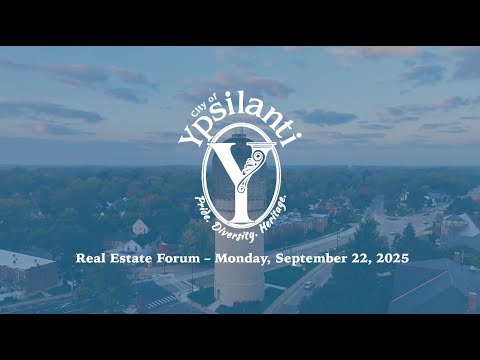
Katie Jones, economic development equity manager and project manager for the Water Street site for the City of Ypsilanti, opened a public panel at Spark East and said the city has been testing and recently begun excavation to remove PCB contamination from a storage-yard “hot spot.” Jones said the city is preparing additional site evaluation work to inform an upcoming request for qualifications (RFQ) process for developers.
Panelists framed the site as attractive for mixed commercial and residential development because of its riverfront, proximity to Michigan Avenue and downtown, and contiguous parcel layout. “It’s an exciting possibility because it’s continuous land in the heart of Downtown Ypsilanti,” said Patrick Tamsen, senior vice president and private banking manager at Bank of Ann Arbor. He urged that the right mix of incentives and financing could bring the project to life.
Michael Caldwell, an environmental attorney and shareholder who leads the environmental practice at Zasmer, said the site’s contamination also creates opportunity because of available incentives and liability-limiting processes in Michigan. “As the environmental lawyer, I’m usually . . . the voice of gloom and doom. But the fact that there are . . . environmental challenges . . . cries out opportunity because of all the incentives that are available,” Caldwell said, citing tools such as tax-increment financing and brownfield programs.
What the city is doing now
City staff and the city’s environmental consultant described active, phased cleanup and investigation. Katie Jones said the city has focused recent efforts on removing PCBs from a storage-yard area and that the city will continue environmental evaluation along the Michigan Avenue frontage to provide data for the RFQ. Jeremy McKellay, an environmental consultant with AKT, said: “Currently removing hazardous levels of PCBs so, costly and, necessary to remove for redevelopment.”
Panelists said the city has used or plans to use a mix of federal, state and local funding tools — including EPA and state cleanup grants and tax-increment financing (TIF) — and that having some public funds to address “hot spots” makes parcels more marketable to developers by reducing their cleanup liability and financial risk.
Environmental process and developer cautions
Speakers described a standard environmental pathway for projects on contaminated land: historical review and a Phase 1 assessment to identify potential hazards, followed by Phase 2 testing (soil borings and delineation) where necessary. Several panelists referenced a Michigan baseline environmental assessment (BEA) or similar procedures that can clarify a purchaser’s liability at the time of acquisition.
Panelists emphasized differences between industrial and residential reuse. Contaminants that produce vapor-intrusion risks (such as certain chlorinated solvents) pose additional constraints for owner-occupied housing; panels noted that state agency (EGLE) guidance and the availability of TIF or other funds to pay for required vapor-mitigation systems have shifted in recent years. One panelist warned that EGLE is “very hesitant” to allow captured TIF revenues to pay for vapor mitigation in owner-occupied parcels because of concerns about long-term maintenance by small homeowner associations.
Financing and development structure
Speakers said a realistic financing plan will be critical. Banks will evaluate the overall capital stack — equity, TIF capture, grant funding and projected revenue — before lending. Patrick Tamsen said Bank of Ann Arbor has seen projects where TIF and brownfield funds were part of the capital stack. Panelists predicted a public–private partnership model and phased development, with the city potentially funding or subsidizing infrastructure (roads, utilities) to reduce upfront costs for private developers.
Timing, demand and master planning
Panelists agreed the project will take many years and should be phased according to market demand and site conditions. “This is a long time project,” one panelist said, adding that the sequence of remediation, incentives and market appetite will drive which uses are feasible and where on the site they are placed.
City next steps and RFQ timeline
Jones and staff said the city intends to provide as much environmental information as feasible to prospective developers. Multiple panelists and staff said the city plans to use a community benefits process to inform the RFQ. Speakers mentioned several, inconsistent timing references during the panel: at different points moderators and staff said an RFQ could be released in “the first quarter of next year,” that an RFQ would be released in 2026, and that the city’s goal was by the end of 2026. Panelists and staff emphasized that the RFQ timeline remains subject to change as additional environmental evaluation and community-engagement work proceed.
What residents and officials should consider
Panelists urged the city to: identify environmental “hot spots” and areal constraints early; assemble a clearinghouse of incentive and funding information to share with developers; adopt a master plan that coordinates Water Street with nearby Michigan Avenue, Depot Town and riverfront assets; and craft an RFQ that attracts experienced teams able to manage environmental remediation, complex financing and public engagement. Several panelists also recommended reserving some public funds to bridge cleanup costs developers may encounter during due diligence.
Bottom line
Panelists described Water Street as a rare, contiguous downtown riverfront redevelopment opportunity with substantial environmental and financing complexity. They urged a phased, demand-driven approach that pairs public remediation and infrastructure work with developer-led construction, and a carefully scoped RFQ and community benefits process to attract teams with environmental, financing and long-term development capacity.