Lee County Board urges state to allow paper tests or fund infrastructure if online EOG/EOC testing is mandated
Loading...
Summary
The board unanimously passed a resolution asking the State Board of Education and General Assembly to give districts the option to administer end‑of‑grade and end‑of‑course tests on paper where appropriate, and to provide dedicated funding for devices and bandwidth if online testing is required statewide.
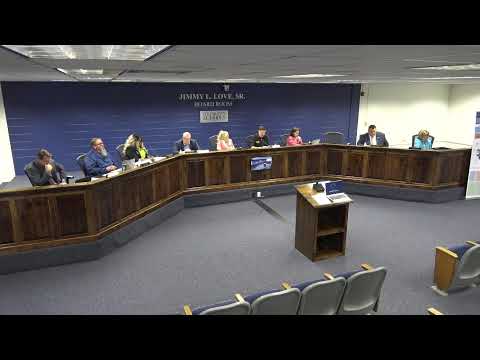
The Lee County Board of Education passed a resolution asking state education leaders and lawmakers to allow local districts the option of paper‑and‑pencil administration for end‑of‑grade (EOG) and end‑of‑course (EOC) tests, or to provide dedicated, sustained funding for technology infrastructure if online testing is mandated.
Alan Rummel, a board member who read the resolution aloud, said the measure responds to widely varying district readiness for online administration — differences in bandwidth, device inventories and staff capacity — and to concerns from educators, families and students about reliability and testing conditions.
The resolution asks three things of state leaders: allow districts to choose paper or online formats based on local capacity and student needs; provide additional state funding for technology infrastructure, including purchase and maintenance of student devices if online testing is required; and ensure equitable, developmentally appropriate testing settings for all students.
A board member moved adoption; the resolution passed by a voice vote. The board directed staff to post the resolution to the district website and to share copies with members of the North Carolina General Assembly, the State Board of Education and the state school‑administrator and school‑board associations.
Ending
Board members said the resolution is intended to prompt state policymakers to weigh logistics and funding before adopting mandatory online testing statewide.