Get Full Government Meeting Transcripts, Videos, & Alerts Forever!
Get email alerts on the Education Equity topic
No spam. Unsubscribe anytime.
North Kingstown DEI advisory committee urges equity-driven revisions to conduct policy, curriculum and facilities plan
Summary
At its Oct. 22 meeting the North Kingstown DEI Advisory Committee reviewed the superintendent's draft goals and recommended prioritizing revisions to the student conduct policy, elementary curriculum representation, an accessibility audit for facilities and follow-up on discipline disproportionality. The committee also noted a low response rate to
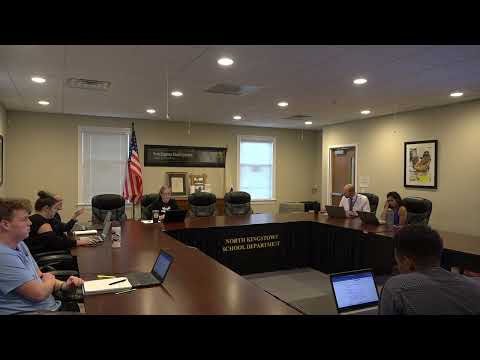
At its Oct. 22 meeting, the North Kingstown Diversity, Equity and Inclusion (DEI) Advisory Committee reviewed the superintendent’s draft district goals and recommended that the district prioritize equity-focused revisions to the student conduct policy, curriculum at the elementary level, and the district’s long-term facilities plan while pursuing accessibility audits and follow-up on disciplinary disproportionality.
The committee — which includes school and district staff, students and community members — discussed the superintendent’s five draft goals, singling out Goal 2, “advancing equity, access and inclusion across all schools,” as the area where the advisory group can make the most direct recommendations. “Promoting equitable outcomes and inclusive practices through data-informed decision making, family engagement, and targeted professional learning” is listed in the superintendent’s draft as Goal 2, the committee noted.
Nut graf: Committee members said changes to the student conduct policy, curriculum materials and school facilities accessibility would affect daily experiences of students from underrepresented groups and could reduce observed disparities in discipline and chronic absenteeism. The advisory group asked the district to carry those recommendations to the School Committee before the superintendent’s goals are finalized.
Most urgent recommendations and context
- Student conduct policy: Committee members said the district’s student conduct policy is punitive and has not been modernized to reflect restorative practices. A member noted the last major revision dates back to earlier in the decade and recommended the committee review and provide input. "The student conduct policy hasn't been revised since 2012," the committee chair summarized when describing why the policy is a priority. Members proposed that a revision process be explicitly viewed through a DEI lens and that the earlier temporary discipline committee’s findings be reexamined for implementation gaps.
- Discipline disproportionality and bullying reporting: Members raised continuing concerns about disproportionate discipline outcomes by race and gender and inconsistent reporting of bullying across schools. The advisory committee discussed official bullying reports showing large discrepancies between some schools and urged a district review of implementation practices and data. "There's a huge discrepancy between the number of documented instances of bullying at one school versus another," a committee member said, adding that the difference likely reflects inconsistent implementation rather than true differences in behavior.
- Curriculum representation and elementary emphasis: Several committee speakers, including student members and instructors, recommended strengthening representation in early-grade curricula so conversations about belonging start before high school. The group discussed using a rubric to assess cultural responsiveness during curriculum selection; one district staff member described a "RISE rubric" used in recent curriculum selection that draws on nationally recognized resources including NYU Steinhardt’s culturally responsive scorecard and work from the Great Lakes equity centers. Committee members urged that when curriculum selection or piloting occurs the DEI rubric be part of the review process.
- Accessibility and facilities: A member who attended a recent meeting of the Governor’s Commission on Disabilities said the commission can provide technical assistance for districts, including accessibility reviews for buildings used as polling places. The committee encouraged the district to incorporate accessibility audits into the long-term facilities plan. "They provide... technical assistance for districts," the member said of the commission and offered to gather more information at the commission’s November meeting.
- Multilingual family engagement and student supports: The group discussed improving communications and outreach to multilingual families and increasing family representation on school improvement teams, consistent with the superintendent’s indicators of success.
- Equity coordinator hire: The committee was briefed on the vacancy in the equity, belonging and engagement coordinator role (the previous coordinator, Sally Davidson, left at the end of the last school year). "The coordinator position has been posted, and we are in the process of setting up interviews," Assistant Superintendent Rob Beznati told the committee. The district said it will onboard the new hire and resume the equity-rollout work when the position is filled.
Student survey findings and limits
District staff presented a summary of the spring student survey results but emphasized the sample size was very small. The presenter said only 12 students completed the survey out of a district population of about 1,374 students, a response rate the committee called too low to generalize broadly. Despite the limited sample, responders repeatedly cited inconsistent discipline practices, peer behavior, and access to supportive resources as factors affecting belonging. The summary noted suggestions from respondents including consistent enforcement of rules, better mental-health supports, and support for LGBTQ+ students such as a GSA.
Committee process and next steps
Members urged prioritization rather than attempting to address the full range of suggested actions immediately. They recommended that the advisory committee: (1) review and offer suggested language for a student-conduct policy revision with restorative elements, (2) request data and a targeted analysis of discipline disproportionality and cross-school reporting discrepancies, (3) ask that curriculum pilot committees adopt the cited DEI rubric during selection and piloting, and (4) pursue an accessibility audit in collaboration with the Governor’s Commission on Disabilities. Committee members asked staff to flag any recommendation the group wanted the superintendent and School Committee to consider before the superintendent’s goals are finalized.
Votes and formal actions
The committee approved the May meeting minutes after a motion by Assistant Superintendent Rob Beznati and a second from Shivali Finkelstein. At the end of the meeting Shivali Finkelstein moved to adjourn; the motion was seconded and the meeting was closed.
Ending: The committee set a tentative next meeting for Nov. 19 and said it will reconvene to prioritize tasks and to prepare any recommendations to the School Committee related to the superintendent’s goals.