Get Full Government Meeting Transcripts, Videos, & Alerts Forever!
Get email alerts on the Land Use Development topic
No spam. Unsubscribe anytime.
Residents raise light, noise and legal concerns over approved Farmington data-center project; city attorney outlines limits of moratorium
Summary
Residents told the Farmington City Council that construction lighting and noise from an approved data-center project could harm nearby homeowners and that litigation is already underway. The city attorney said a moratorium would not apply to an already-approved project and that the consolidated court date is likely to be delayed.
Several residents told the Farmington City Council on Oct. 6 that construction lighting, continuous noise and related impacts from an approved data-center project will disrupt nearby homes for years and could generate additional lawsuits.
Jeff Schottler, who said he lives at 22420 Calico Court, told the council that "there are currently no statutes or administrative rules that apply to exterior lighting on construction sites" and that the city's existing "exterior lighting ordinance ... does not apply specifically to construction activity." He said construction could last "3 to 5 years" and called for the council to adopt guardrails addressing light and sound.
Why it matters: Nearby residents described the possible effects as ongoing health and quality-of-life problems — including sleep disruption and anxiety — if 24/7 construction lighting and high construction noise are allowed without limits. Speakers urged the city to study technical differences among data centers, consider a pause while rules are refined, and to engage more directly with neighbors.
Resident Nate Ryan urged the council to consider a moratorium, saying it would give officials time to study other sites and impacts and to learn from case studies such as the Rosemount and Meta sites. "Why not think about a moratorium?" he asked the council. Ryan also said federal claims over "use and enjoyment of your home" could make future litigation more costly for the city.
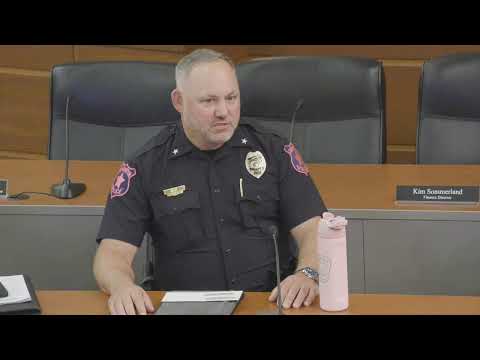
City Attorney Amy McCauley responded during the council roundtable. She said the lawsuits related to the project have been consolidated and that the court date set for January may be pushed because motions remain under advisement. McCauley told the council, "A moratorium ... would not apply to an application that's already been approved, even if it had only been given preliminary approval," and confirmed the city cannot guarantee the outcome of pending litigation.
What was and was not decided: The council did not take formal action on changes to construction lighting or noise standards at the meeting. City staff and the attorney indicated they can provide more legal and technical information on request, and residents said they are pursuing sound and light monitoring at private expense to document baseline conditions.
Details and clarifications: Schottler cited the city's exterior lighting ordinance but said it does not cover construction; he also cited "NAC 4" and said that while it includes "under construction" uses, "there are no noise level standards established for NAC 4." Schottler estimated the construction period could be "3 to 5 years." McCauley said the two lawsuits have been consolidated by the court, discovery is stayed by stipulation of parties, and written discovery is being addressed by staff and litigation counsel.
Next steps: No ordinance or moratorium was adopted at the meeting. The city attorney said staff can follow up with councilmembers on legal questions. Residents indicated they will continue to press the council and may pursue additional legal remedies.