Get Full Government Meeting Transcripts, Videos, & Alerts Forever!
Get email alerts on the Immigration Resources topic
No spam. Unsubscribe anytime.
Fillmore forum connects immigrant residents with legal, financial and worker-rights resources
Summary
City officials and local nonprofits gathered at a Fillmore forum to outline legal rights, emergency supports and workforce programs for immigrant residents; presenters emphasized privacy protections, how to prepare family emergency plans and where to access rapid legal help.
Fillmore City hosted a community forum on immigration resources featuring city officials and nonprofit service providers who outlined legal rights, emergency financial supports and worker-protection services available to immigrant residents.
City of Fillmore staff opened the forum, and Mayor Cristina Villaseñor thanked attendees and framed the event as part of the city’s outreach to immigrant families. Mayor Cristina Villaseñor said the workshop aimed to “inform and empower our immigrant families with vital resources.” City officials reiterated that the city and its contracted police services do not share resident information with U.S. Immigration and Customs Enforcement (ICE).
Immigration attorney Vanessa Frank of Mariposa Advocacy explained basic immigration categories and the limited pathways to lawful status, and she described practical steps residents can take if they are detained. Frank noted an upcoming change to the naturalization test pool and passing rules, saying the question pool would expand from 100 to 128 items and applicants would need to answer 12 questions correctly instead of six. She advised minimizing information given to officers, asking for a phone call and contacting a trusted person so counsel can be reached. Frank also recommended pre-filling a Form G-28 (Notice of Entry of Appearance as Attorney) so an attorney can be appointed quickly if needed.
Service providers described rapid-response and ongoing supports. Friends of Fieldworkers — represented by director Martita Martínez Bravo — said the small nonprofit (two paid staff and more than 200 volunteers) has distributed emergency cash, food and supplies during recent immigration enforcement actions. Martinez Bravo said Friends created an emergency fund that provided $500 starter payments to families impacted by recent raids; she said the organization has served roughly 300 of about 360 families affected in that operation. She gave a local phone number (805-399-0030) for follow-up.
Project MICOP (represented by Juvenal) and the United Farm Workers (represented by Román, national vice president) emphasized worker-rights outreach. MICOP described a labor-justice program that helps farmworkers recover unpaid wages, secure safe working conditions and access benefits; MICOP staff provided contact numbers for local help. Román said the UFW is pressing for workplace-safety measures — including hotter-weather protections for field workers — and urged families to create “family plans” (documents listing emergency contacts, keys, powers of attorney and pre‑signed G-28 forms). He also mentioned a community event to help residents complete family-preparedness documents on Oct. 25.
Other local nonprofits and agencies described complementary services: Poder Popular (Santa Paula) is distributing food, baby supplies and modest rental assistance; the county 2-1-1 helpline (Ventura County) provides confidential referrals to the programs discussed and can be reached by phone at 2-1-1 or text at 898-211; and the Ventura County Workforce Development Board’s “Campos de Oportunidad” program offers job search help, English classes and up to $5,000 for short vocational training for qualifying low-income residents or family members with work authorization.
Speakers repeatedly emphasized privacy and confidentiality. Friends of Fieldworkers and Poder Popular both said they do not share client information without consent and that some local emergency assistance is funded by private donors rather than federal sources. Presenters urged residents to use 2-1-1, the rapid-response hotline cited by Vanessa Frank (805-870-8855) and local nonprofit contacts to connect with legal and social supports.
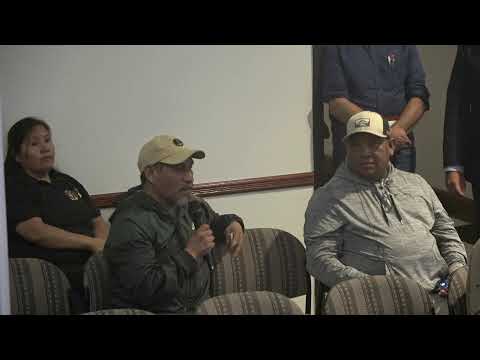
The forum included question-and-answer exchanges in which attendees asked how to behave during an enforcement encounter, how to obtain emergency legal help, where to get diapers and formula, and how often nonprofits visit farm worksites. Presenters recommended remaining calm during enforcement encounters, giving only a name and requesting a phone call, and using family plans and prefilled legal forms to speed representation.
The event concluded with city staff thanking presenters and attendees. No formal actions, votes or city policy changes were taken at the forum; it was an informational outreach session connecting residents to legal, labor and emergency services.