Get Full Government Meeting Transcripts, Videos, & Alerts Forever!
Get email alerts on the Poverty Exemption topic
No spam. Unsubscribe anytime.
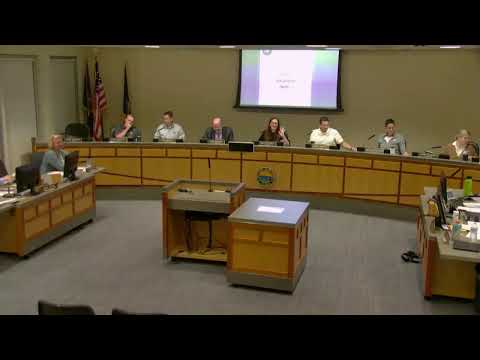
East Grand Rapids commissioners weigh raising poverty-exemption limits, remove special-circumstances clause
Summary
Commissioners opened detailed debate on updating the city's property tax poverty-exemption policy, including doubling income thresholds, excluding vehicles from asset tests and removing a 'special circumstances' provision at the direction of the state. Staff will return with a draft for action by the second meeting in November.
East Grand Rapids finance staff and residents debated proposed changes to the city's property tax poverty-exemption policy, including higher income and asset thresholds and elimination of a 'special circumstances' clause that the state has advised be removed.
Finance Director Sharla Seath told the commission the city has been reviewing peer communities and state guidance and said staff is seeking direction on how high to set income and asset limits and whether to keep a sliding-scale exemption. Assessor Stacy Hayes joined staff to answer technical questions about assets and application requirements.
The discussion matters because the city must set its policy before the Board of Review period; staff said the commission needs to finalize changes by the second meeting in November for a 2026 start if it chooses to amend rules now. Seath said the state recommended removing the special-circumstances section because it is open to inconsistent interpretation and creates audit risk.
Commissioners and residents pressed staff on several details: how many additional households would qualify under higher thresholds, whether vehicles should count as assets, and whether the city can obtain tax-return verification directly from the IRS. Seath said staff had surveyed other communities and that Ann Arbor reported about 20 applicants in a typical year while Birmingham had two or three; staff also told the commission that, under current rules, the city does not have anyone qualifying today but estimated "possibly 2 people" could qualify if the thresholds were raised.
Several commissioners urged more generous limits. "Let's at least double the asset threshold," one commissioner said during the discussion, arguing that current asset limits are too low for residents to manage emergency expenses. Several commissioners also supported excluding a personal vehicle from the assets test to avoid forcing homeowners to liquidate necessary property.
Residents who spoke at public comment urged the city to reduce paperwork and rely on federal tax forms rather than intrusive budget worksheets. Catherine Kriegbaum, who described living on Social Security disability income, told the commission: "My income for the past 13 years is from Social Security disability insurance at $22,000...the percentage of my income going toward property taxes is causing financial hardship." Mary Lee Fisher, a six-year member of the Board of Review, recommended doubling the federal minimum poverty guideline amounts, exempting vehicles from the asset limit and requiring a signed IRS Form 4506 to verify returns.
Staff also described verification options: Seath said the IRS provides a Taxpayer Authorization (Form 4506) that would allow the city to obtain returns for verification, and that the assessor already requests tax documents and bank statements as part of applications. Commissioners asked staff to research whether the city could pull tax information directly from the IRS electronically, as FAFSA does, to reduce the risk of misreported tax returns.
The commission did not adopt a final policy at the meeting. Instead, members asked staff to return with a revised policy that incorporates the discussion'including options for doubling the income test, raising asset thresholds and excluding vehicles'so the body can act at a subsequent meeting in November.
Ending: Staff will prepare a draft ordinance amendment and supporting materials reflecting the commission's preferences, including sample threshold options and estimates of likely applicant counts, for formal action in November. The city noted the state tax commission audits poverty-exemption decisions and has recently tightened guidance on consistent application.