
Great Neck presenters offer K–12 media literacy framework with 22 competencies
Get AI-powered insights, summaries, and transcripts
Subscribe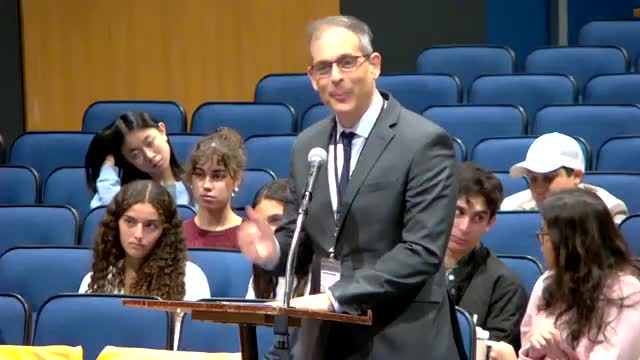
Summary
District staff Maya Lerner and Frank Bloch presented a proposed K–12 media literacy framework to the Great Neck Public Schools Board of Education outlining 22 competencies across five domains and recommending an inventory, pilot and phased professional learning.
Maya Lerner and Frank Bloch, department chairs leading the district—s media literacy work, presented a K–12 framework to the Great Neck Public Schools Board of Education that lays out 22 competencies across five domains and recommends an inventory and pilot implementation.
The proposal, introduced by Dr. Bossert and delivered by the framework authors, urges the district to take an inventory of existing media-literacy instruction, pilot the framework, and provide targeted, scaffolded professional learning rather than one-off trainings.
Lerner and Bloch said the framework groups competencies into evaluating information; content creation and engagement; personal and social dimensions; civic and societal impact; and algorithm/AI awareness. "We built out something that we believe to be more comprehensive and more vertically aligned and more cross disciplinary than anything that we were able to see," Lerner said. Bloch added that the framework includes developmentally appropriate progressions: "spark" for grades 6–8, "expand" for grades 9–10, and "advance" for grades 11–12.
The presenters described the research base they used (Stanford Education Group, Stony Brook, AASL News Literacy Project, UNESCO, Common Sense Media) and argued the work should be cross-curricular: "Every subject offers opportunities to help students think critically about the media shaping their world," Lerner said. They recommended starting with an inventory to identify what teachers are already doing and who is leading the work, then piloting implementation with tailored professional learning.
Dr. Bossert framed the presentation as part of the district—s larger effort to align practice across buildings and praised the authors— work. "Our district has made meaningful progress in supporting media literacy," he said, noting past steps such as summer institutes, new electives and reserved superintendent conference time.
The presentation included a proposed toolkit of resources and a 50-state scan referenced by the presenters; they said most states are "getting started or have barely began this work," and that standards can quickly become outdated because AI and platforms evolve rapidly. The presenters emphasized flexibility: the framework is intended as a living document that can be updated as technology and research change.
Next steps discussed by presenters included conducting an inventory across grades and buildings, piloting the framework, and offering differentiated, ongoing professional learning for teachers. The board did not take a formal vote on the framework during the meeting; presenters said a report and implementation suggestions would follow.
The presentation prompted several public questions later in the meeting about community communication and whether the same curriculum would be offered across the district; callers in open time asked for clarity on timeline, consistency between North and South schools, and public accountability for the project. The district representatives said they plan follow-up reporting after upcoming professional learning days.