Get Full Government Meeting Transcripts, Videos, & Alerts Forever!
Get email alerts on the Sezp Transition topic
No spam. Unsubscribe anytime.
Springfield prepares to resume management of eight Empowerment Zone schools; Commerce and RISE flagged for extra attention
Summary
SPRINGFIELD — Springfield Public Schools officials and the school committee spent the bulk of a recent meeting laying out plans to transition eight schools run under the Springfield Empowerment Zone Partnership back to district control on July 1, 2026.
SPRINGFIELD — Springfield Public Schools officials and the school committee spent the bulk of a recent meeting laying out plans to transition eight schools run under the Springfield Empowerment Zone Partnership back to district control on July 1, 2026.
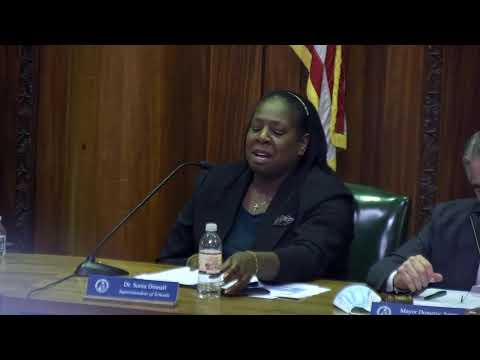
The transition, Superintendent Dr. Denault told the committee, will be led operationally by former executive principal Mike Calvin (referred to in the meeting as Michael Calvin), who the superintendent said is ‘‘leading the charge and guiding the process.” The administration said the move requires new memoranda of understanding with the teachers’ union and careful alignment of budgets, staffing and school-level autonomies the zone used.
Why it matters: several schools being returned under the SEZP model — notably the High School of Commerce and RISE — post performance metrics that place them at or below the state’s 10th percentile threshold used by the Department of Elementary and Secondary Education (DESE). Committee members and district staff said Commerce and RISE will need targeted plans and close oversight to avoid service disruptions for students.
District and zone officials described the state of play and next steps. Calvin and district staff emphasized two elements that were central to the zone’s previous results: a teacher compensation and time contract tied to additional planning and a separate SEZP-SPS memorandum of understanding that allowed different budgeting and staffing approaches. Calvin recommended using the innovation-school (Renaissance) model as a framework for how schools and the district could craft prospectuses and governance arrangements during the transition.
Calvin said the empowerment zone model’s teacher contract and the SEZP MOU ‘‘have driven success’’ in schools that improved, and he recommended a screening committee — including a school committee designee, a union representative and the superintendent — to vet and approve school prospectuses if the committee pursues the innovation approach.
But several committee members warned that the transition will be complex and flagged unresolved issues:
- Data and accountability: Committee member Joseph Collins pressed district officials on how DESE aggregates Commerce’s data into a single school metric. Collins said that aggregating multiple programs into one Commerce number can obscure the differing performance of programs in the same building. District staff replied that DESE currently treats Commerce as one school for accountability purposes.
- High special-education concentration: District officials told the committee Commerce has about 280 students, roughly 55% of whom are enrolled on Individualized Education Programs; of those, officials said about 77% are in high‑needs, low‑incidence programs. RISE was cited as having about 70 students. Those concentrations, district staff said, raise operational and instructional challenges that require staffing and programmatic solutions as the schools rejoin the district.
- Funding and philanthropy: Board members noted the zone previously attracted philanthropic dollars from outside the city. Some committee members expressed caution about relying on outside fundraising and urged district efforts to secure local and state support. Vice Chair Latonya Naylor said the district would need to negotiate access to continuing philanthropic relationships while ensuring transparency.
What’s next: Calvin urged quick work to negotiate the MOU with the union and recommended the committee appoint a member to a screening committee to evaluate school prospectuses under the innovation-style model. Superintendent Dr. Denault and Calvin said staff will continue building transition plans and holding school-level meetings to hear teachers and families.
Quotes from the meeting:
"Eight schools are coming back to us 07/01/2026, and Michael Calvin is leading the charge and guiding the process," Superintendent Dr. Denault said during the presentation.
"The contract the teachers have under SEZP and the MOU with SPS — those two things have driven success," Michael Calvin said.
Concerns from committee members were candid: "I just don't think we get the robust discussion that we get from being in person," committee member Joseph Collins said during an earlier conversation about meeting rules, and he later urged careful scrutiny of Commerce’s aggregated data.
Community impact and next steps: The administration framed the transition as an opportunity to preserve successful activities from the zone — early college work, expanded professional time for teachers and specialized programs — while returning governance to the district. District staff said they will continue community and staff outreach, negotiate a union MOU to preserve needed autonomies where justified, and bring specific transition items back to committee votes before July 2026.
Ending: District and committee leaders said more details, including any formal prospectus for innovation status and the proposed MOU language, will come to subcommittees and then to the full school committee for review before the July 2026 transition date.