Get Full Government Meeting Transcripts, Videos, & Alerts Forever!
Get email alerts on the Public Safety Pedestrian Safety topic
No spam. Unsubscribe anytime.
Council adopts ordinance regulating dangerous pedestrian conduct in city rights-of-way
Summary
Council members adopted an ordinance creating rules to address dangerous pedestrian conduct and public-right-of-way safety; proponents said lack of pedestrian infrastructure and enforcement has created hazards on high-volume corridors.
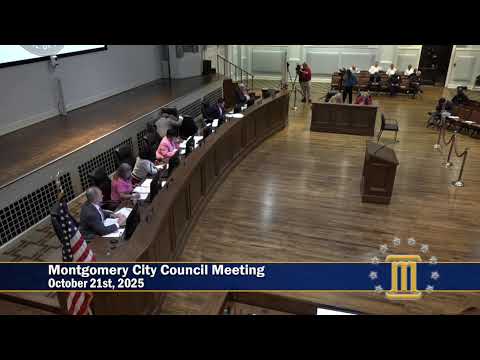
The Montgomery City Council unanimously adopted an ordinance (agenda item 10) creating a new Article to regulate dangerous pedestrian conduct in public rights-of-way, following public testimony about safety and nuisance concerns.
Angela Exford, president of the South Johnson Neighborhood Association, urged councilors to address people standing in medians, reports of indecent exposure at intersections, and the safety risks to both pedestrians and motorists. "We have lost too many lives standing in those medians," Exford said while asking for more enforcement and infrastructure improvements.
Council members described the ordinance as a tool to reduce hazardous pedestrian activity and to encourage safer crossing infrastructure on major boulevards such as Eastern Boulevard. One councilor noted the state controls some of the major medians and that safer pedestrian crossings will require interagency coordination.
Councilors also said they had received support from police leadership; the item passed unanimously and the ordinance will move to administrative implementation through police and code-enforcement channels.
City staff and councilors emphasized the need for both enforcement and infrastructure changes to reduce unsafe pedestrian behavior, and they directed staff to coordinate with state and other agencies when medians or rights-of-way fall under nonlocal jurisdiction.