
Public hearing draws broad opposition to proposed SR 89 widening; residents call for separating wastewater fixes from road expansion
Get AI-powered insights, summaries, and transcripts
Subscribe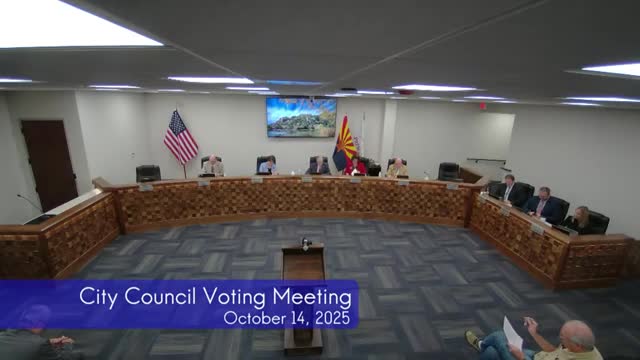
Summary
A lengthy Oct. 14 public hearing on the SR 89 effluent and roadway project drew dozens of residents who urged the council to pause widening plans, pressing instead to repair failing effluent infrastructure and provide missing design reports and independent reviews.
Dozens of residents and civic groups urged the Prescott City Council to delay decisions on widening State Route 89 through the Granite Dells, arguing that the city has not provided complete design reports, that wastewater centralization plans were not transparent, and that the traffic and cost data are insufficient.
The hearing was the second held under Resolution 2024-? (the citizen-sponsored procedural resolution cited by commenters) and followed an open house the city held Oct. 1. Public commenters repeatedly said the city released 15% design drawings without the companion design-report narrative and traffic-data analysis that the resolution required. Several speakers said the city promised the full 15% design report but had not provided it to the public before the comment period.
Kathy Rusing urged council to remove the agenda item from the Nov. 18 vote because “there’s so many questions about this project” and said the effluent pipeline design, the so-called centralization project and the pipe sizing decisions were not clear to residents. Multiple speakers said an effluent line leak Oct. 11 demonstrates urgency to fix underground infrastructure and argued that road widening debates should be decoupled from required sewer repairs.
Several technical and civic speakers highlighted data concerns. Carter LaBarge said the project’s crash statistics are concentrated in existing roundabouts and warned that adding more roundabouts could increase the number of crashes; he urged “smart street lights” and prioritized pipe repairs. Traffic and planning professionals and engaged citizens called for an origin-destination analysis (cellphone-based trip pattern study) and criticized reliance on single-day counts. One commenter, representing an independent review of the public comments, summarized 429 submissions and said 62% opposed widening, 31% supported it and 7% were neutral.
Multiple commenters called for an independent, arms-length review of costs and a full, all-in estimate before council commits to a construction manager at-risk (CMAR) procurement. One speaker said city cost estimates appear to omit roundabout-specific items, rock-removal volumes and other line items that could materially raise construction costs.
Supporters of proceeding now argued that the centralization program and the effluent/wastewater pipelines must move forward, and one commenter urged that delaying the road work risks double-digging if the city must later excavate a widened roadway to access the same underground utilities. Others countered that decoupling the sewer/effluent repairs from the roadway widening would allow the urgent pipe work to proceed while preserving options for future road design.
City staff clarified this meeting was a public hearing; no council vote was taken on a roadway option at this session. Council members asked public-works staff to summarize comments and requested that outstanding reports and the 15% design report be made available to the council and public before any future votes. Several speakers also raised the question whether some elements could trigger the city charter’s Proposition 401 spending limit and urged an independent financial/legal review to determine whether voter approval would be required for the larger program of centralization.