Get Full Government Meeting Transcripts, Videos, & Alerts Forever!
Get email alerts on the School Improvement topic
No spam. Unsubscribe anytime.
Principals present school improvement plans emphasizing curriculum rollout, attendance and social‑emotional learning
Summary
Principals from across the Dennis‑Yarmouth district presented 2025–26 school improvement plans that emphasize implementation of new curriculum, improved tier‑1 instruction, attendance strategies and a new K‑12 social‑emotional curriculum (Wayfinder).
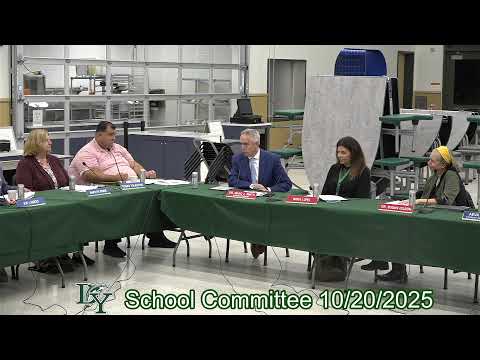
Principals from Dennis‑Yarmouth Regional School District presented school improvement plans for the 2025–26 year at the Oct. 20 school committee meeting, outlining priorities that include rollout of new curriculum materials, measures to boost attendance, and social‑emotional learning implementation.
Presenters from elementary, middle and high schools described aligned goals: support for teachers through professional learning communities (PLCs), frequent walkthroughs to monitor priority standards, focused interventions for students who need extra support, and attention to student attendance.
At the elementary level, principals described use of the HMH curriculum pilots, “What I Need” intervention blocks and a focus on early numeracy and fractions. Principals said they will continue using PLCs, frequent walkthroughs and data cycles to adjust instruction. Several schools reported building attendance teams that send daily notifications and call families when students are absent.
Middle and high school principals emphasized student ownership of learning through student‑led conferences, expanded flex blocks (branded variously as “wind block” or “Dolphin Time”) to provide both intervention and enrichment, and the district’s adoption of Wayfinder as the K‑12 social‑emotional curriculum. The middle school noted use of LiveSchool to track positive behavior points; the high school described a PowerSchool plugin to document non‑disciplinary interventions.
High school principal Kendra Bennett outlined a five‑year school improvement plan with objectives that include higher‑quality tier‑1 instruction, NEASC decennial follow‑up work, enhanced leadership meeting structures, improvements to Dolphin Time and expanded career pathway work.
Committee members asked about screening tools and timelines. A screening tool called the Social, Emotional, Academic, Behavior screener (SABR) was described as a grades‑2 through‑8 risk screener that families can opt out of; principals said they are using the tool to get early supports to students who need them. Several principals asked for continued district‑level supports for curriculum implementation and consistent PLC practice.
No formal votes were taken; the presentations were received for committee review.