Get Full Government Meeting Transcripts, Videos, & Alerts Forever!
Get email alerts on the Mental Health Court topic
No spam. Unsubscribe anytime.
Whatcom County mental health court credited with lower recidivism, stable housing for graduates
Summary
Presenters described Whatcom County's mental health court as a voluntary, five-phase program that combines judicial oversight, behavioral-health probation, case management and community services; presenters said graduates show large reductions in legal involvement and improved housing and employment outcomes.
Speakers in a Whatcom County presentation described the county's mental health court as a voluntary program that routes people with criminal charges tied to untreated mental illness into coordinated treatment and supervision rather than the standard criminal docket.
Program staff said the court uses a five-phase model that connects participants to treatment, case management, probation support and services such as housing assistance and vocational help, and that most participants are supervised for about two years while they complete the phases.
The program's goal, presenters said, is to address the underlying behavioral health challenges that led to criminal charges so participants do not return to the legal system. "Mental health court reduces recidivism and increases community safety by addressing the untreated mental and behavioral health challenges that led to problematic and illegal behavior," one program staff member said.
A program participant described personal experience with homelessness, addiction and repeated criminal charges before entering the court: "I tried to get a a cop to shoot me because I was so done with living," the participant said, and later added that the program gave a path to stability, including completing Social Security paperwork and getting housing.
Program staff outlined how referrals are made: a defense attorney coordinates with the prosecuting attorney to refer an individual whose charges appear to be linked to untreated mental health needs. Staff screens referred individuals, develops a wraparound care plan and enrolls those who choose the program.
Staff described the team that supports each participant as multidisciplinary: "We have a judge, a prosecutor, a defense attorney, a specialized behavioral health probation officer, case manager, behavioral health specialist, clinician," one staff member said, adding these team members work together to keep participants accountable while addressing root causes.
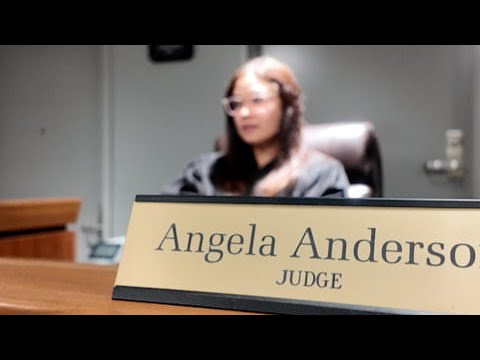
The judge described the court's hands-on supervision: "My role as a judge is to just sort of supervise how they proceed through those phases," the judge said, noting that participants meet with the court regularly and receive certificates at the end of each phase. The judge and staff said the program is not a "get out of jail free card" and that there are therapeutic responses to substance use as well as the possibility of sanctions, work crew or jail if participants do not engage with required services for an extended time.
Program staff provided outcome figures for participants: they said 90 percent of program participants who were in the workforce had improved employment status upon graduation, that since 2021 all program graduates exited in stable housing, and that participants had a 90.4 percent decrease in legal-system involvement one year after graduation. Staff attributed improved outcomes to coordinated community partners and wraparound services.
Speakers emphasized that participation is voluntary and intended for people who acknowledge their need for treatment and commit to the program's requirements, including frequent court appearances, probation supervision and coordination with treatment providers. A staff member described individualized support, including meeting clients in community settings when needed to connect them with services.
The presentation closed with an invitation for more information: "To learn more about mental health court, visit whatcomcounty.us/mhc," a staff member said.
Sources: transcript of Whatcom County mental health court presentation; program staff statements and participant testimony in that presentation.