Get Full Government Meeting Transcripts, Videos, & Alerts Forever!
Get email alerts on the Economic Development topic
No spam. Unsubscribe anytime.
Public hearing on proposed Lodi Winery Business Improvement District draws divided winery community
Summary
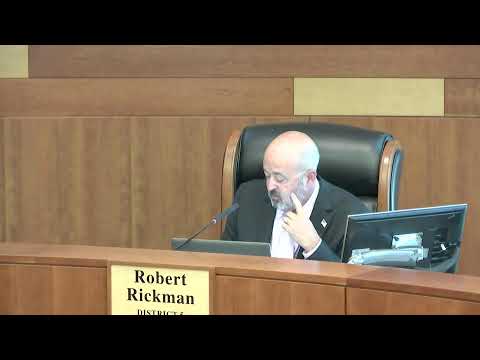
San Joaquin County supervisors held a public meeting Oct. 7 to take testimony on a proposed Lodi Winery Business Improvement District that would add a 1.5% assessment on taxable on-site wine sales at participating Lodi-area tasting rooms.
San Joaquin County supervisors held a public meeting Oct. 7 to take testimony on a proposed Lodi Winery Business Improvement District that would add a 1.5% assessment on taxable on-site wine sales at participating Lodi-area tasting rooms, county staff and proponents said.
The BID proposal, presented by Stuart Spencer of the Lodi Wine Grape Commission and Gina Reed of Civitas, is the second of three county hearings required under Government Code Section 54954.6. The proponents said funds raised would be governed by a new entity composed of small, medium and large winery representatives and Visit Lodi members, and would be used for shared promotion and visitor marketing.
Proponents argued the assessment would expand the region’s customer base and generate economic benefit across San Joaquin County. “This effort is really about promoting the wineries in our region and bringing more people to Lodi,” said Stuart Spencer, who said San Joaquin County leads the state in acres planted to wine grapes and that direct-to-consumer sales are concentrated in California. Natalie Scotto, a tasting-room operator, told the board she initially distrusted regional marketing groups but changed her view after participating in local meetings: “Passing this BID gives us that chance. It gives us a shot to move forward. To act, to try, to invest in ourselves and each other.”
Opponents, largely owners of small or independent tasting rooms, said the assessment would disproportionately affect local customers and smaller vintners who rely on repeat local buyers. Rochelle Spoletta of Intercoastal Wine Company said the BID would “force our local consumers” to pay a marketing assessment and that the largest producers’ weighted votes determined the petition drive: “This is very large discrimination against the smaller wineries who have no say in this matter.” Tom Hoffman, owner of Heritage Oak Winery, urged stronger governance protections and accountability for funds, though he said a stable funding mechanism could help winery representation.
County staff confirmed the formation process has included outreach, a petition drive and coordination with the cities and Sacramento County. Kelly Cabelo, senior deputy county administrator, said the meeting was procedural and no board action was required Oct. 7. Gina Reed said collections would not start until Jan. 1 following final approval; the final board hearing is scheduled for Nov. 18.
Speakers on both sides asked questions about boundaries (Sacramento County wineries may be excluded), weighted petition thresholds and whether tasting-room retail sales — not production or out-of-area sales — would be assessed. Reed said eliminating Sacramento County wineries from the district would reduce the budget somewhat but could make service delivery more efficient for the core Lodi area. City approval is required; staff said a “no” vote by the City of Lodi would require starting the boundary and petition calculations over.
The county did not take action at the Oct. 7 meeting. County staff said the matter will return to the Board of Supervisors on Nov. 18 for the final hearing, at which the board may adopt a management district plan and form the BID if there is not a majority protest by businesses.
The hearing attracted two dozen in-person speakers representing large and small wineries, regional marketing groups and both trade and independent operators. Board members asked staff to continue outreach and asked Park/Visit Lodi representatives to engage with smaller tasting rooms to address concerns about governance, transparency and impacts on local consumers.
Upcoming steps: the Nov. 18 final hearing; if the board approves the management district plan and no majority protest is filed, collections would begin Jan. 1. If any city affected (including Lodi) votes not to consent, staff said the petition boundaries and weighted approvals must be recalculated.
Ending
The board closed the Oct. 7 public meeting on the Lodi Winery BID and scheduled the final formation hearing for Nov. 18. County staff and the Lodi Wine Grape Commission were directed to continue outreach and to return with any boundary or petition amendments as needed.