
Ohio River Way highlights river recreation, national water-trail designation and regional planning grant
Get AI-powered insights, summaries, and transcripts
Subscribe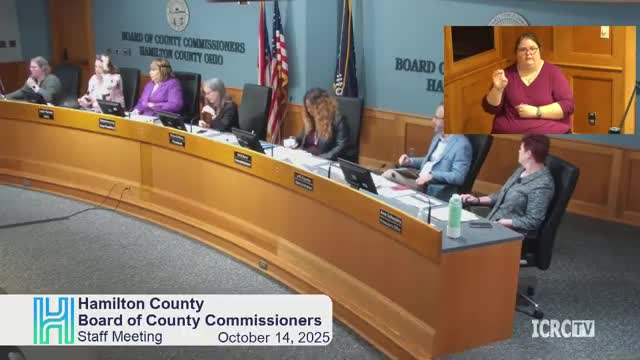
Summary
The Ohio River Way told Hamilton County commissioners Oct. 14 it is expanding river- and land-trail work, promoting PaddleFest and reporting a recent national water-trail designation and an ODOT planning grant for a regional cycling route.
Forrest Clevinger, executive director of the Ohio River Way, told the Hamilton County Board of County Commissioners on Oct. 14 that the nonprofit is steering a multi-county effort to expand river- and land-based recreation, boost tourism and promote ecological restoration along the Ohio River corridor.
Clevinger said Hamilton County is geographically central to the initiative and that the county contributes $5,000 a year to support the organization, while the city of Cincinnati contributes $10,000 annually. He described three main program areas: an Ohio River water trail with maps and 74 public access points, a “braided” network connecting land trails and water access, and outdoor programming including youth expeditions and an annual PaddleFest.
The Ohio River Way reported several measurable updates. The group said PaddleFest attracts about 1,500 to 2,000 participants annually and that June 2025 brought a national water-trail designation from the U.S. Department of the Interior for a 308-mile route. Clevinger said last year’s effort to plan cycling connectivity secured an ODOT planning grant of $275,000 to study a regional route following US-50 within Hamilton County and US-52 across the river; Hamilton County provided a letter of support for that application.
Clevinger also noted conservation and restoration priorities, including work to protect river islands and to expand regional projects that might qualify for federal funding proposals. He cited a proposed federal bill, the Ohio River Restoration Program Act, which he said seeks $350 million a year for five years to fund restoration, habitat work and recreational infrastructure across the basin.
Commissioners asked several questions about regional representation, cleanup work and how county investments intersect with the River Way’s goals. Commissioner Denise Driehaus noted county investments in the Mill Creek and in a bikeway that connect underserved communities to recreation and practical destinations; Commissioner Stephanie Summer O’Dumas and Commissioner Alicia Reese thanked Clevinger and asked staff to relay appreciation to the Ohio River Way board.
Clevinger highlighted additional accomplishments and partnerships: the organization helped raise $10 million to start the “Crown,” a 34-mile loop that is roughly 65 percent complete; PaddleFest proceeds benefit Adventure Crew, a local nonprofit that runs youth outdoor programs; and volunteer cleanups in the region removed roughly 20 tons of debris in one end-of-season event.
Ending: Commissioners thanked the Ohio River Way for the update and for the group’s local partnerships. Clevinger encouraged continued county support for planning and conservation work that links recreation, restoration and local economic development.