Get Full Government Meeting Transcripts, Videos, & Alerts Forever!
Get email alerts on the Education topic
No spam. Unsubscribe anytime.
Maple Heights superintendent highlights graduation gains, flags early-literacy shortfalls
Summary
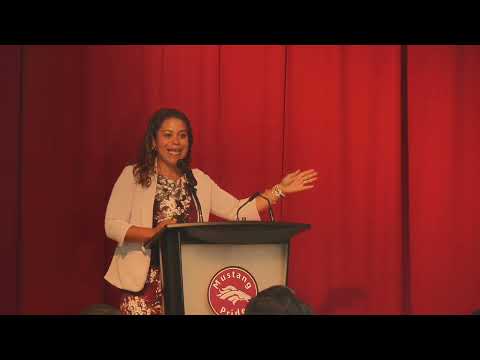
Superintendent Olympia Dela Flora told attendees at the joint State of the City/State of the Schools event that Maple Heights City Schools has roughly 3,000 students, a 15.1% mobility rate, and an overall 3-star Ohio report-card rating; she cited gains in graduation while identifying early literacy as a “1-star” area needing work.
Olympia Dela Flora, superintendent of Maple Heights City Schools, told a joint State of the City/State of the Schools event that the district is serving about 3,000 students, has a student mobility rate of 15.1%, and earned an overall three-star rating on the Ohio school report card for the 2024–25 reporting year.
"Our mission in Maple Heights City Schools is educating our students through expectations of excellence to prepare them for a lifetime of success," Dela Flora said. She described the district as focused on improving core instruction and on programs meant to support attendance, behavior and post‑graduation outcomes.
Dela Flora presented the district's report card subratings and recent outcomes. Graduation received four stars and she said the district is predicted to reach five stars next year. The district reported 1,900,000 dollars in scholarship awards to students, 31 seniors with honors diplomas and 27 graduates entering military service. Dela Flora also said "we had every student graduated in 2025" referencing the Maple Heights High School senior class.
At the same time, the superintendent identified early literacy as a significant weakness: the district received one star in early literacy (grades K–3). She said the district adopted a new reading curriculum last year and is implementing additional interventions this school year, and added that a new math curriculum is being adopted in the current year.
Dela Flora emphasized efforts to strengthen universal classroom instruction (tier 1) and to expand behavioral supports. The district uses Positive Behavioral Interventions and Supports (PBIS) and has launched initiatives described as a student wellness center, a homework center staffed with teachers, and an esports lab at the high school. She credited middle‑school students with contributing photos used in district materials and thanked Gia McCants, the communications coordinator, for that work.
Attendance and chronic absenteeism remain a concern. Dela Flora said the district's chronic absenteeism rate reached 52.3% in the 2021–22 period (the figure refers to students missing 10 or more days per year) and that the rate has since declined but remains a challenge. The district participates in incentive programs, including a partnership with the Cleveland Browns' "Stay in the Game" program, to encourage attendance.
Dela Flora also described partnerships with neighboring districts through a Heights consortium (Shaker Heights, Cleveland Heights and Warrensville Heights) that allow students to apply to shared career and technical programs such as auto technology, criminal justice, construction trades, cosmetology, marketing/media arts and teaching preparation.
On special education, she said approximately 21% of students receive special education services and emphasized targeted work to close achievement and access gaps. The district has added three family engagement liaisons—one at each campus—to increase outreach to families and to connect parents to resources.
The superintendent closed by reiterating the district's focus on "creating strong cultures and climates" in buildings so new and mobile students can acclimate quickly and by thanking board members and district staff present at the event.