Rosemount council adopts zoning amendments to allow educational uses, ease event-center rules and adjust fence standards
Loading...
Summary
The Rosemount City Council on Oct. 7 approved five zoning code amendments to allow educational services in a business park district, relax residency and guest limits for commercial event centers, align outdoor-dining rules with liquor-license practice, and simplify fence and parking-lot landscaping rules.
The Rosemount City Council on Oct. 7 voted to adopt five amendments to the city zoning code, approving changes staff and the planning commission described as minor clarifications that will ease development requirements for businesses and property owners.
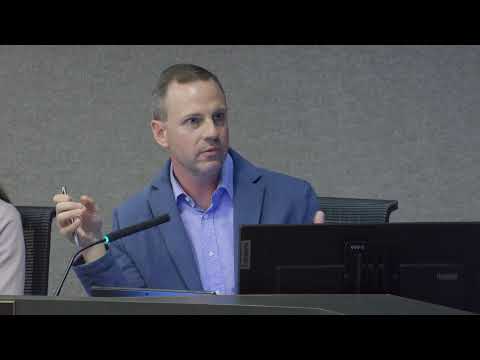
Council action came after a staff presentation summarizing the planning commission's review and a period of council questions about how the changes would be applied to specific sites. The ordinance amendments passed on a roll call vote; the council also approved the related summary publication as part of the same action.
Staff told the council the amendments grew from questions raised during recent development inquiries and from planning commission hearings this summer. The first change adds "educational services" as a permitted use in the B-2 business park district so uses such as dance or music instruction can locate in business park/warehouse-office developments that previously did not list them as allowed. Planning staff said other cities typically treat studios as teaching or training facilities and that adding the definition removes an unnecessary restriction.
The council also approved loosening two rules tied to commercial event centers. The existing code required the property owner and the operator to be the same person and for the site to be the owner's primary residence; staff said that requirement reflected the original intent to allow small farmstead wedding venues. The planning commission recommended removing the residency requirement and allowing an owner or operator to be present for events rather than requiring the site to be a primary residence. The council also agreed to let maximum guest counts be determined by site size, parking and other standard factors rather than a fixed numeric cap, consistent with how the city regulates other uses.
A third amendment aligns the zoning code with recent changes to liquor-license rules for outdoor dining. The zoning code had required outdoor dining areas to be contiguous with the principal building and entered from inside; the liquor-license practice no longer requires that. The amendment makes the two rules consistent while retaining standards that the patio or deck be sectioned off by an appropriate fence, wall or staff monitor.
Councilmembers spent the most time discussing a proposed change to fence-height rules on corner lots. Under current code a fence in a side yard that abuts a neighbor's front yard is limited to 48 inches; staff proposed removing that special-case limit so side and rear yards have a consistent maximum of 6 feet. Staff said requests for taller privacy fences are common, that aerial photos show property owners often already have taller fences, and that other cities regulate this differently. Several councilmembers raised public-safety and visual concerns about a taller fence facing the street; staff and other councilmembers said the situation is uncommon and typically involves unusual lot shapes. The council approved the change.
The final amendment clarifies parking-lot landscaping calculations. Rather than requiring parking-lot trees on top of a separate per-area tree requirement, the code will count required trees based on site area and then require a portion of those trees be located within parking areas. Staff said this reduces developer confusion while keeping the ordinance's intent to provide shade and reduce heat islands.
The motion to adopt the ordinance and approving summary publication was recorded on the council minutes. The council vote was recorded in a roll call: Klimpel — aye; Wiesenstahl — aye; Dyson — aye; Reske — aye; Esler — aye. The motion carried and the ordinance amendments were approved.
Councilmembers and staff said the changes are intended to remove unintended barriers for small businesses and streamline internal code inconsistencies rather than to change substantive policy. The planning commission's meeting minutes and staff report were included in the council packet for more detailed text and definitions.
Votes at a glance: The council also approved the consent agenda earlier in the meeting (items A–F) on a roll call vote (mover Tyson; second Esler). The consent package included approval of minutes, bill listings, final payment authorization on Project C.S.A. H.42 and a resolution supporting a Minnesota suburban transit provider; the roll call on the consent motion was recorded as Esler — aye; Semple — aye; Weisenfeld — aye; Tyson — aye. The consent items were adopted as presented.
The ordinance amendments take effect according to the city code's publication and enactment schedule; staff will update the zoning maps and permit handouts to reflect the changes.