
District leaders outline CSIP goals, baseline data and a 15-point proficiency target by 2028
Get AI-powered insights, summaries, and transcripts
Subscribe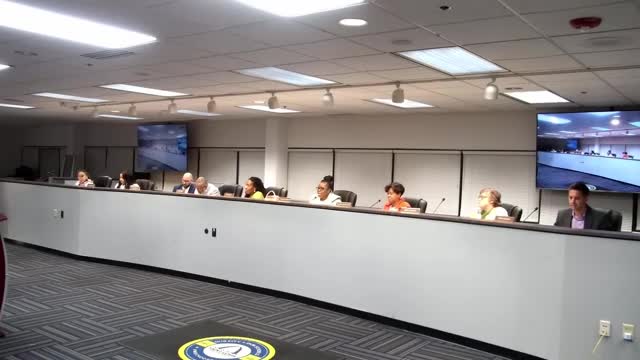
Summary
The district’s accountability and academics teams reviewed the new Continuous School Improvement Plan (CSIP) goals, evidence-based strategies and baseline assessment results, and set a 15-percentage-point increase target for student proficiency by 2028.
At the Oct. 14 meeting the district’s accountability and academics leaders presented the Continuous School Improvement Plan (CSIP) goals and baseline assessment data to the Saint Louis Board of Education.
Dr. Dino, the district’s chief of schools, and Miss Mitchell, chief technology officer, told the board that CSIP goals 1–3 focus on academic achievement and that the district is targeting a 15-percentage-point increase in students scoring proficient or advanced on MAP and EOC assessments by 2028. “This is our baseline data… the 2025 results are the starting point for the 15% improvement,” Mitchell said in response to a board clarification request.
Staff highlighted several evidence-based strategies and recent curriculum actions intended to drive the goals: adoption and rollout of new phonics and phonemic‑awareness materials (described as 95% group materials), adoption of Amplify and new science curricula, district-wide literacy professional development including a literacy conference, and expanded pacing guides and lesson-planning resources. The presenters said all staff received training on the science of reading and that beginning-of-year benchmark assessments (STAR early literacy, MAP practice, curriculum-based measures and dyslexia screeners) have been completed to give teachers data for planning instruction.
Assessment and accountability notes
Mitchell reviewed 2024–25 baseline proficiency percentages and noted early gains in some content areas: English language arts increased from 32.1% to 36.1%, algebra from 20.6% to 26.7%, and science showed growth in tested grades (fifth grade 17.1% to 20.5%, eighth grade 14.4% to 17.3%). The district is using the 2025 baseline to measure progress toward the 15-point goal.
The presenters also told the board that the Missouri Department of Elementary and Secondary Education (DESE) issued an administrative memo and that DESE confirmed the Annual Performance Report (APR) will not be used this year to lower district classification; staff said the APR will instead inform continuous improvement.
Why it matters
Board members asked how the district avoids “teaching to the test.” Presenters said practice assessments inform which standards teachers must prioritize and that instruction is aligned to standards and high-quality curriculum materials rather than to testing mechanically. The board and staff emphasized fidelity of implementation, training for non‑certified staff (ILA support) and support for principals to lead classroom instruction improvements as critical parts of the plan.
Next steps
Staff said progress monitoring will continue, climate-and-culture surveys will open during parent‑teacher conferences and districts will report MOSIS/core data to DESE in October submission cycles. The board requested more detail on interventions for content areas where incremental growth is not yet sufficient to meet the 15-point target.