Get Full Government Meeting Transcripts, Videos, & Alerts Forever!
Get email alerts on the Public Property Naming topic
No spam. Unsubscribe anytime.
Public Property Naming Committee pauses proposed changes on corporate namings, seeks more guidance on appeals and criteria
Summary
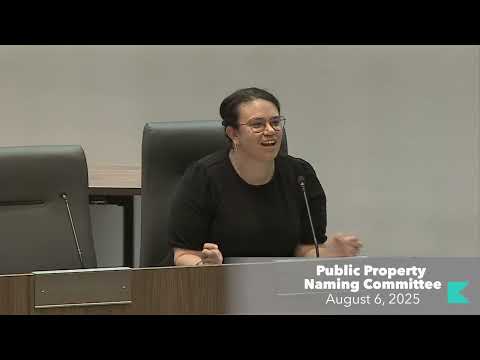
At a Public Property Naming Committee meeting (date not specified), members debated proposed edits to the city’s public‑property naming guidelines that would allow consideration of corporate recognitions and change the approval threshold for naming public property after living people.
At a Public Property Naming Committee meeting (date not specified), members debated proposed edits to the city’s public-property naming guidelines that would allow consideration of corporate recognitions and change the approval threshold for naming public property after living people.
The revisions under consideration included removing language that categorically excluded “commercially concerned and corporate related recognitions,” replacing a requirement for unanimous committee and council approval to honor living people with a two‑thirds threshold, and adding a requirement that any corporate naming application include documentation of a “significant contribution (monetary, land, etc.).” Committee staff also proposed minor wording updates to change references from “Planning Commission” to “Knoxville Knox County Planning” and from “commission” to “staff.”
The debate centered on balancing fundraising and budget needs against preserving the public character of city property. Councilwoman Lauren Ryder, the committee’s former chair, outlined the ordinance’s origins and defended reviewing the rules now that in‑person meetings have resumed: “I think it’s a fair time to look at it, and I want you to know why you have it, and how it got where it’s at,” she said, noting the guidelines were compiled after reviewing practices used by other cities.
Some committee members and public commenters urged caution. One resident said the proposed changes risked creating a perception that “Knoxville’s for sale,” adding that opening the door to corporate namings could allow corporations to “come in, putting names on buildings.” Committee members raised specific concerns about how to define “significant contribution,” the potential for politicized or short‑sighted namings, and the lack of an appeal mechanism for applicants denied by the committee.
Committee staff read aloud the document’s reassessment clause, which says approved namings are intended to be permanent but that “the city and the committee will retain the right to reassess the naming in the future if facts, circumstances, and or conditions arise that make it prudent for the city on behalf of the public interest to amend, alter, or remove the name of a street or public property.” That provision helped frame discussion about denaming and post‑approval review.
After extended discussion, the committee voted to decline the proposed changes to the subsections that would remove the corporate exclusion and add corporate‑contribution criteria, deferring further action until staff and council can provide clarifications and examples. The committee did not adopt the change from unanimous to a two‑thirds threshold for honoring living people; an initial motion on that item was withdrawn and committee members asked staff and the city law department to research options, including whether an appeal process to city council is legally feasible for this advisory body.
The group approved a separate, narrow set of wording corrections to replace the word “commission” with “staff” in two places where the ordinance should refer to planning staff rather than the planning commission.
What’s next: The committee directed staff to return with additional context, examples of how other cities handle corporate recognitions and living‑person namings, and a legal review of whether an appeals process to city council could be implemented. Staff said they would consult the law department and aim to provide a timeline to the committee in the near term.
The committee adjourned with no further substantive votes on the proposed substantive policy changes.