Get Full Government Meeting Transcripts, Videos, & Alerts Forever!
Get email alerts on the Immigration Benefits Idaho topic
No spam. Unsubscribe anytime.
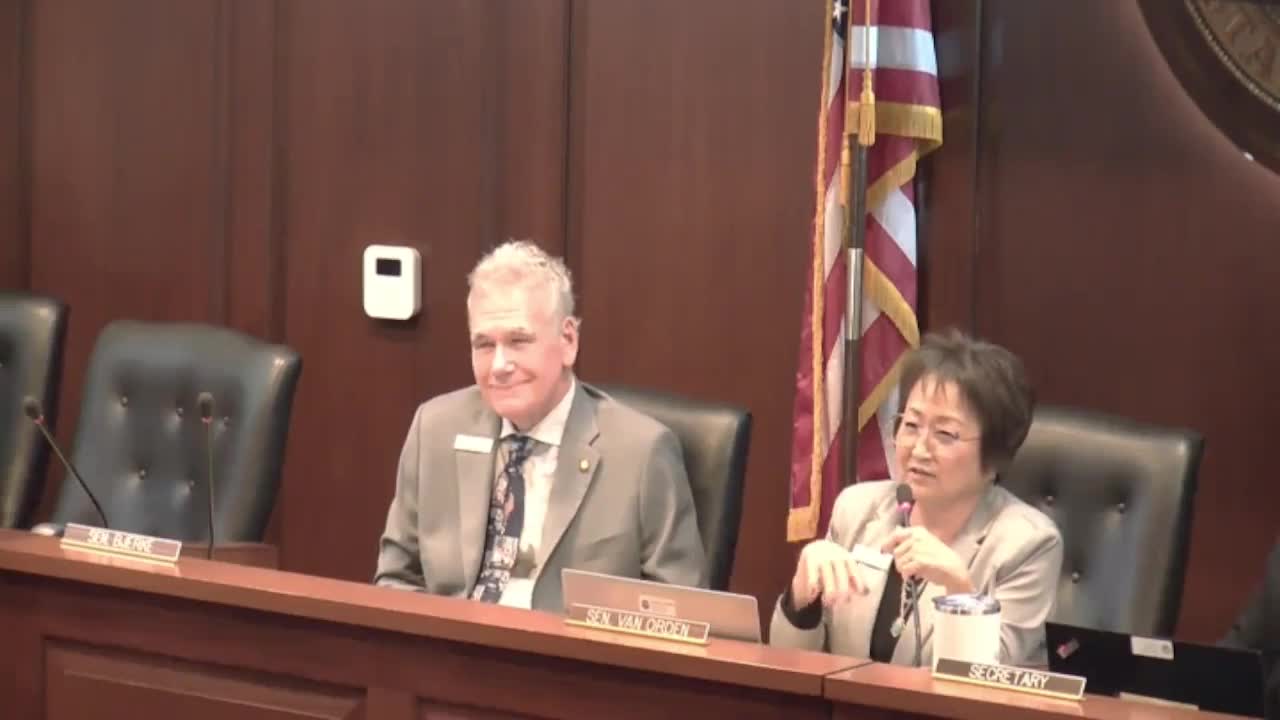
Idaho Senate committee advances bill requiring proof of legal presence for some state-funded benefits
Summary
An Idaho Senate committee voted to advance House Bill 135, a proposal from Rep. Phil Hart that would require adults to show proof of lawful presence before receiving certain state-funded public benefits, and sent the bill to the Senate floor with a "do pass" recommendation.
An Idaho Senate committee voted to advance House Bill 135, a proposal from Rep. Phil Hart that would require adults to show proof of lawful presence before receiving certain state-funded public benefits, and sent the bill to the Senate floor with a "do pass" recommendation.
Hart, the bill sponsor, told the committee the measure "will withhold, some some public benefits from people who are here in the state of Idaho but cannot prove they're here legally," and said the bill preserves emergency exceptions: "This legislation does not take away benefits that might be necessary in an emergency situation." He said the Department of Health and Welfare would screen applicants during interviews and request documentation of lawful presence.
The bill prompted hours of testimony and questions from senators about which programs would be affected and how the changes would interact with federal law. Opponents — including nonprofit leaders, teachers, immigrant advocates and health-care and faith leaders — warned HB 135 would reduce access to food and health services for children and pregnant people and could conflict with federal program rules.
Craig Peterson of Idaho Voices for Children told the committee that "denying access and basic human needs to an American citizen, let alone a child, is too great of a risk" and argued federal SNAP and WIC rules protect U.S. citizen children in mixed-status households. Randy Ford, president and CEO of the Idaho Food Bank, said the bill "goes beyond the federal law" and warned that if families lost access "the demand of food banks and local food pantries would exceed what can be sustained." Teacher Rachel Rojas testified that the bill was "simply cruel," saying it would strip students and families of "essential support like food assistance." Christian Welp, speaking for the Catholic Church in Idaho, said he had come to the Capitol often to "fight for unborn babies" and that he could not support legislation that would "take away prenatal care for anyone." On the other side, Nicholas Kleinworth of the Idaho Freedom Foundation urged support, saying "citizenship means something and it matters to Americans" and arguing the state should limit taxpayer-funded benefits to people here legally.
Committee members pressed for clarifications. Senator Maryanne Wintrow repeatedly asked why the bill would exclude prenatal and postnatal care and food assistance for children, noting the public-health implications of limiting immunizations and preventive care. Hart replied that the bill preserves emergency care and that nonprofits could provide non-taxpayer-funded services for people who do not qualify. Several witnesses and senators raised concerns about how the bill would interact with federal exemptions; testifiers pointed to language on page 2, lines 40–41 of the draft that they said could strip state recognition of federal exemptions.
Senators debated procedural options near the hearing's close. A substitute motion to send the bill to the fourteenth order for possible amendment was proposed but did not carry. A motion by Senator Lenny — moved by Lenny and seconded by Senator Kaiser — to send House Bill 135 to the full Senate with a "do pass" recommendation passed on a roll-call vote; committee members recorded their votes during the hearing and the secretary completed the count before the meeting adjourned. The committee did not adopt any substantive amendment on the floor of the committee; Senator Hart said he would work with the Department of Health and Welfare if the committee wanted language clarified.
The bill as discussed would require interviewers at the Department of Health and Welfare to request documentation of lawful presence from adults applying for state-funded benefits, while leaving emergency-care exceptions in place. Testimony raised additional operational questions, including whether school meals and federally administered programs such as SNAP and WIC would be affected in practice and how nonprofits that administer state-funded programs would manage new documentation and data-storage requirements.
Supporters framed the proposal as fiscal stewardship and protection of taxpayer-funded programs. Opponents emphasized likely impacts on U.S. citizen children in mixed-status families, public-health risks if preventive care and immunizations decline, and operational burdens for nonprofits that said they lack the capacity to collect and secure additional personal data.
With the committee's vote to advance HB 135 to the Senate floor, the measure will next appear on the chamber calendar for further consideration, amendment, and a separate floor vote.