Get Full Government Meeting Transcripts, Videos, & Alerts Forever!
Get email alerts on the Urban Design Madison Avenue topic
No spam. Unsubscribe anytime.
Residents urge ‘civic corridor’ and Madison landing as city weighs Madison Avenue investments
Summary
Two community speakers asked the City Council and Budget Commission to expand Madison Avenue plans beyond staff-support facilities, suggesting a civic corridor and a modest waterfront landing funded by transient lodging tax revenues tied to a private development.
Two residents urged Corvallis officials to expand the city’s Madison Avenue civic campus plan into a broader civic corridor and to consider building a modest overlook or landing at the end of Madison Avenue, citing potential transient lodging tax revenue from a private waterfront project.
Rob Lancaster, a South Corvallis resident, told the joint City Council and Budget Commission meeting the city should not limit civic design to “modest and cost effective improvements” and urged officials to “dream bigger” for Madison Avenue. “Make of Madison Avenue a lasting civic corridor, close to traffic and furnished with the means of joyful public life,” Lancaster said, suggesting an outdoor amphitheater, murals and programming that would draw students, workers and retirees downtown.
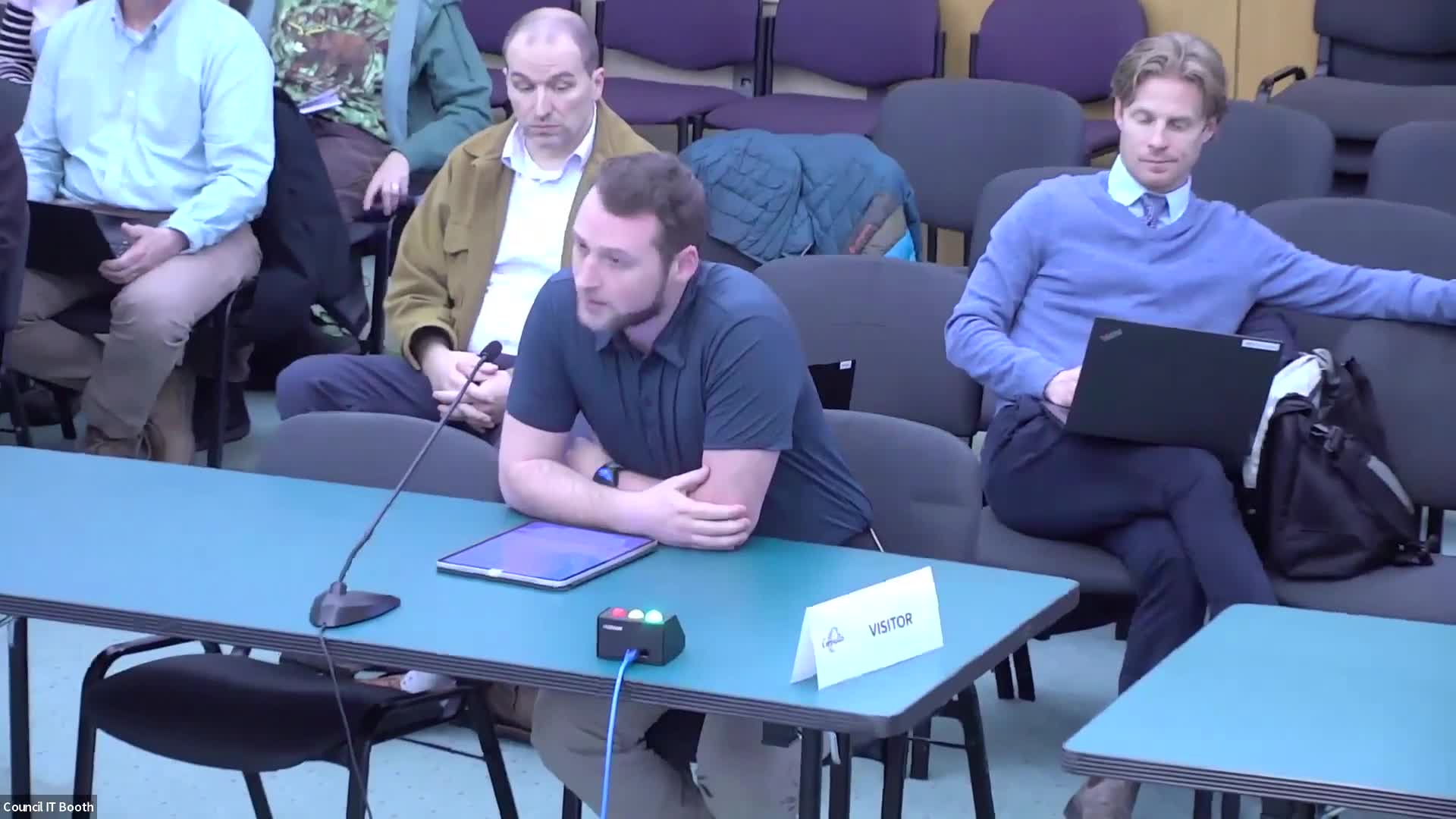
Seth Sherry, an OB project stakeholder who said he had worked to attract hotel and residential development to the waterfront, asked staff and council to “move forward with building an overlook at the end of Madison Avenue.” Sherry told officials that the planned waterfront development could generate “on an average year, $500,000 of new transient lodging tax per annum,” and argued those revenues can be used under state law to fund tourist facilities. He cited a comparable landing in Eugene that, with design, permitting and construction, cost about $220,000.
Staff and council response City staff at the meeting indicated that capital improvements in the CIP must conform to available funding sources and that some projects must be matched with grant or other funds. Councilors thanked the speakers and asked them to submit written materials; staff encouraged follow-up and feasibility work. No formal action or funding commitment was taken at the meeting.
Ending Speakers and several councilors framed the proposals as opportunities to build civic life as well as practical infrastructure, and both officials and presenters said they would follow up with feasibility and funding analysis so council could consider options with the biennial budget.