Get Full Government Meeting Transcripts, Videos, & Alerts Forever!
Get email alerts on the Parks And Recreation topic
No spam. Unsubscribe anytime.
Corvallis budget meeting spotlights parks restroom funding, Osborne study and bike-park plans
Summary
City staff and councilors debated adding permanent restrooms to key parks, programming for playground replacements, a facilities bond and a long-term assessment of Osborne Aquatic Center while staff outlined plans for a Chip Ross bike park and other park projects.
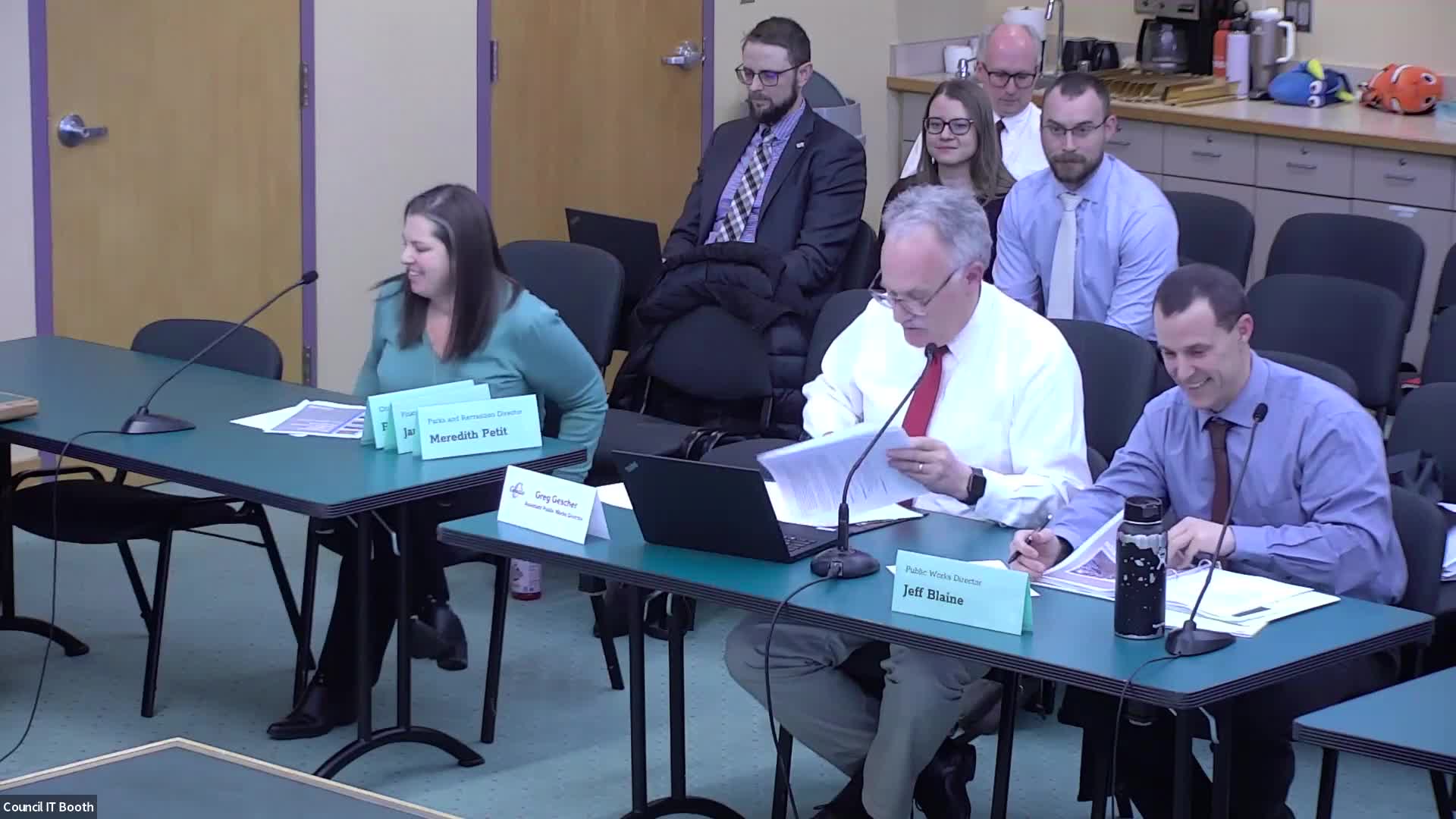
Corvallis city staff and councilors used a joint City Council and Budget Commission work session to press for clearer funding and timelines for park restrooms, playground replacements and a new parks maintenance facility, while Parks & Recreation leaders said they are auditing the aging Osborne Aquatic Center and moving the city’s bike park toward public outreach and permitting.
Parks and Recreation Director Meredith Pettit told the meeting the department is “a general fund department,” and that capital funding often depends on grant matches and park system development charges (SDCs). Pettit said the department is working with a consultant to refine its SDC methodology so the fees can be applied more effectively to both new and existing park projects.
Why it matters: Council members said permanent restrooms are a high-priority, visible need for users and for park equity, while staff cautioned that new restrooms carry ongoing operations and maintenance costs. Councilors and commissioners asked staff to return with options the council could act on before the May budget decisions.
Staff presentation and projects Meredith Pettit outlined completed and planned work including the new Avery Park inclusive playground and restroom, and seating and accessibility work at the Majestic Theater. Park planner Travis North said staff is trying to pace playground work so the city does not face multiple simultaneous replacements: “the thought process behind this is…to put the playgrounds on a schedule, so that at the end of 20 years, we don't end up with 20 playgrounds that need fixed up all at the same time.” He said staff may combine several playground replacements into a single design effort to save money and staff time.
Funding constraints and options Pettit and park staff described the limits of the current SDC methodology. She said the city’s method allows SDCs to pay up to about 14.7% of the cost of improvements to existing parks, leaving a significant funding gap for upgrades. The city’s recent SDC receipts have averaged roughly $1.5 million per year, Pettit said. That combination, she told the council, often means the department must pair grants, SDCs and developer SDC credits (an in-kind improvement option) to deliver projects.
Council members asked whether federal Community Development Block Grant (CDBG) funds could help pay for restrooms in parks that serve lower-income neighborhoods; staff said CDBG can fund infrastructure projects that serve low- and moderate-income populations, but availability and federal program rules limit how the city can rely on that source.
Park facilities and operations Councilors repeatedly returned to the trade-off between capital cost and long-term operating expense. Pettit said adding a restroom can cost “$250,000, $300,000 per restroom these days,” plus daily cleaning and maintenance. Councilor Ellis said restroom access is essential and urged the city to plan both short-term (porta-potty) and long-term (brick-and-mortar) steps. Several councilors asked staff to provide a targeted plan with funding options and likely operating costs so council could consider the matter before finalizing the biennial budget in May.
Osborne Aquatic Center assessment Pettit said the city is pursuing two concurrent paths for Osborne Aquatic Center: a targeted roof repair scope and a broader facility audit that will evaluate pool mechanical systems, decks, liners, staff space and other elements. “We’re at that point to have a really full comprehensive understanding of all of the needs,” Pettit said, and she added the school district — a partner on the facility — is leading an assessment effort with the city. Staff emphasized the need for a cost comparison between repairing Osborne and building a new aquatic facility at the existing site or on other land before decisions are made.
Chip Ross bike park and other projects Travis North and staff described progress on the city’s proposed bike park. The city has hired designers and planned public outreach; an initial community meeting was being rescheduled to encourage council participation. Staff also noted other park investments in the CIP including Porter Park improvements tied to a nearby townhouse development (using developer-provided SDC credits) and the new parks maintenance facility that is proposed to proceed with a bond.
Next steps and council direction Council members expressed broad interest in returning to the restroom question before final budget action. Multiple councilors asked the city manager and parks staff to bring back a specific, affordable set of options that balance capital and operating costs. Staff said they would work with council leadership to schedule the discussion in time to affect the budget.
Ending Parks staff asked the council for direction on prioritizing funding sources; councilors asked for a follow-up work session to examine restroom costs, funding options and trade-offs ahead of the May biennial budget vote.