Get Full Government Meeting Transcripts, Videos, & Alerts Forever!
Get email alerts on the Alternative Education topic
No spam. Unsubscribe anytime.
Career Readiness Academy reports rising graduation rates and individualized model at school board meeting
Summary
Career Readiness Academy administrators and students described a small, individualized alternative program that uses MTSS, Edmentum coursework, career connected learning and social‑emotional supports. The presentation highlighted graduation increases and strategies used to improve credit attainment.
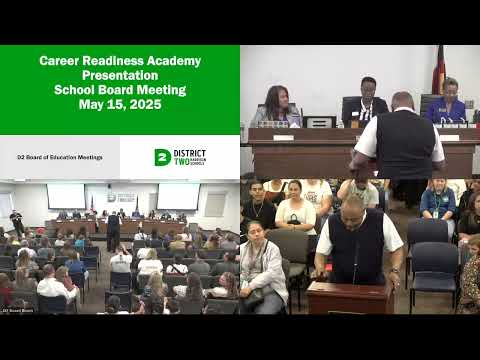
Career Readiness Academy (CRA) leaders and students presented to the Harrison School District 2 board May 15, describing a small alternative campus model that leaders credited with rising graduation totals and measurable credit recovery for juniors and seniors.
Coach Terry Dunn introduced students and staff from the middle and high school programs and outlined CRA’s mission to provide alternative education pathways “that equip students with the knowledge, skills, attitudes and behaviors needed to succeed in college, careers and life.” Presenters described a small enrollment (the presentation cited 32 middle‑school students and 45 high‑school graduates this year) and emphasized individualized learning, data tracking and social‑emotional supports.
Results and methods
- Credits and MTSS: CRA staff described a targeted Multi‑Tiered System of Supports (MTSS) approach focused on credit attainment. Presenters said the share of seniors in the “tier 1” credit‑on‑track category rose from about 22% at the start of the year to about 70% by year’s end; juniors moved from roughly 29% to about 65% on track, staff said.
- Coursework and platforms: At the high school level the school uses Edmentum as a core program, with students working at individualized paces. The staff described teacher‑led scaffolds, daily check‑ins and progress monitoring to support completion; the school reported 13,500 total course hours and an average class completion of 15 per student at the high‑school level.
- Social/emo and career learning: Presenters stressed social‑emotional interventions, mentorship, on‑campus mental‑health therapy and community partnerships such as visits to a therapy ranch and weekly career speakers. A school social worker and a school mental‑health therapist were described as on‑site supports.
Student perspective
High‑school graduate Jose (last name recorded as Fincher in the transcript) told the board CRA helped him choose classes that matched his interests, accelerate his coursework and graduate early. He said staff adapted instruction to students’ preferred learning styles and credited the environment for increasing his confidence.
Board reaction
Board members praised the program’s outcomes and described CRA as a differentiated magnet‑style program rather than a marginal “alternative” placement. Superintendent Wendy Berhansl and board members thanked staff and noted that the campus’s strategic funding model differs from other schools and accounts for the additional supports offered.
Why this matters: CRA’s presentation shows a district‑operated, small‑school approach designed to recover credits and graduate students who otherwise were at risk of dropping out. Board members and presenters emphasized the results came from targeted staffing, close data tracking and partnerships.