Get Full Government Meeting Transcripts, Videos, & Alerts Forever!
Get email alerts on the Historic Markers topic
No spam. Unsubscribe anytime.
Clarkdale commission agrees to begin overhaul of 26 historic markers, starts work on natural-environment panels
Summary
The Clarkdale Historic Preservation Commission voted to approve meeting minutes and agreed to begin reworking existing museum and town panels, starting with natural-environment content and assigning research leads. Commissioners discussed tribal inclusion, image copyright and a pilot approach for redesigning the town’s 26 historic panels.
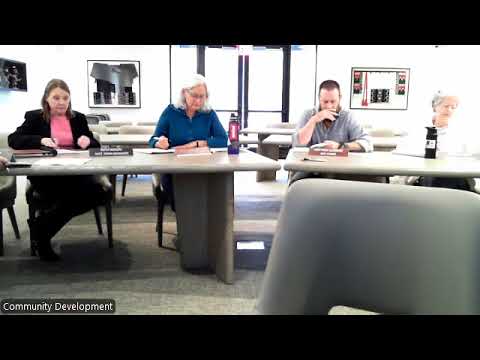
The Historic Preservation Commission of the Town of Clarkdale agreed May 6 to begin a planned overhaul of the town’s existing historic markers and museum panels, deciding to start with the natural-environment theme and to break the work into smaller, assignable research tasks.
The commission, chaired by Gabbard, opened the item after approving March 4 minutes and moved into a lengthy discussion about themes, imagery, tribal consultation and logistics for reworking what commissioners described as 26 panels that currently interpret Clarkdale’s history.
Commissioners said the project should emphasize why Clarkdale was sited where it is — geology, the Verde River, flora and fauna — while maintaining a through-line to human stories. Vice Chair Stein and several commissioners urged organizers to tie geological and ecological information back to people’s experiences in the Verde Valley rather than producing purely scientific text.
Commissioners discussed whether to organize content by five broad themes that had emerged from a prior work session (natural environment; man‑made environment; William Clark’s vision; business and industry; people and society) or by a slightly different topical breakdown. They agreed the two formats largely overlap and that the immediate practical step is to collect material for one theme so the commission can prototype a sign layout.
The commission settled on a pilot: assemble and distill all available material for the “natural environment” theme (geology, river, plants, animals) and create draft panel(s) so members can see how images and text work in practice. Commissioners proposed using QR codes on panels to give readers access to extended material without overloading the signs.
Commissioners raised several practical issues: the museum and archives hold many photographs but some are marked as restricted or copyrighted; the Clemenceau/Copper Museum and other local archives will need to confirm rights. Commissioners also discussed the Yavapai‑Apache Nation’s role in the project. The commission’s account of the exchange was that the nation has been invited to provide content and may supply panel text or material it deems appropriate; commissioners said they would not preclude material the tribe wants to provide even if it does not neatly match the commission’s preselected themes.
The commission also discussed standardization of design (number of images, text length, layout) versus allowing panel‑by‑panel variety. Several members said a standardized visual framework would aid public legibility and make the project easier to manage; others favored flexibility to suit content (for example, portraits for people and landscapes for environments).
To make progress between meetings, commissioners divided work on the natural‑environment theme: John (last name not specified) agreed to gather geology material, Cynthia agreed to gather flora and fauna resources, and Mike agreed to gather material on the Verde River and aquatic topics. Commissioners said they would invite local experts and former town officials to work sessions as needed; names mentioned as possible contributors included Wayne Rainey (geology) and Doug Von Gossett (former mayor). The commission planned to convene the research teams, compile the material, then return to a work session to draft a prototype panel.
The commission ended the discussion by scheduling the next steps: collect archival photos, confirm copyright and tribal approvals as needed, and produce a first draft of the natural‑environment content for review at the next work session. The meeting closed after a short administrative update on a separate planning/design issue (a joint meeting to consider replacement window work at a downtown building).
Next meeting: commissioners referenced June 3, 2025 as the next meeting date for follow‑up work on the pilot panels; the date was stated in the meeting discussion as the upcoming meeting date for continued work on the markers.
This article is based on the commission’s May 6, 2025 meeting transcript and the commissioners’ recorded discussion of the marker‑revision project.