Get Full Government Meeting Transcripts, Videos, & Alerts Forever!
Get email alerts on the Higher Education topic
No spam. Unsubscribe anytime.
Boise State tells JFAC it improved graduation rates, defends course options and says lawsuit defense used non‑tax funds
Summary
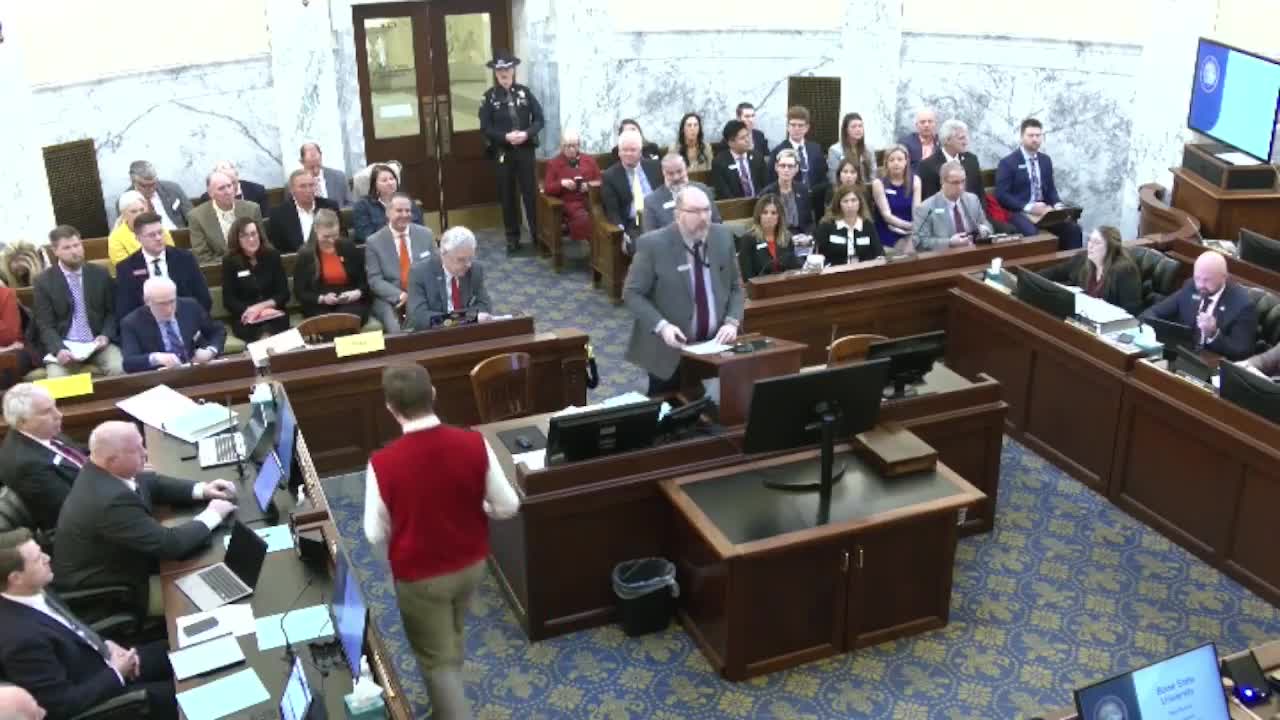
Boise State University President Marlene Tromp told the Joint Finance-Appropriations Committee on Jan. 29 that Boise State has increased graduation rates, maintains curricular options that students may choose, and used non‑tax university funds to defend a lawsuit related to a campus coffee shop.
Boise State University President Marlene Tromp told the Joint Finance-Appropriations Committee on Jan. 29 that Boise State has increased graduation rates, maintains curricular options that students may choose, and used non‑tax university funds to defend a lawsuit related to a campus coffee shop.
Tromp said Boise State has 1,300 students enrolled in the LAUNCH program, with about 600 of those students relying on LAUNCH as their sole financial support. She highlighted workforce‑oriented fields such as nursing, computer science and engineering and defended curricular reforms the university has made to focus on student success.
On policies arising from the State Board of Education's direction to end some DEI programs, Tromp said the university transformed and consolidated previous centers and reduced DEI‑related staff from eight to five while restructuring services to serve broader student success goals. "We have really worked to transform those centers," she told the committee, and added the university may expand some work as the student‑success model evolves.
Tromp described the Institute for Advancing American Values — a program created to bring a range of viewpoints onto campus and encourage civil discourse — and noted Boise State faculty and student government had adopted principles to protect free expression. She said the university's UF 100/200 first‑year course sequence offers many subject sections and that no student is required to take any particular topical section: "No. A gender class is not required," she said.
Senators and representatives pressed Tromp on whether courses and programs complied with Idaho law prohibiting discrimination and barring state funds for certain purposes. A committee member asked Tromp to provide a written assurance that courses comply with Idaho Code 33‑138 and 33‑139 (the dignity and nondiscrimination and related expenditure provisions). Tromp agreed to provide detailed information requested by the committee.
On litigation costs, Tromp said Boise State used non‑tax funds to defend the Big City Coffee lawsuit, a defense the university said it "is obliged to mount by Idaho state law to defend ourself and our employees in the course and scope of their employment." Tromp told the committee the university had spent about $1,500,000 and did not expect the appeal to add a "significant amount" to that total; she said university employees who appeared at trial used vacation or worked within the general counsel's office and that the university would provide further breakdowns to the committee on request.
Tromp also described Boise State's responsibility‑centered management model (a form of performance budgeting) and said it helped the university operate with a balanced budget and the lowest administrative spend per student in the state. She described campus initiatives tied to Micron and semiconductor workforce needs, including unique equipment (an "Xtron") used for research and student training; and she said Boise State runs a Cyberdome cybersecurity program supporting rural Idaho businesses.
On federal‑funding developments, Tromp said Boise State staff reviewed the federal guidance and that federal grant funds are restricted to the purposes specified in grant documents; the university would comply with state and federal directives and provide requested information to the Division of Financial Management as needed.
Tromp closed by reiterating Boise State's student‑success and workforce priorities and the university's balanced‑budget position.
The presentation did not include any formal committee votes; Tromp and the university agreed to provide additional written details on course compliance and the litigation cost breakdown.