Get Full Government Meeting Transcripts, Videos, & Alerts Forever!
Get email alerts on the State Public Defender topic
No spam. Unsubscribe anytime.
New State Public Defender agency seeks millions to cover transcripts, contracts and staffing
Summary
The newly created Idaho State Public Defender office told the Joint Finance‑Appropriations Committee it needs supplemental and ongoing funds — including spending authority to use a $39 million cash transfer — to cover transcript costs, higher contract rates and hires as counties are onboarded.
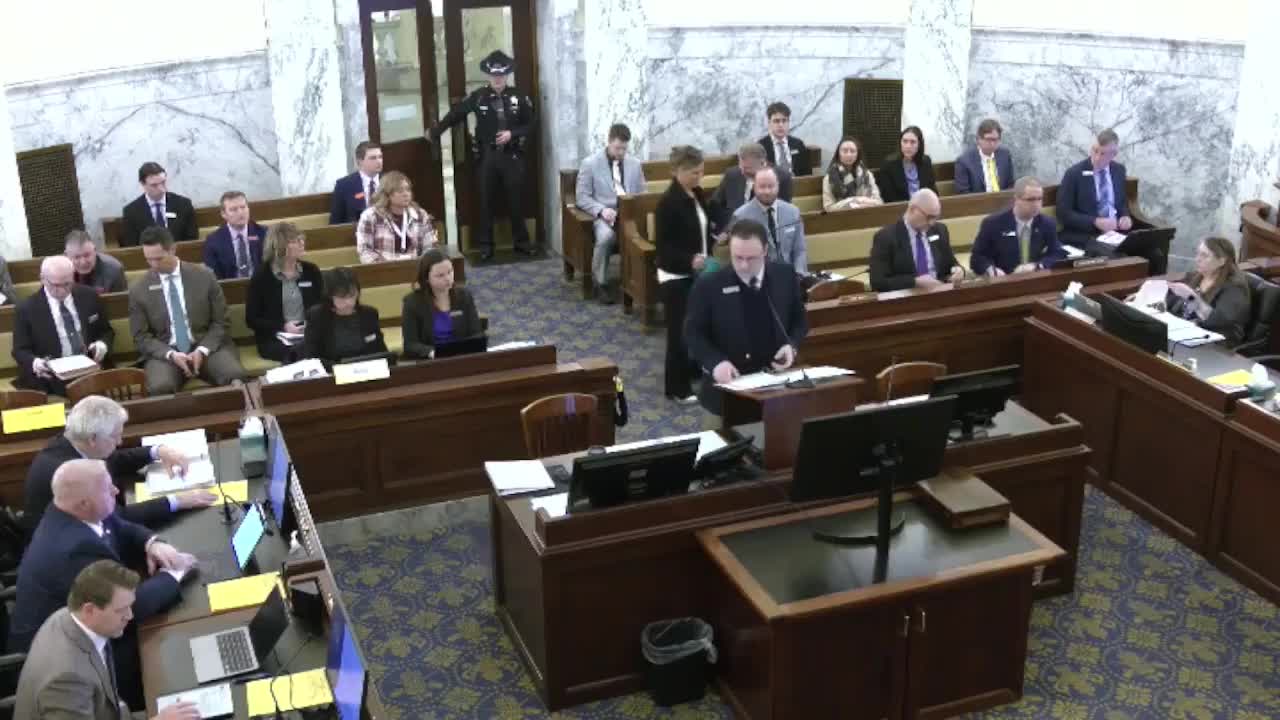
The Joint Finance‑Appropriations Committee received a detailed budget briefing on the new Idaho State Public Defender office, created by statute in Title 19, Chapter 60. Legislative analyst Christopher Lahoset said the office’s budget rests largely on a dedicated State Public Defense Fund seeded by a $39 million transfer from the tax relief fund and that appropriation authority for that cash transfer was omitted in last year’s bill.
Lahoset briefed the committee on the agency’s requests: a one‑time supplemental $2.5 million in the current fiscal year to allow the office to fully use the $39 million transfer; a one‑time $390,200 for transcript costs following an Idaho Supreme Court ruling in State v. Blasick that the state is responsible for transcript costs; and a one‑time $5,427,600 supplemental in FY25 for personnel and contract increases. For FY26, Lahoset said, the agency requests $2.5 million ongoing to utilize the dedicated fund, roughly $16 million for ongoing public‑defense operating costs (contract attorneys, investigators, experts and transcripts), and authorization for about 18 full‑time positions to onboard new institutional offices in several counties.
Eric Fredericksen, the State Public Defender, told committee members the agency has faced a fast, difficult transition since it began operations in October. “We walked into 1,300 withdrawals and cases,” Fredericksen said, describing a wave of cases and personnel shifts the office inherited. He said the office has lost contract attorneys and that many flat‑fee county contracts were untenable as the unified system raised compensation to meet constitutional and professional standards. “We lost a lot of contract attorneys…The way to move forward was to increase rates,” Fredericksen said.
Fredericksen also described costs that counties previously paid — for example, psychosexual evaluations and other expert services — that the state agency must now anticipate. He told the committee those evaluations can run about $2,500 apiece and said some county‑level district court funds used previously were not visible to the new statewide office.
Committee members pressed on several points: how the agency would spend one‑time supplemental dollars in a short time frame; whether counties would continue to provide facilities (statute requires county facilities through 2029); and whether the agency’s staffing and pay structure could be adjusted to recruit for rural counties. Fredericksen said the agency is standardizing pay with Department of Human Resources and that increased pay and benefits would improve recruitment in rural districts.
Why this matters: the State Public Defender assumed responsibility for many public defense functions previously overseen by counties and the Public Defense Commission; the agency’s requests seek both to cover costs identified during the transition and to fund ongoing operating needs. Committee members asked for more detailed cost breakdowns and indicated they would review the supplemental and ongoing requests as part of the FY26 budget process.