Get Full Government Meeting Transcripts, Videos, & Alerts Forever!
Get email alerts on the Libraries Digital Access topic
No spam. Unsubscribe anytime.
Idaho libraries seek ongoing state authority to continue federal digital-access program
Summary
At a Joint Finance and Appropriations Committee hearing, the Idaho Commission for Libraries described federal grants and a new Digital Access for All Idahoans program and asked lawmakers for ongoing spending authority and modest broadband reimbursements while answering questions about summer reading materials.
The Idaho Commission for Libraries told the Joint Finance and Appropriations Committee it is seeking ongoing state spending authority to continue implementing a federal digital-access program and to reimburse libraries for certain broadband costs.
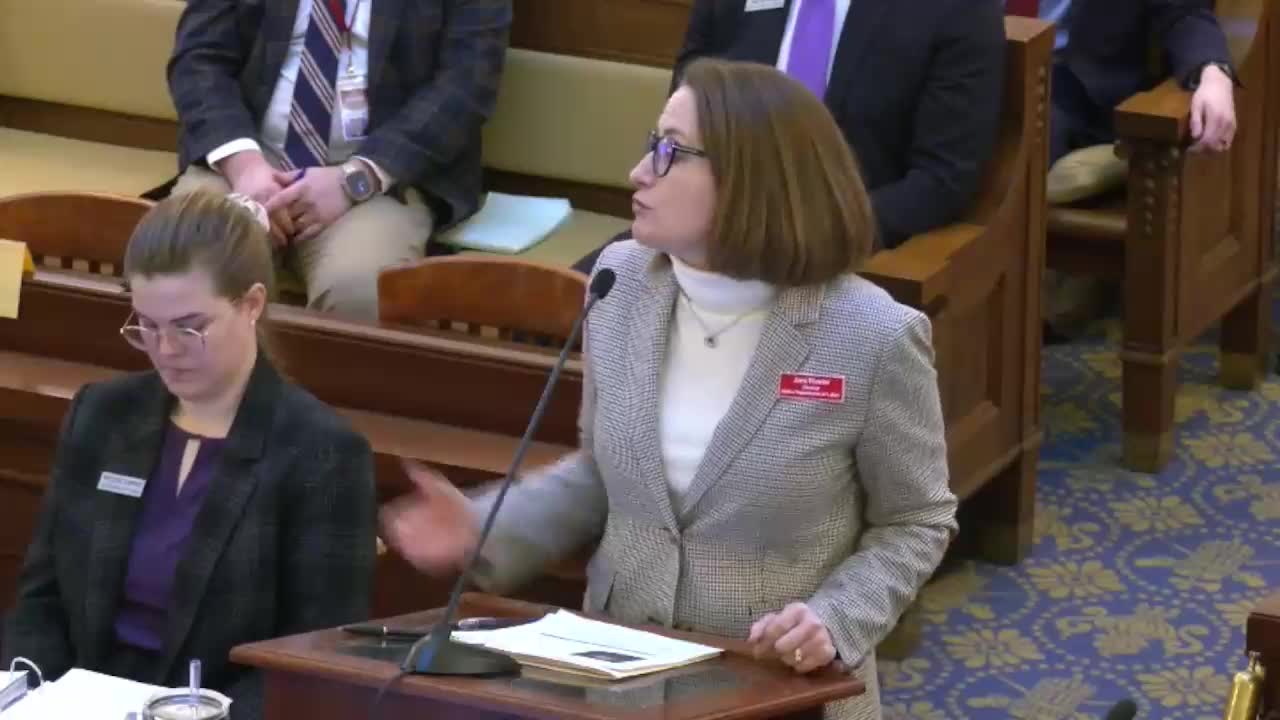
The library commission asked the committee to add $2,500,000 ongoing for the Digital Access for All Idahoans grant, $42,400 ongoing for a broadband reimbursement tied to the Education Opportunity Resource Act (chapter 56, title 33, Idaho Code), and other fund and reappropriation authorities to continue subgrants and capital projects begun with ARPA/IIJA funds. Brooke Dupree, a budget and policy analyst with the Legislative Services Office, and State Librarian Stephanie Bailey White described the grant, how it has been used so far and how the commission plans to distribute future awards.
The request matters because the program aims to reduce barriers to internet access — including affordability, device access and digital skills — by sending most funds to community organizations and local partners. The commission said the program will rely heavily on “digital navigators” and competitive subgrants to community colleges, school districts, libraries and nonprofits.
Brooke Dupree explained the recent federal funding history and the reason the agency’s receipts spiked in fiscal years 2023–24: “The reason you're seeing that go up in fiscal year 23 and 24 is due to ESSER or elementary and Secondary School Emergency Relief Funds that were authorized under ARPA.” Dupree said the $2.5 million ongoing request ties to the National Telecommunications and Information Administration (NTIA) implementation of IIJA funds and that the commission expects more notices of award through the multi‑year grant period and therefore is seeking ongoing authority now.
Stephanie Bailey White, the state librarian and director, told the committee the commission launched its subgrant process and that roughly 80% of the funds are planned to go out through competitive subgrants. “We had a good round of 39 organizations who applied for this first round of funding,” she said, describing subgrants to hire digital navigators, provide tech support and deliver digital skills training.
Committee members pressed for specifics. Senator Carlson asked for an itemized description of how the funds are spent and raised concerns about summer reading materials; White said summer reading programming was funded through ESSER and miscellaneous revenue and that the commission has taken steps to vet books used as giveaways. White said the commission received a donation from the Scottish Rite Foundation this year of $17,500 and that about 107,000 children participated in Idaho summer reading programs last year, a roughly 30% increase from the prior year. Dupree and White agreed to follow up with more detailed spending and distribution information for both the digital-access awards and the summer reading materials.
Some lawmakers questioned making the digital‑access funding “ongoing” in the state base out of concern that a time‑limited federal grant could become a permanent state expectation. One senator suggested converting the request to one‑time authority instead. Dupree and White said the federal program is multiyear and that the commission has applied best practices for competitive subgrants and monitoring; they offered to provide the committee a more detailed multi‑year spending plan and a ledger of past expenditures.
The commission also asked for reappropriation authority for ARPA capital projects previously appropriated in 2024 and included a request for $275,000 as a base broadband reimbursement tied to the Education Opportunity Resource Act. Dupree said the Education Opportunity Resource Act reimbursement would expand available support as more libraries become eligible for the program.
What’s next: Committee staff and the commission agreed to supply (1) an itemized breakdown of how the digital‑access and ESSER funds have been and will be used, (2) details of the competitive subgrant scoring and award timeline, and (3) information on summer reading book selection and distribution for committee review.