Get Full Government Meeting Transcripts, Videos, & Alerts Forever!
Get email alerts on the Transportation Software topic
No spam. Unsubscribe anytime.
Finance panel OKs $600,000 pilot for student bus-routing software; lawmakers seek longer data window
Summary
JFAC approved $600,000 one-time for a student transportation routing software pilot to cover roughly 400 buses; committee members asked for clearer evaluation data and were told districts would report savings and performance.
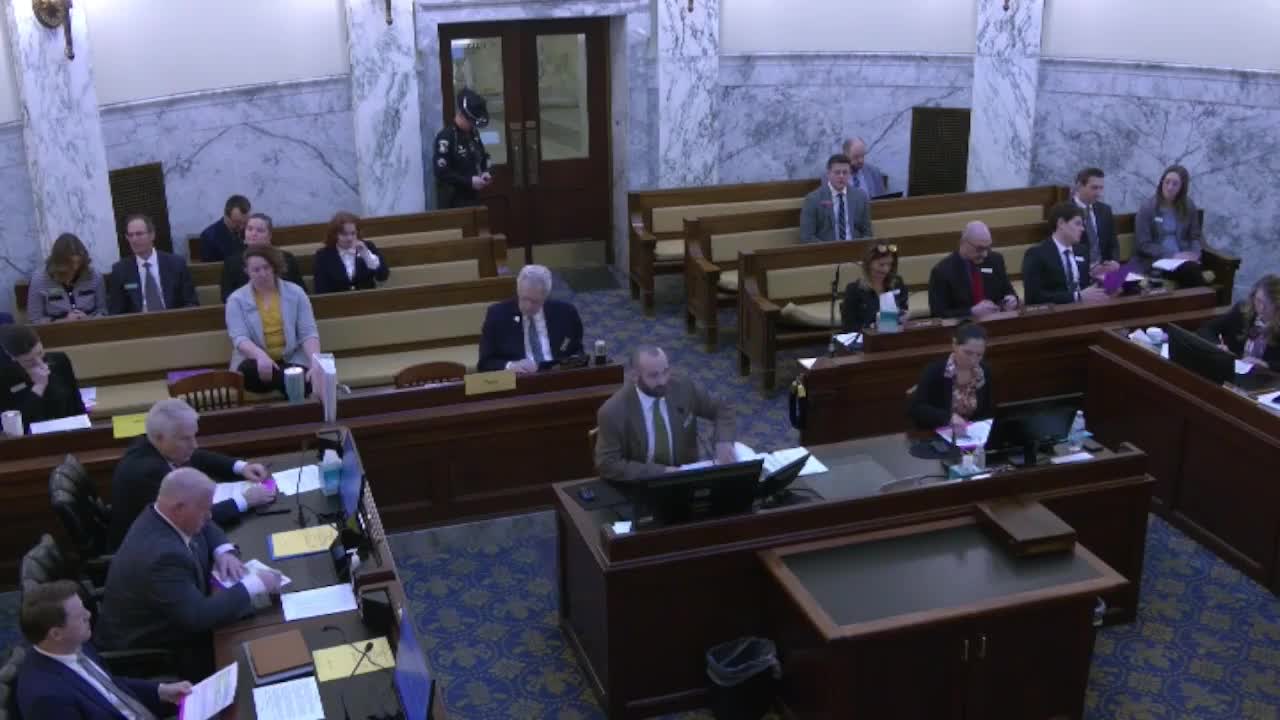
The Joint Finance-Appropriations Committee on Oct. 25 approved a one-time $600,000 appropriation for a student transportation routing software pilot aimed at helping districts optimize bus routes.
Senator Woodward moved the FY2026 program maintenance motion to add $600,000 from the general fund for a pilot program; the committee approved the motion after recorded votes in both chambers resulted in a combined tally that carried the measure.
Jared Tetro of the Legislative Services Office told the committee the division of central services administers state-level programs and contracts on behalf of school districts and that the original agency request sought a larger sum for routing software. “The original request was for $5,000,000,” Tetro said; after earlier reductions the committee considered a smaller pilot. The $600,000 motion reflects a further reduced scope, Tetro said.
Committee members and staff discussed scope and measurement. Tetro said the Department of Education surveyed districts and received responses from about 70 districts and charters, with 43 indicating interest in participating. Under the proposal, the pilot would provide software at about $1,500 per bus and the $600,000 appropriation would cover roughly 400 buses.
Lawmakers asked how much data the pilot would produce for evaluation. Tetro said if contracts were signed and implementation began in August, districts would have roughly four months of data in the first year and a fuller set to report in the next legislative session. The language adopted by the committee requires participating districts and charters to track cost and savings and directs the Department to report back to the legislature after one full year of data.
Representative Petzke described the pilot as a scaled start: it reduces the agency request and asks districts that participate to report savings so the legislature can consider funding levels in future sessions. Petzke acknowledged the funding is one-time and said “we will at least be able to report to us some data next year, and then we can decide whether or not we wanna continue with the pilot program at that time next year.”
The committee approved the motion on a recorded vote (combined 15 ayes, 5 nays). Members later adopted the implementing language by unanimous consent; the language sets a two-year pilot and requires the department to collect data and report back after one full year of operation.