Get Full Government Meeting Transcripts, Videos, & Alerts Forever!
Get email alerts on the Libraries Digital Access topic
No spam. Unsubscribe anytime.
JFAC approves library grants, digital access funding and limits on DEI spending after heated debate
Summary
The committee approved $1.231 million in grants for the Idaho Commission for Libraries, including $1.2 million federal funds for a digital access grant and $42,300 general fund for broadband reimbursement, and adopted language restricting state funds from supporting diversity, equity and inclusion (DEI) activities in library‑sponsored programs.
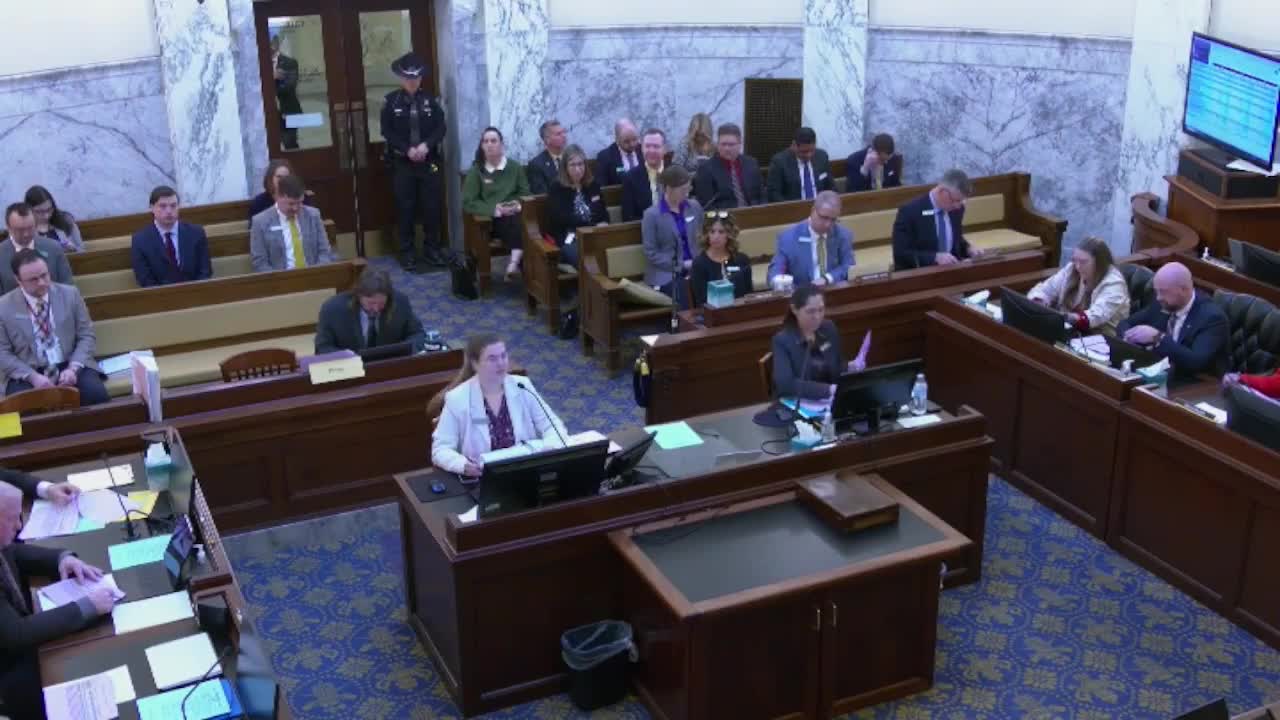
The Joint Finance‑Appropriations Committee on March 20 approved funding and a package of policy language for the Idaho Commission for Libraries after several hours of debate and a failed substitute motion.
Analyst Brooke Dupree summarized the commission’s requests: $42,400 for broadband reimbursement to eligible libraries; $30,000 for federal subgrants to local libraries (part of an available $40,000 federal grant); and $2.5 million in federal funds requested for the “Digital Access for All Idahoans” grant program. Senator Carlson moved a package that included $42,400 from the general fund and $1,231,000 one‑time federal funds for the digital access grant; Representative Price seconded. A substitute motion by Representative Galavese proposed a larger federal funding allocation ($2.5 million) and additional subgrants but failed (9 ayes, 11 nays). The original motion then passed on a combined committee vote (17 ayes, 3 nays).
After the funding vote, the committee considered multiple pieces of language: re‑appropriation authority for ARPA capital projects to build telehealth facilities in libraries, a ban directing state funds not be used to support any diversity, equity, inclusion or social justice ideology in library‑sponsored activities (with a required report due Dec. 1), and direction to designate an employee to confirm library adherence to a cited Idaho Code provision and coordinate with the Department of Education. Senator Wintrow repeatedly asked whether the DEI restriction would prevent libraries from serving covered populations (the commission’s digital access grant listed covered populations including households below 150% of poverty, aging individuals, incarcerated individuals, veterans, people with disabilities, language learners, racial or ethnic minorities and rural residents). The motion maker said past uses of similar language had not prevented libraries from serving those populations.
On the DEI restriction, the motion passed by combined roll call (15 ayes, 4 nays, 1 absent/excused). Later language requiring the commission to designate an employee and to coordinate with education also passed (17 ayes, 2 nays, 1 absent/excused), and re‑appropriation language for ARPA capital projects passed unanimously (20 ayes). Committee members who supported the funding emphasized library programs for seniors, telehealth, veterans and rural residents; supporters said federal funds can be tailored to state priorities and libraries urged reconsideration after initial rejection.
The committee’s actions included both funding approvals and policy directives; minutes show sustained debate over statutory compliance and the scope of activities state funds may support.