Get Full Government Meeting Transcripts, Videos, & Alerts Forever!
Get email alerts on the Public Health Budget topic
No spam. Unsubscribe anytime.
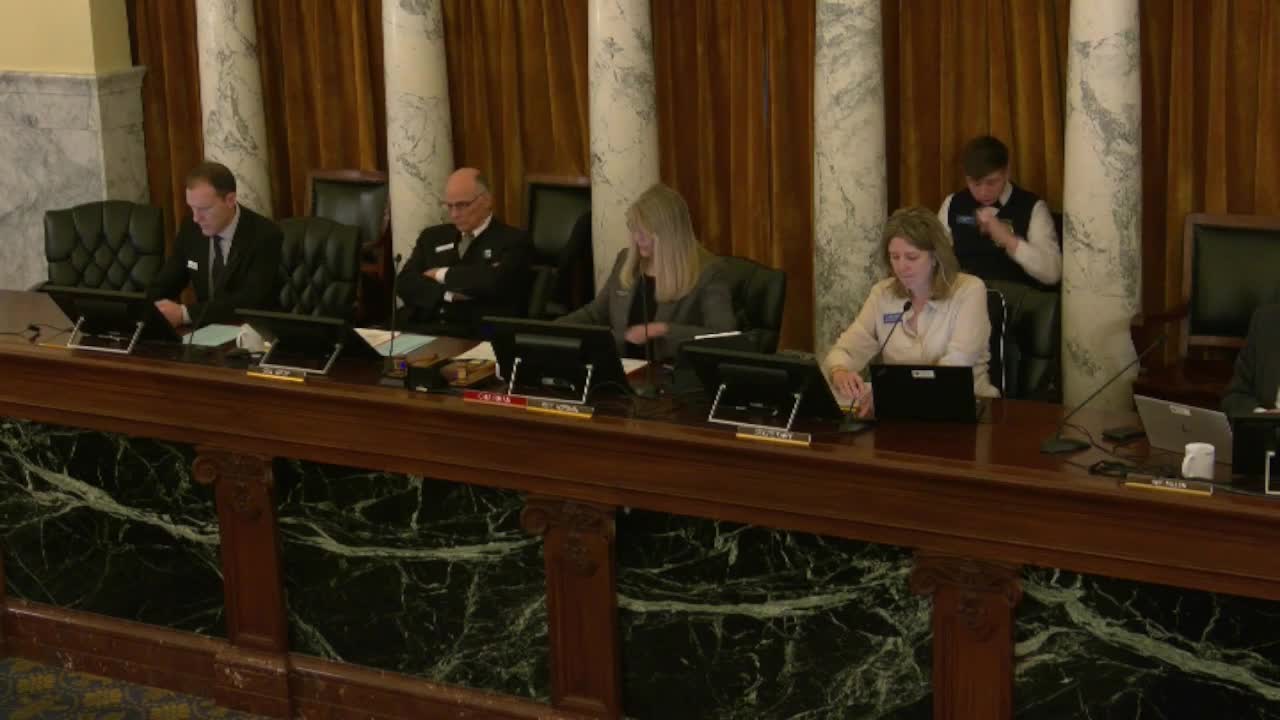
Joint committee approves $25.6 million enhancement package for Public Health Services
Summary
The Joint Finance-Appropriations Committee approved enhancement funding and several directed studies for the Department of Health and Welfare's Division of Public Health Services, including new positions, immunization and home-visiting funds, and studies of program transitions.
The Joint Finance-Appropriations Committee voted to recommend due pass for a suite of Fiscal Year 2026 enhancements to the Department of Health and Welfare's Division of Public Health Services, approving additional positions and a package of one-time and ongoing funding for prevention, immunization and restoration programs.
The committee recommendation covers an addition of 4 full-time equivalent positions and combined increases of roughly $25.6 million from general, dedicated and federal sources to support program restorations (suicide prevention, drug overdose prevention, Alzheimer's and dementia supports, Fit and Fall Proof, WIC, and temporary assistance), ARPA multi-year grants, communicable disease prevention, the Idaho immunization program, home visiting, HIV and hepatitis prevention, and a governor-proposed rural physician incentive appropriation.
The package directs $2,736,300 from the general fund (as read on the floor during the motion), $2,650,000 from dedicated funds, and about $20.2 million from federal funds in the motion that carried. Committee members who spoke in favor highlighted retention and access benefits for rural health incentives and the central role the division plays in passing federal grant funding to local public health districts.
The committee also approved multiple language sections directing the department to prepare reports or cost-benefit analyses rather than immediately enact policy changes. Those instructions include a requirement to report any potential double billing between federal grants and Medicaid, to study transitioning pass-through clinical-service grants from public health districts to federally qualified health centers or other safety-net providers, a cost-benefit analysis on moving the 988 crisis line contract to Magellan Health (or another qualified vendor), and analyses of moving select programs (drug overdose prevention, Alzheimer's/dementia services, Fit and Fall Proof) to other state entities such as the Office of Drug Policy or the Commission on Aging. The committee also requested a cost-benefit study of bringing the statewide cancer data registry in-house from its current contractor.
Several members objected to treating long-running prevention programs as one-time funding, saying that unpredictability can jeopardize staffing and service continuity for programs such as home visiting and the immunization assessment fund. Senator Sandra Wintrow repeatedly urged caution about shifting ongoing programs to one-time dollars; proponents said the one-time classification allows the committee to scrutinize program components and return the next year with information.
Votes: the motion to recommend due pass carried on a joint vote with recorded totals announced in the hearing (Senate 7-2-1; House 7-2-1; combined total reported in the hearing as 14 ayes, 4 nays, 2 absent/excused).