Get Full Government Meeting Transcripts, Videos, & Alerts Forever!
Get email alerts on the Public Comment Policy topic
No spam. Unsubscribe anytime.
Committee sends public-comment bill to amendment order after wide testimony for and against
Summary
Senate Bill 1007, a cleanup bill that would remove language limiting public comment at school board meetings to agenda items, was sent to the fourteenth order for possible amendment following testimony from parents, trustees and the Idaho School Boards Association.
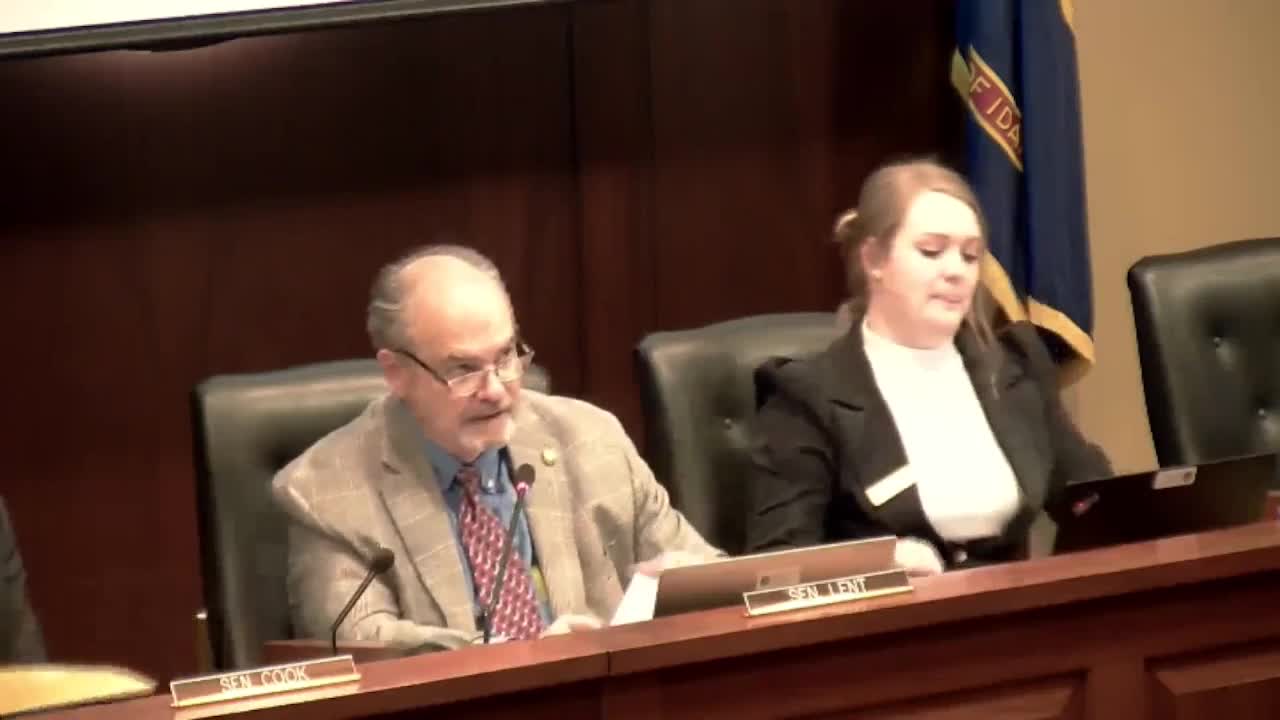
The Senate Education Committee voted to send Senate Bill 1007 to the fourteenth order for possible amendment after more than an hour of testimony from parents, school board members and the Idaho School Boards Association about whether public comment at school board meetings should be restricted to agenda items.
Senator Cindy Carlson, the bill sponsor, described the draft as a “cleanup” to remove a sentence that some districts use to bar public comment unless an item is listed on the agenda. Carlson said districts were using that language to prevent patrons from addressing school boards and to stop members of the public from communicating with board members outside meetings.
Several parents and local board members told the committee they rely on the ability to speak to school boards about topics not listed on the published agenda. Melanie Phillips, a parent from Kuna, described pressing district officials for six months about using Advanced Opportunities funds to cover driver's-education costs, and said that bringing the issue to a board meeting allowed the district to research and ultimately adopt the approach, saving the community an estimated $500,000. "If I had been restricted during delegations to only the items on the agenda, I would never have had a voice," Phillips said.
Leslie Bjerke, vice chair of the Coeur d'Alene School Board, said her board had long allowed patrons to address nonagenda items without problems and opposed returning to a statute that would restrict that practice. Christina Hardy, a longtime meeting attendee, told the committee she has observed that public comment usually uses only a few minutes per meeting and yields matters the board later addresses.
Quinn Perry of the Idaho School Boards Association testified in opposition to the bill. Perry said the statute enacted last year — a response to a single district that had banned public comment — has been working well and that limiting comment to agenda-related items helps boards run efficient public business meetings and prevents using regular meetings as a venue for grievances or matters that may require quasi-judicial impartiality. "School board meetings are not a public meeting. They are a business meeting held in public," Perry said, arguing that unrestricted public comment could create legal and operational problems.
Committee members asked whether the law already allows boards to adopt rules for public comment, including time and conduct limits and the 48-hour agenda posting requirement. Perry said boards must post agendas 48 hours before regular meetings and that boards retain authority to set time and conduct limits but that the bill as written would remove the requirement that public comment be limited to agenda items and thereby broaden the scope of topics raised at meetings.
Senator Jordan Woodward moved to send Senate Bill 1007 to the fourteenth order for possible amendment; the motion was seconded and approved by voice vote. A prior substitute motion to send the bill directly to the floor failed for lack of a second. The committee also agreed to request a presentation from the State Department of Education on the Advanced Opportunities program after testimony referenced its use for driver's education.
The committee did not adopt final statutory language; instead it directed further work on compromise language in the amending order.