Get Full Government Meeting Transcripts, Videos, & Alerts Forever!
Get email alerts on the Workforce Education Cte topic
No spam. Unsubscribe anytime.
Lawmakers review $10 million request to expand Idaho career-technical education capacity
Summary
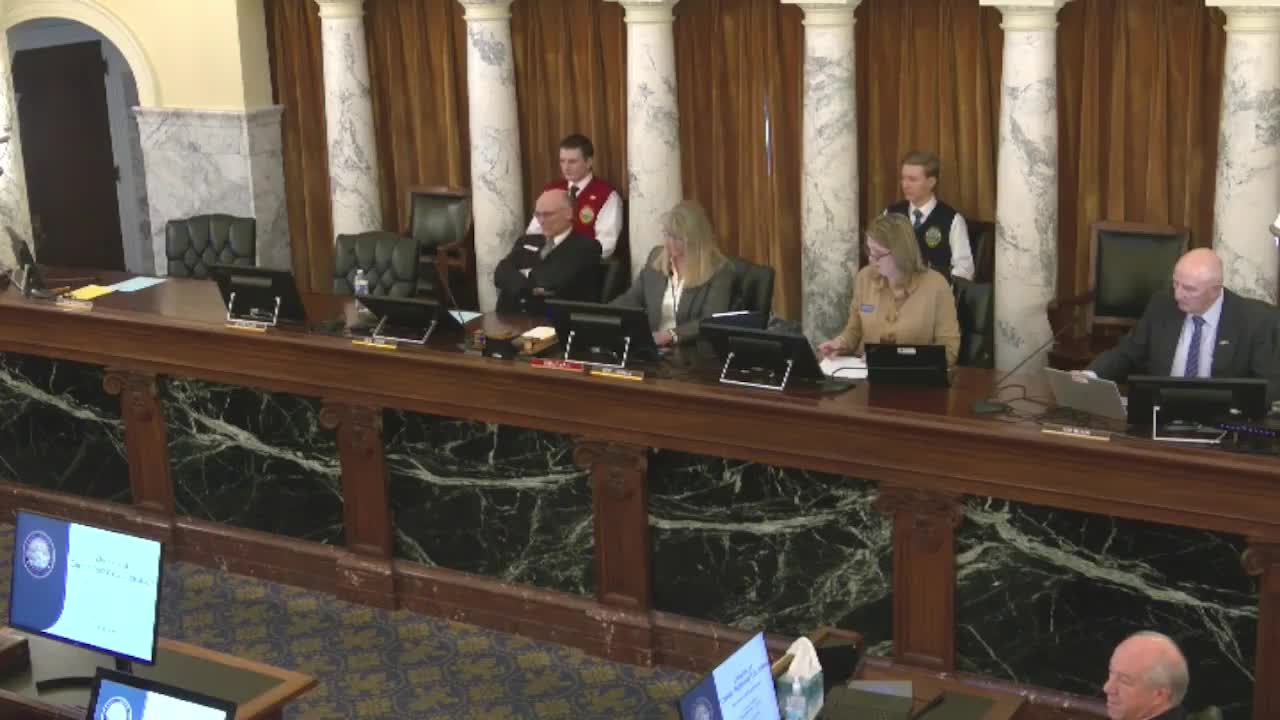
The Joint Finance‑Appropriations Committee heard Feb. 10 from Legislative Services budget analyst Kevin Campbell and interim CTE administrator Joshua Whitworth about Career Technical Education’s FY2026 budget requests, including a governor‑recommended $10 million ongoing appropriation aimed at expanding capacity in high‑demand programs.
The Joint Finance‑Appropriations Committee heard Feb. 10 from Legislative Services budget analyst Kevin Campbell and interim CTE administrator Joshua Whitworth about Career Technical Education’s FY2026 budget requests, including a governor‑recommended $10 million ongoing appropriation aimed at expanding capacity in high‑demand programs.
The request, Whitworth told the committee, is intended “to meet that critical need today” by funding faculty, facility upgrades and other ongoing costs at Idaho’s six technical colleges and secondary CTE programs. He said the money would be distributed by the CTE division as grants tied to industry engagement and performance reporting rather than as automatic equal shares to campuses.
The funding request follows several recent appropriations to CTE. Kevin Campbell told the committee that recent actions included $5 million ongoing for CTE readiness in middle and high schools, $10 million one‑time for secondary CTE programs, $5 million one‑time for equipment and a range of ongoing and one‑time staff and equipment enhancements in FY2024 and FY2025. For FY2026, CTE is also requesting $664,000 ongoing for additional instructors, $125,400 for a business‑industry engagement manager, $50,000 for adult education and literacy and $125,700 in additional federal grant spending authority.
Why it matters: committee members said CTE investments affect current workforce shortages in fields such as nursing and welding and influence the ability of Idaho businesses to hire skilled workers. Several legislators told the division they are concerned about oversubscribed programs and waitlists and want clearer detail about how the $10 million would be awarded and evaluated.
Discussion and questions
Representative Paul Miller asked whether waitlists reflect facility shortages, instructor shortages or both. Joshua Whitworth said demand is growing rapidly and identified three constraints—student demand, available faculty and facility capacity (for example, the number of welding booths). “We see it actually on both,” Whitworth said, referring to faculty and facility shortages.
Senator Galloway noted welding and nursing as the most oversubscribed programs and asked whether local employers could absorb more graduates. Whitworth pointed to statewide manufacturing growth and projects he said will require more welders and said expanding existing college programs—through additional ventilation, seats or faculty—would be the likely path.
Representative Furness and others pressed for more detail on the governor’s $10 million recommendation. Whitworth and other CTE staff described the proposal as a grant program that would require industry matching and would be distributed based on demonstrated regional demand. Whitworth said the division plans to run the funds with reporting requirements and a roughly three‑year rotation so the money targets current high‑demand programs rather than being permanently locked to a single discipline.
Other items committee members asked CTE to follow up on
• Federal grants: Representative Petzke asked whether large federal grants remain available; Whitworth said funding is presently available but cautioned the division must be diligent about when it draws federal funds and must follow changing federal guidance.
• Business‑industry engagement manager: Representative Price and others asked whether this position would duplicate work by the Workforce Development Council; Whitworth said the proposed manager would be embedded with local school districts to connect district programs directly to local employers rather than serve at a statewide strategic level.
• Hazmat and motorcycle safety funds: Committee members flagged apparent negative or growing balances in the Hazardous Materials and Waste Enforcement Fund and the Motorcycle Safety Fund and requested CTE validate reporting and propose any adjustments to ensure fee structures and expenditures align.
• Oversubscribed program list: Whitworth agreed to provide the committee a list of oversubscribed postsecondary programs and to follow up on secondary program specifics to help legislators plan future investments.
Program and budget details cited in the hearing
• CTE staff count: Campbell reported approximately 569 FTP positions, with the bulk in postsecondary programs (technical colleges). • Recent appropriations: $5,000,000 ongoing for CTE readiness in middle and high schools; $10,000,000 one‑time for secondary CTE programs; $5,000,000 one‑time for postsecondary equipment/investments. • FY2026 requests: $664,000 ongoing for instructors; $125,400 for a business‑industry engagement manager; $50,000 for adult education and literacy; $10,000,000 governor recommendation ongoing for expanding high‑demand capacity.
Voices from the hearing
Kevin Campbell, budget and policy analyst, summarized the division’s structure and funds and noted CTE “typically spends close to 100% of its appropriations.”
Joshua Whitworth, interim administrator for the CTE division, emphasized rising student demand for applied programs and said the $10 million proposal would require industry partners to match funding and would be distributed to meet regional demand.
Tracy Bent, chief administrative officer for CTE, described the Workplace English program as an adult basic‑education offering for people whose first language is not English and noted the program serves participants at workforce training centers and other venues, including some Department of Corrections programming.
What the committee directed or is expecting next
Committee members asked CTE to provide: (1) a detailed list of oversubscribed programs (postsecondary and secondary), (2) clarification and documentation about the reporting and balances for the Hazardous Materials and Waste Enforcement Fund and the Motorcycle Safety Fund, and (3) a more detailed distribution and oversight plan for the governor’s $10 million ongoing request, including proposed grant criteria and expected outcomes.
No formal committee votes or motions were taken during this presentation.
Looking ahead
Whitworth said the division will use industry engagement and reporting requirements to target funds to programs with demonstrated local employer demand, then return to the committee with details. Committee members signaled they will seek more detail before supporting any large ongoing appropriation on the floor.