Get Full Government Meeting Transcripts, Videos, & Alerts Forever!
Get email alerts on the Conservation Funding topic
No spam. Unsubscribe anytime.
Soil and Water Conservation Commission reports FY24 gains, high demand for Waukapa cost-share
Summary
Acting administrator Loretta Strickland told the House Agriculture Affairs Committee the Idaho Soil and Water Conservation Commission met or exceeded several performance goals in fiscal year 2024 while demand for the Waukapa cost-share program far outstripped available funding.
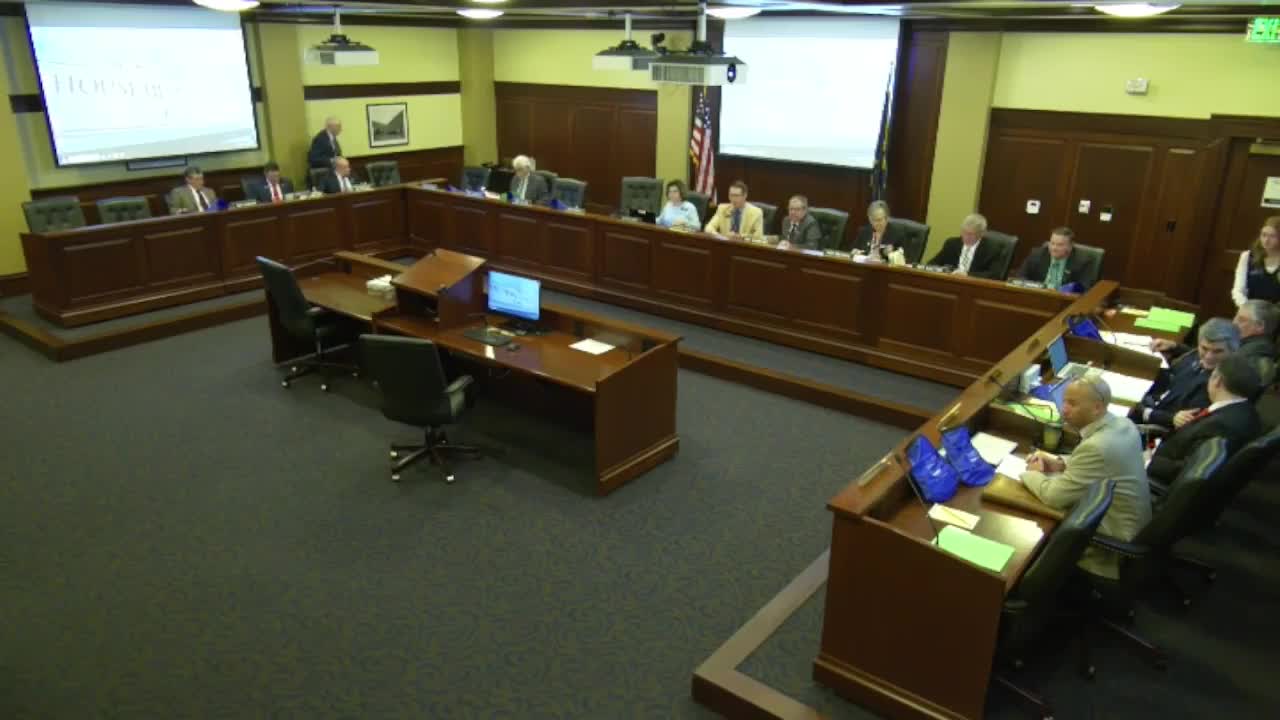
Acting Administrator Loretta Strickland of the Idaho Soil and Water Conservation Commission told the House Agriculture Affairs Committee on Feb. 18 that the agency met several performance targets in fiscal year 2024 but continues to face high demand for voluntary conservation funding.
The commission, Strickland said, delivered staff time and technical support to conservation districts and private landowners across Idaho while administering programs that include the Resource Conservation and Rangeland Development Program (RCRDP), participation in the Eastern Snake Plain Aquifer CREP partnership, and development of TMDL implementation plans for agricultural lands.
Strickland, introduced as the commission’s Ag Program Manager who was serving as acting administrator in the absence of the agency administrator, said the commission reported roughly $3.95 million in total revenues for FY24 and just over $7.9 million in expenditures. She said $1.58 million appropriated for distribution to conservation districts was disbursed per statute and rule. "In accordance with Idaho code 20-2-727 and the intent language set forth in House Bill 352 from 2023, the first $725,000 was distributed equally among the 50 conservation districts," Strickland said. That equal distribution translated to $14,500 per district, she said, and the remaining $858,800 was distributed as state match based on eligible local support, with a median match allocation of $13,834 per district.
Strickland said staff provided nearly 12,000 hours of commission time assisting districts and that commission staff supported roughly 1,031 landowners (as reported in the packet) and provided 2,771 hours of technical assistance to landowners participating in CREP. The commission reported support for 9,705 acres enrolled in CREP and said RCRDP loans assisted conservation work on 8,221 privately owned acres; the agency said it helped implement best-management practices across about 63,075 acres. Strickland added that the U.S. Environmental Protection Agency did not approve any new TMDLs in FY24, which she said freed staff time to complete WACPAW obligations.
On the Waukapa cost-share program — a state-funded incentive program to conserve water and improve water quality that the commission said was revived with general-fund money in 2022 — Strickland described very strong demand. She reported that from the 2022–2024 period $10 million was appropriated to Waukapa. Commission documents, and Strickland’s summary, said 170 project proposals requested $20.2 million in Waukapa cost-share during that period; 98 proposals were funded from the available $10 million and, when combined with partners’ match and other funds, those funded projects represented roughly $36.1 million in total conservation investment. For FY24 specifically, $5 million was appropriated to Waukapa, the commission received 80 project proposals requesting funding, and selected 50 for funding; the state’s $5 million leveraged a total project cost of about $17.7 million, which the commission characterized as $3.54 of total conservation per $1 of state Waukapa money.
Committee members asked for detail about projects that were not funded and about whether any proposals involved aquifer recharge. Strickland said funded projects included a large share dedicated to irrigation infrastructure and on-field irrigation efficiency (roughly $4.35 million across the program), livestock best-management practices (about $949,000), streambank and erosion projects (about $949,000), soil-health projects (about $203,000) and district administrative funds (about $942,000). She said she did not recall proposals that specifically targeted aquifer recharge, though some proposals sought improved groundwater use management on private land.
Melanie Ziegler, the commission’s financial manager, told legislators the commission receives a base general-fund appropriation and may receive an annual growth allowance of up to 3% from the governor’s office for some line items. She described the RCRDP loan fund and two smaller dedicated funds maintained by the commission for specific programs; Ziegler said federal grant funding was not in the FY24 portfolio but could be pursued in the future. When representatives asked how state funding reaches local districts, Strickland explained that the commission distributes trustee-and-benefits appropriations per statute — the initial equal distribution, then proportional match allocations tied to prior-year eligible local support.
Devin Fielding, treasurer and former president of the Idaho Association of Soil Conservation Districts, and Tori O’Neil, IASCD vice president and a locally elected Custer County district supervisor, described how conservation districts use the funds. O’Neil highlighted district work with young producers, irrigation upgrades (she described a pivot conversion example), youth outreach programs such as Envirothon and fifth-grade tours, and projects that partner with counties to repair infrastructure damaged by floods. Fielding and O’Neil framed districts as locally elected supervisors offering voluntary, nonregulatory assistance and emphasized partnerships among districts, the commission, federal agencies and NGOs.
The commission noted one vacant field staff position and said it was working to backfill that role. Strickland thanked the legislature for continued support and stood for questions.
Why it matters: The commission’s report shows both that state investments are leveraging additional local and private funds and that demand for cost-share assistance considerably exceeds available dollars, particularly for irrigation-efficiency and water-quality projects. The commission and districts said volunteer landowner participation and local partnerships are central to program delivery, and legislators pressed agency staff on funding flows, program eligibility and opportunities to scale effective projects.
The commission’s written FY24 performance report was placed in committee materials; committee members and staff discussed follow-up questions, including clarifying legislative intent language and program accounting.