Get Full Government Meeting Transcripts, Videos, & Alerts Forever!
Get email alerts on the Workforce Retention Pay topic
No spam. Unsubscribe anytime.
ITD seeks pay adjustments to retain maintenance crews; lawmakers press for evidence of retention effects
Summary
The Idaho Transportation Department requested targeted compensation adjustments for maintenance staff, including a proposal to raise wages across maintenance career steps by $2.50 per hour and other targeted increases. Lawmakers pressed ITD on recruiting, retention and the interaction with a separate statewide CEC proposal.
The Idaho Transportation Department told Joint Finance-Appropriations Committee members it seeks targeted pay adjustments aimed at retaining frontline maintenance staff and reducing turnover that officials say has hampered operations.
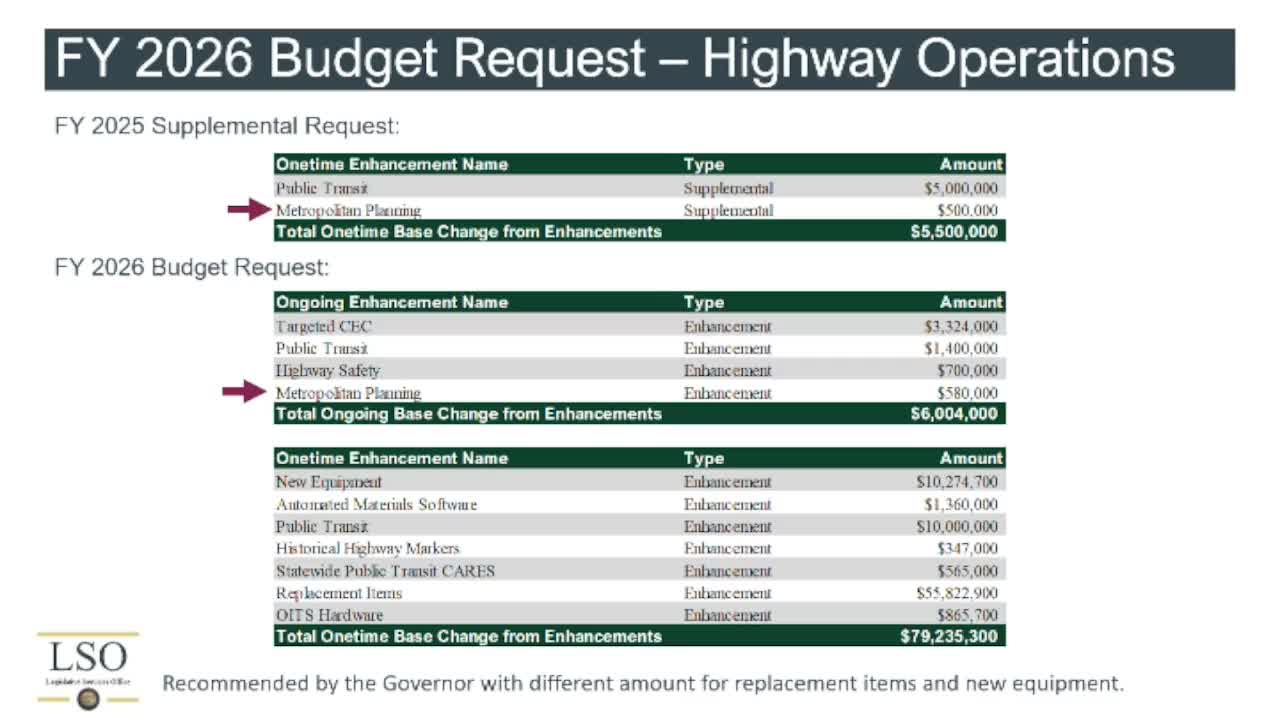
Brooke Dupree, the Legislative Services Office analyst, described a targeted CEC request for the highway operations division that “would affect 505 positions” and would raise hourly pay for transportation technicians by $2.50. Committee discussion and requests for clarification followed.
Director Scott Stokes and other ITD officials said the proposal is tied to ITD’s horizontal career paths for maintenance employees and is intended to raise starting rates and all pay steps to avoid compression between steps. Stokes and staff described the personnel challenge: the department has averaged roughly 78 maintenance departures per year in recent years and frequently hires entry-level workers who lack commercial driver's licenses, requiring substantial state-paid training before employees are fully productive.
Stokes said increasing the pay schedule would reduce turnover and the repeated investment in training. “Having experienced and institutional knowledge is the key thing for us,” he told the committee.
Lawmakers pressed specifics about how the requested agency adjustments interact with the broader employee compensation committee (CEC) proposals under consideration for the state. Stokes said the ITD request focuses on maintenance horizontal career paths and that the agency would follow the committee on how to implement any combined effects of a statewide CEC action and ITD’s targeted adjustments.
Committee members asked for wage‑survey comparisons and evidence that pay increases would reduce departures to municipalities or private employers. Stokes said ITD maintains county and city pay data and that many local governments pay entry rates above state levels; he said counties and cities often pay $20–$25 an hour for comparable entry-level positions, while ITD’s entry starting rate is lower. The department also reported that retention improves substantially after an employee remains with ITD for multiple years, and that raising the entire step chart reduces compression risk when employees progress.
Committee members asked ITD for follow-up materials, including detailed lists of affected positions, the agency’s current vacancy count and a breakdown of the requested dollar impact by step.